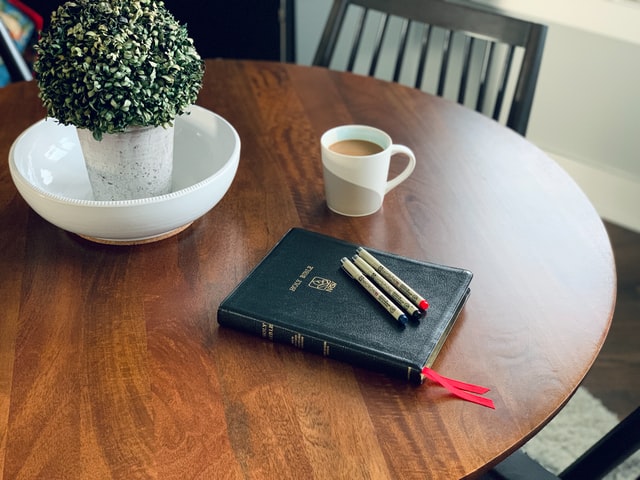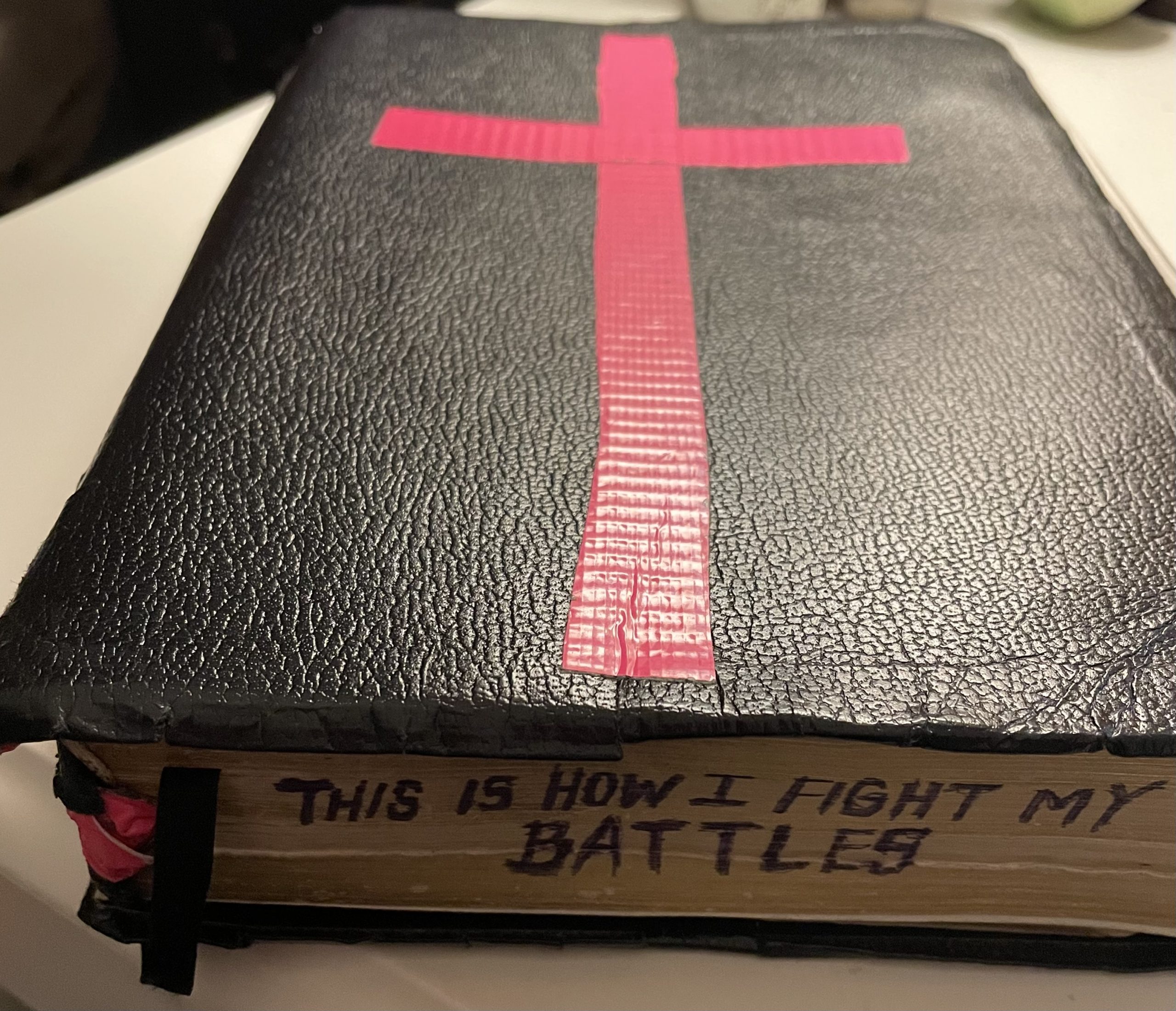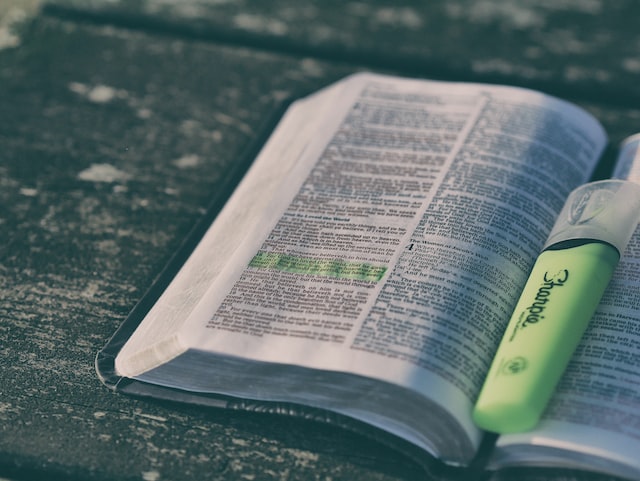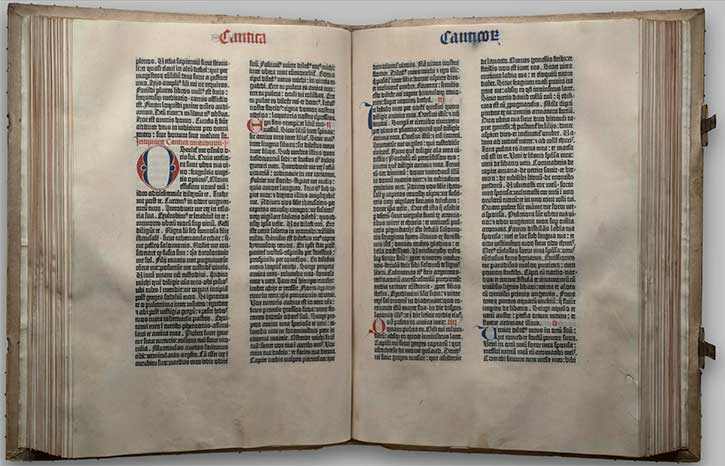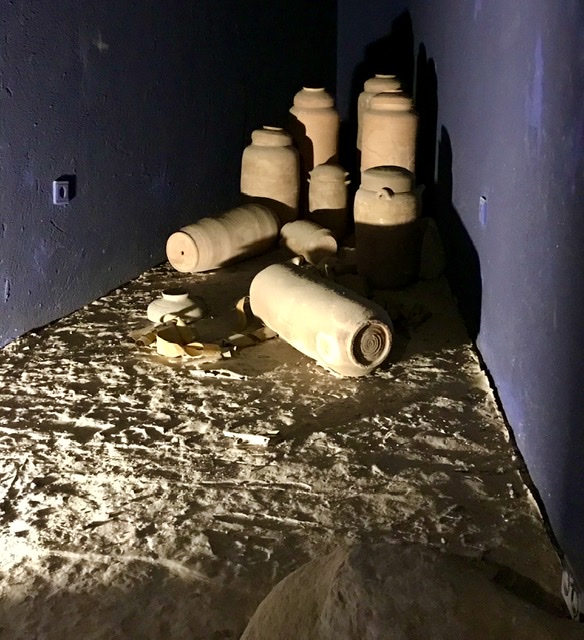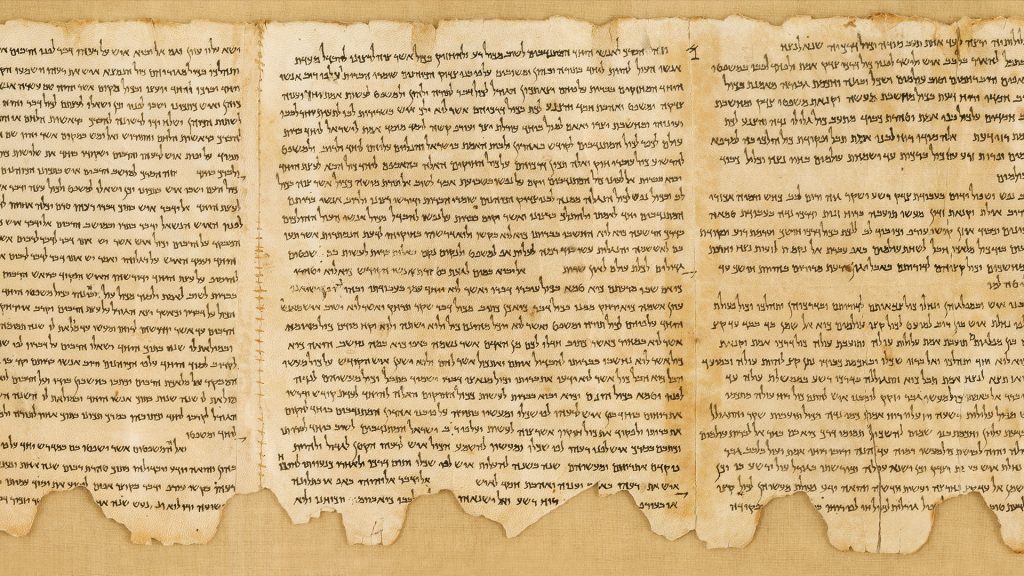
Many people have never read the Bible cover to cover. That’s not a judgmental statement, because it used to be me! Nothing has completely transformed my life more quickly than spending time reading and studying God’s beautiful words every day of the week. God’s Word is living and active, and by the power of the Holy Spirit, transformation happens from the inside out.
Perhaps as you start this new year, daily Bible reading will provide a “soul reset” that you need to combat the world’s daily chaos. And that chaos, confusion, and dissension seem to gain momentum every year. We need God’s Word in our hearts, so let’s be intentional about it.
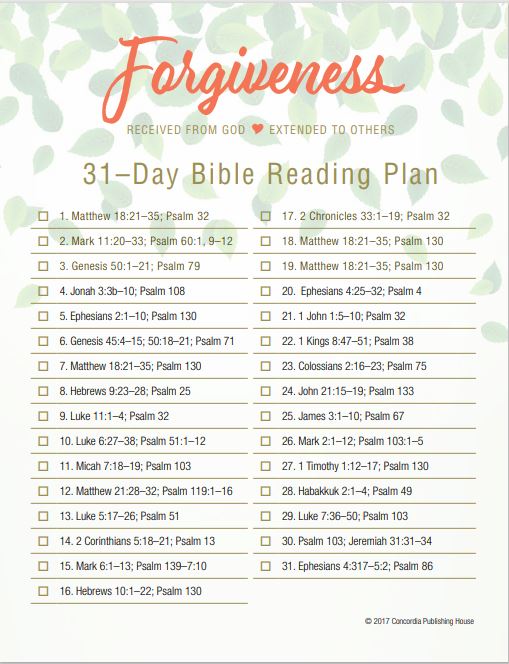
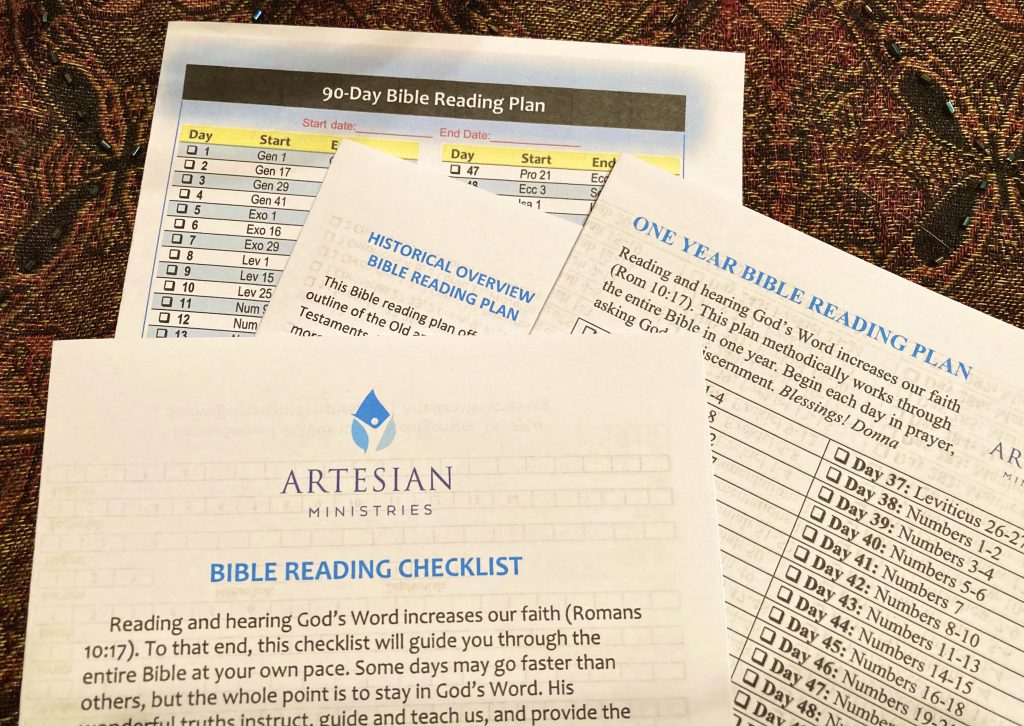
Do you want to pick a Bible reading plan that you won’t regret committing to for the next season? I have done all the work for you digging deep to find the top ways to read the Bible broken down in daily readings. These free downloadable plans vary widely, and you will likely be surprised by all the different approaches to help you read the Bible.
Why Read Through the Bible?
Reading and hearing God’s Word increases our faith (Romans 10:17). To that end, each checklist will guide you through the entire Bible at your own pace. Some days may go faster than others, but the whole point is to stay in God’s Word. His wonderful truths instruct, guide, and teach us, and provide the encouragement we need to shine His light in a dark world. And friends, this world NEEDS His light.
During your journey through Scripture, ask God each day to speak to you directly from His Word — whether you read a whole book of the Bible, an entire chapter, or one verse at a time. Approach His words of absolute truth with expectation. His story is our story.
Print off one of these free Bible reading plans and tuck it into your Bible. Make the commitment today to read through the most profound, life-changing truths ever written. You will never be the same again. His Words will hydrate you from the inside out.
One-Year Bible Reading Plan
This 52-week Bible reading plan methodically works through the whole Bible in one year. It combines readings from the Old Testament, New Testament, and Psalms each day to work through the entire book in a calendar year. Begin each day with prayer, asking God for discernment, and dive into each day’s reading. {Download here.}
Bible Reading Plan At Your Own Pace
This plan offers a lot of grace space when your days get busy. This plan allows you to pick up where you left off, no matter how long it’s been since you read the last entry. Once you get used to reading God’s Word on a regular basis, you can move back to specific books of the Bible or Scripture references where God has specifically touched your heart.
A dedicated Bible reading schedule is important, but if you are just starting out give yourself a lot of grace. If you miss a day, or a week, or feel like you are just shuffling pages, it’s okay. Your spiritual walk over the course of a year and your whole life takes diligence and patience. Trust in the Lord and how He will work through His Word in your heart and mind. {Download here.}
Historical Overview One-Year Bible Reading Plan
This Bible reading plan offers a basic outline of the Old and New Testaments, then fills in readings with more detailed books. You will read the entire Bible with this historical Bible reading plan!
The Old Testament readings follow a historical overview, then moves to the prophetic literature, followed by the wisdom literature, and Psalms (some twice). The New Testament begins with Christ’s birth, then moves into Acts (Luke’s sequel), followed by Ephesians (Paul’s teachings), the pastoral epistles, and so on. {Download here.}
Read The Bible In 90-Days
This 90-Day Bible reading plan is very different from the others. In biblical times, the Word of God was passed orally, learned orally, and memorized by hearing it orally. A pen and paper were not standard staples back then. Usually, only the rabbis in synagogues had printed copies of God’s Word. This plan allows you to hear the Bible as those people back in biblical times.
This is not a competition with yourself just to say that you have completed it. You WILL see God move in ways that you haven’t before if you walk through the Bible passages and listen. Even if you actually retain only a small portion of what the Bible says in each reading, you will retain what He wants you to hear for a long time – perhaps for your lifetime.
Pray each time you read to hear what God wants you to hear and be able to let the rest go. This is not a Bible study. This is a Bible reading. Absorb what you can. Listen. He will help you.
Setting a goal is important with this particular plan because each day’s reading takes an average of 45-60 minutes. Since our listening can easily become distracted, commit to actually reading a Bible rather than listening to an audio version. Take your Bible everywhere!
You are on an important mission, so grab additional reading time whenever possible: waiting to meet friends, waiting for the oven to preheat, a 10-minute break at work, waiting in your child’s school car pick-up line, or even arriving early at church and read before worship. Even 10 increments help. {Download here.}
Bottom Line
As you commit to walking through your daily or weekly readings, you will discover what a tremendous asset and great springboard it is to know what it means to live a Christ-centered life. That’s the bonus part of the plan!
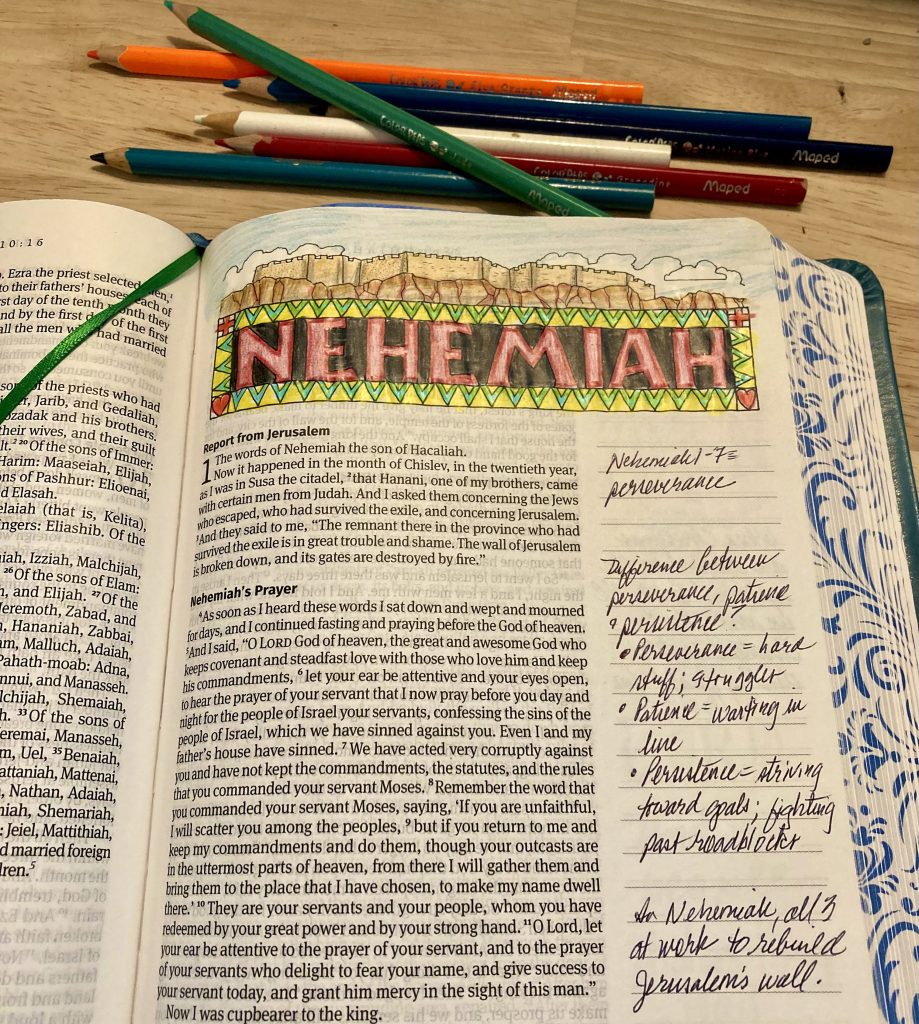
Over time, you may discover a preferred Bible version, choose to jot down study notes as you read, write down some meaningful passages in your own words, or even venture past the daily reading assignments as God moves your heart toward His. The key is following those spiritual nudges as God brings them about. And He will.
There will be parts of the Bible that will be difficult to understand, but do not lose heart! The history of Israel in the Old Testament historical context sometimes seems harsh. We see a wrathful side of God in some of the battles.
But as you spend time in God’s Word on a daily basis, you will see God work and move in different ways. You will see His helping hand, His good way, and His unquestionable love for you.
Keep Going
When you finish a year plan, select another year’s reading plan! Studying the Bible is a lifelong adventure that never becomes stale. If you are not part of a bible class at church or in your community, I challenge you to find one. Such group Bible studies are a good resource to engender a stronger tie and accountability to maintain your own desire to keep moving forward.
There is no one way to read the Bible — that’s the beautiful part. There are many foundational passages of Scripture (such as John 3:16), and reading them in context is key to understanding God’s Word and His plan for your life.
I pray that this journey draws you closer to Jesus and inspires you to show His love and forgiveness to a world that desperately needs them.
{Some of these links are affiliate links. This means if you make a purchase through that link, the ministry may receive a small commission at no extra cost to you. Thank you for your ministry support!}
Only six miles south of Jerusalem in the West Bank stands the oldest continually used place of Christian worship in the world, Bethlehem’s Church of the Nativity. Originally built in the fourth century on the spot Christians hold as the birthplace of Jesus, historical sources reference the site as early as the second century.
Today, the Church of the Nativity is one of the most important sites of Christian pilgrimage, alongside Jerusalem’s Via Dolorosa and the Church of the Holy Sepulchre.
Earlier this month, I led a group of thirty pilgrims to visit Bethlehem and its beautiful Church of the Nativity. Visiting in December took on special meaning as the birthplace of our Savior. Leading up to our visit and during our time there, I learned the extensive and powerful history of the Church of the Nativity which will inform your next (or first) visit to this incredible church.
Preserving A Holy Cave and Constantine’s Church
Commissioned by the Roman emperor Constantine in the fourth century, the first church built at the site was consecrated on May 31, 339. However, by the mid-third century, the site had already taken on a sacred position. Early church Father Origen writes about a cave in Bethlehem that was known to be the place of Jesus’s birth.
Thus, Empress Helena journeyed to the Holy Land in 327 AD and a basilica was constructed above the cave, parts of which still exist today. This church consisted primarily of an octagonal altar located directly above the cave, with a five-aisle nave and an atrium.
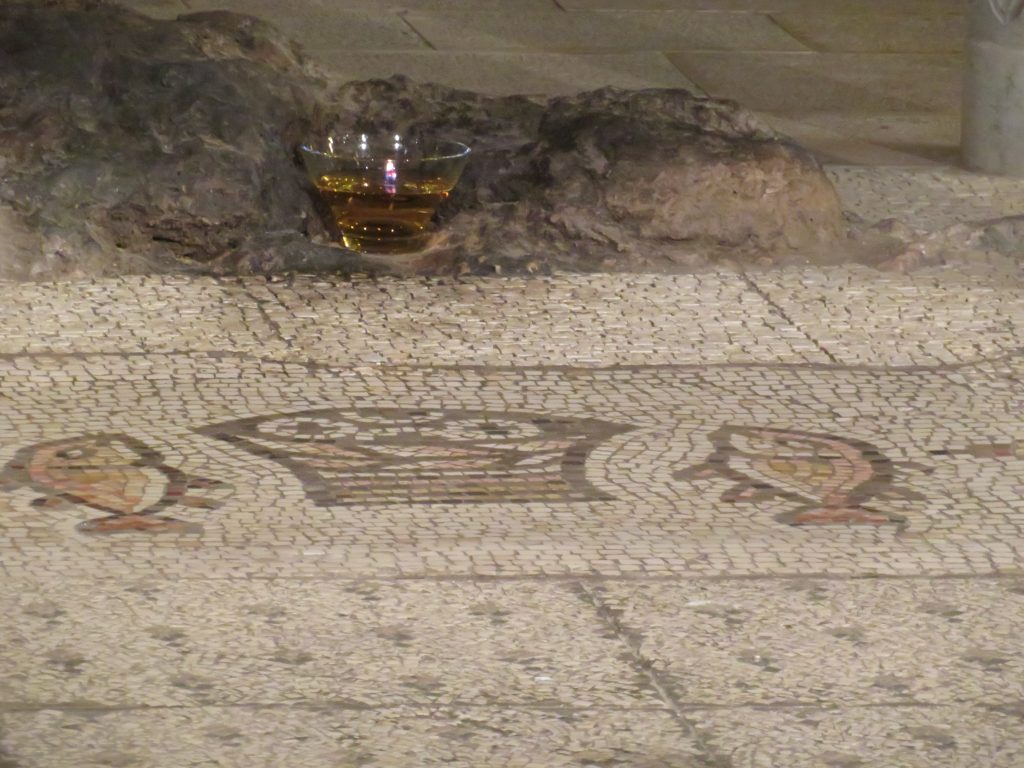
Intricate mosaic tile floors were part of the original Byzantine church, and they can still be seen today. Wooden floors have been built over the mosaic flooring for its protection, but at certain spots, special hatches have been installed that can be lifted to view the original fourth-century mosaics. There was a collective audible gasp when our group was able to view them. They are stunning, to say the least!
Justinian’s Church of the Nativity
Constantine’s original Church of the Nativity stood until the early sixth century when it was partly burned down. Although it is uncertain what event caused the fire, many believe that it was a result of the Samaritan revolts, which were responsible for the burning of several other churches in the region. Nevertheless, Emperor Justinian reconstructed the church soon after. It is this Justinian basilica that still stands today, although numerous modifications have been made through the centuries.
Many modifications and refurbishments occurred during the Crusader period (1099–1291 AD); however, some sections of the church still preserve Constantine’s original fourth-century construction. The Justinian church changed the octagonal altar area into a cruciform (cross) shape. The nave was extended and the atrium was covered to construct a narthex. Justinian erected fifty, 18-foot tall columns along the nave and transepts constructed from local stone quarried near Jerusalem’s Old City.
The courtyard and columned walkway offer beautiful places for reflection, prayer, and simply sitting and pondering what happened here over 2,000 years ago. The key is to never forget the history and miracle of the Christ child’s birth as you walk through the church and grounds.
The Crusader Period
Unlike most other churches in the region, the Church of the Nativity remained relatively unscathed between the time of Justinian and the modern day, avoiding destruction during the periods of instability and turmoil that accompanied the Sassanid, Islamic, and Crusader conquests.
Part of this was due to the church’s distance from Jerusalem, and the relative insignificance of Bethlehem for the region’s strategic defense. The church’s survival even led to stories and legends that it was miraculously protected from such events.
Islamic Rule
During the early Islamic period (c. 634–1099 AD), a Muslim prayer space was introduced into the church alongside the traditional areas of Christian worship. The site remained a pilgrimage destination for western Christians during this time. In 808 AD, Charlemagne sent a mission to the church to record its various details and possibly even carry out some repairs.
On June 7, 1099, the Crusading Franks conquered Bethlehem and the Church of the Nativity. The following year, Baldwin of Boulogne’s coronation as king of the Kingdom of Jerusalem took place inside the church. Baldwin II would likewise be crowned king at the site in 1119.
During its years under Crusader control, extensive repairs and modifications were made to the church, mainly to bring it into conformity with the Latin rite. The basic plan of the Justinian church was left in place, however, as well as many of the various architectural features, including the columns. The Crusaders further encircled the complex in a large wall, parts of which were later incorporated into various monasteries that still stand today.
Beginning in the Crusader period, numerous murals, mosaics, and paintings were added to the church, including the lavish wall mosaics that are still partially preserved today, and the column paintings of various saints and supplicants, which were likely a joint venture between the church leaders and wealthy pilgrims.
The Church from Saladin until Today
Upon Saladin’s conquest of the Holy Land (around 1187 AD), much of the Roman Catholic clergy left the Church of the Nativity. Nevertheless, the church suffered very little damage and Christian worship continued at the site under the Greek Orthodox, Armenians, and other Christian traditions. Eventually, the Roman Catholics returned. The Church would continue relatively unaltered until the Ottoman period (1516–1917 AD).
Under the Ottomans, much of the marble, which had once decorated the Church of the Nativity, was plundered, possibly to be used in refurbishing Jerusalem’s Dome of the Rock. Since graven images are strictly forbidden according to Muslim law, many of the faces of the images on the columns were removed and unable to be restored properly.
Although still in use, the church would enter a long period of decay. Likewise, the central nave of the church was used for non-worship purposes, including legal proceedings and even housing Ottoman troops in the middle east when required. Eventually, church officials regained control over the church although, over the next several centuries, it continued to fall into disrepair.
The Modern Church of the Nativity
In 2012, the Church of the Nativity was deemed a UNESCO World Heritage site. At the time of its listing, it was considered in danger due to its poor state of preservation. However, in 2013, church officials and conservators began massive renovation projects on the church, restoring it to much of its former glory, Today, nearly two million visitors and pilgrims visit the church every year.
The entrance into the church is called “the Door of Humility” and was constructed during the Ottoman period. This small rectangular doorway is less than five feet high. In order to pass through this door, visitors are forced to bow down as they enter the church. The fact that visitors and pilgrims have to bow down in order to enter the Church of the Nativity has a theological significance: We must humble ourselves in order to approach God.
Accessing the Site Where Jesus was Born
The cave area where tradition holds that Jesus was born is located underneath the church’s altar area. Access is gained by descending steep marble steps into a grotto-like area. Various religions have donated ornate oil lamps that clergy and priests ensure are kept burning around the clock all year long.
The traditional place of Jesus’ birth is marked by a 14-point star, which signifies that Jesus is the son of David. Why a 14-point star? The Hebrew name for King David, dwd, has a numeric value: (d = 4) + (w = 6) + (d = 4) = the number 14. Also, three sets of fourteen generations separate Abraham and the birth of Jesus (Matthew 1:17).
Visiting Bethlehem in December
Visiting Bethlehem in December is magical, to say the least. As the birthplace of Jesus, Bethlehem is a must-stop this time of the year during the holiday season. I lead private groups on tours of Israel and this “Christmas city” where the birth of Christ took place is always a favorite. The low temperatures are in the 40s, while the average temperature in the daytime is in the 60s. December is not the coldest month and I have never encountered inches of snow during this time; however, snow has been known to happen in December.
This first month of the winter season means that winter shadows create excellent opportunities for taking beautiful photographs. December is one of the lowest UV index months, as well, and the average rainfall is minimal. Winter conditions requiring snow removal are exceedingly rare. Cold winds and snow showers are rare this time of year, as well. Cloud cover and the dew point are low, though a wet day may happen (as it rained briefly when our group was there).
The Bottom Line
It is important to understand the historical and traditional significance of Christian holy sites. However, we cannot leave out the spiritual significance. Bethlehem, according to God’s Word, was the place hand-picked by God before the beginning of time to welcome His Son into the world.
Bethlehem was intentionally chosen by our Creator. And our Creator intentionally created you.
If you ever have a chance to visit Bethlehem, do not let the physical beauty of a church diminish the spiritual significance of that beautiful place.
{Some of these links are affiliate links. This means if you make a purchase through that link, the ministry may receive a small commission at no extra cost to you. Thank you for your ministry support!}
The best travel experience begins by knowing what and how to pack your travel items. Now that travel has pretty much returned to normal, many are planning trips for the first time in a long time. So refreshing ourselves on the basics is always a great idea.
I feel very blessed to travel regularly. I regularly lead tours through the Holy Land, Reformation tours through Germany, and tours through Greece and Turkey.
Although I am not a certified travel expert, I am a well-seasoned traveler of over 35 years who has logged plenty of real-time airline miles.
I hope that this guide covers everything you need to know about baggage categories, as well as extra tips like what to pack in which and essential accessories that keep your suitcases organized and safe.
Two Main Types of Luggage Categories
Carry-ons and checked bags are the two main types of luggage categories that airlines designate for both domestic and international travel. So how do you choose the right sized luggage and what are the differences between acarry-on vs. checked bag?
This is baggage that you take with you in the passenger area of the airplane. It can be stored above the seating in the overhead bin space, or if small enough, underneath the seat in front of you. Airlines usually allow one carry-on suitcase per passenger.
This is baggage that is stored in the cargo area underneath the airplane. Your check-in baggage is tagged and handed over to the airline’s conveyor belt at flight check in before you head over to security. Depending on the airline, you may be able to take multiple checked bags. This could be helpful if you are moving abroad or going on a long trip.
Guidelines for Carry-on vs. Checked Baggage
Size
The biggest difference between a carry-on vs. checked bag is size limits. Airlines may have slight differences in their suitcase size restrictions. However, the standard maximum dimensions for both international flights and domestic flights are:
These measurements are height x width x depth of the suitcase and include the wheels (and account for the handle being tucked away.) These are usually stored inside the airplane cabin in an overhead compartment.
Checked baggage can be any size up to 62 linear inches, which is equal to the height + width + depth measurements added together. These are always transported in the cargo storage space underneath the airplane.
The maximum dimensions may vary slightly by airline, so be sure to check your airline’s different rules.
Helpful tidbit: In recent years, many airlines have placed a stand at the airport check-in counters with slots where you can insert your carry-on to see if it fits the airline’s regulations. Confirming your free carry-on size helps to avoid the dreadful checked bag fee.
A larger checked bag or unusual/bulky luggage that holds a large musical instrument (think cello) or golf clubs requires special handling and usually incurs an extra fee.
Weight Restrictions
Typically, there are no weight restrictions for carry-on bags and airlines won’t make you weigh it. But there are a few, like budget airlines or smaller regional jet planes, that instill a weight limit on carry-on baggage, so you’ll just have to check the specific requirements of the company you’re flying with if you have heavy carry-on bags. The standard maximum suitcase weight for checked luggage is 50 lbs/23 kg.
Packing Restrictions
There are certain things you are only allowed to pack in checked luggage and certain things you are only allowed to pack in carry-on luggage. One of the most common examples is lithium batteries, which cannot be placed in a checked bag.
Fees
Whether or not you are charged for baggage is dependent on the airline and your fare. Fare is usually divided into tiers like Basic Economy, Economy, Business, Business First, and First Class (among others). Most airlines offer a free checked bag with a premium class ticket but may charge for checked baggage with lesser class tickets (domestic or international.)
Low-cost airlines, such as Spirit or Ryanair, charge bag fees on their basic fare. You may also incur an additional fee if your bag is overweight.
Helpful tidbit: Many airlines allow passengers to have both a carry-on bag and personal item bag. The personal item bag must completely fit underneath the seat in front of you or it will be counted as a carry-on. Personal item bags usually consist of a purse, laptop bag, small backpack, or a diaper bag.
Important Factors When Choosing Carry-On vs. Checked Bag
Storage Capacity
There is an obvious difference in storage capacity between a carry-on vs. checked bag. Carry-on bags are perfect when you want to pack light. They are ideal for weekend trips or short getaways, since they weigh less and make for a smoother, more convenient airport experience.
For longer or seasonal trips, checked luggage might be needed to fit all the items that you require. For instance, a ski trip to Canada carrying bulky winter clothing and snow boots usually results in a checked bag.
Portability
Carry-on baggage is lighter and easier to maneuver, which can be a factor in deciding whether you want to take along a checked bag. For example, when I get away to the remote Smoky Mountains for a writing sabbatical or to finish a book, I do not carry bulky checked bags to haul up the mountainside to a cabin. I choose Airbnbs that have a washer and dryer so that I can reuse the same clothes.
Risk of Lost Luggage
If you are traveling with checked baggage and have connecting flights, your bag has a greater chance of getting lost in the shuffle. Here are a few tried and true ways to avoid such a conundrum if you have a connecting flight to your final destination:
Ask at check-in if your bag is flying directly to your final destination. If not, you will need to get off the plane at your connecting airport, pick up your bag at baggage claim, and check it in again at the airline counter. This usually only happens if you book separate flights/tickets.
Keep the tag that prints with your checked bag label. At the end of the long label that prints with your luggage tag sticker, there is a small square with your contact information. This will help airlines locate your bag.
Attach a luggage tag with your personal information. You should tag your luggage even if you are flying carry-on only in the event that you arrive at the gate and the airline makes you check your carry-on bag. This can happen when flights are full and they are expecting little space available by the time boarding ends. Write your full name, phone number, email, and address on each tag.
The only sure way to avoid lost baggage is to travel with carry-on bags only!
Price
Carry-on bags are often free on most major airlines, except for the scenarios we have already covered. Checked baggage fees can be hefty, with most starting at $50 per bag. Again, check with your specific airline.
Carry-On & Checked Suitcase Essentials
Whether you go with one or both, these tools are essential to both carry-ons and checked bags.
Packing Cubes
Packing cubes are the ultimate packing tool for saving space in your suitcase. My go-to cubes are listed below.
Small Luggage Scale
Weighing your suitcase is easiest with a portable luggage scale. The benefit of this is that you can pack this lightweight scale in your suitcase. This is especially helpful for the international tours that I lead in order to bring souvenirs back home without exceeding the checked bag weight limits.
Luggage Locks
Some suitcases already come with locks, or you can attach a TSA approved lock. This ensures no one tampers with your bag.
What To Always Pack In Your Carry-On
There are a few items you should always pack in a carry-on bag no matter how you’re traveling. These include:
Important travel documents (itineraries, passports, boarding passes, vaccine records, etc.)
Jewelry and any other valuables
Prescriptions/Medications
Extra travel outfit
Electronics (including chargers)
Whether or not you bring a checked bag, I always recommend bringing a carry-on bag. It serves as an extra place to keep valuables safe, reading material, fun activities to occupy you during the flight, or even for storing items that you may have bought in the airport.
Pros & Cons Overview
In summary, when it comes to a carry-on vs checked bag, here are the main pros and cons:
Carry-On Pros
Skip the check-in counter lines
Skip baggage claim
Travel light
Carry-On Cons
Limits how much you can bring
Checked Bag Pros
Accommodates extra items for a more comfortable vacation
Checked Bag Cons
More cumbersome and heavier
Baggage fees
Less convenient airport experience
Risk of getting lost with flight connections
Essentials to Pack Regardless of Luggage Size
First of all, reliable luggage is crucial. After using soft-sided luggage for years, I switched to hard-sided luggage seven years ago. They simply last longer. My luggage set is shimmering purple so that it sticks out among the plethora of black bags. I bought this 3-size set in November 2015 and it is still going strong after thousands of international travel miles.
With reliable luggage in place, these are the essentials that I routinely pack which make travel easy, comfortable and stylish.
Packing Cubes
These light weight, sturdy, and breathable packing cubes (with laundry bag included) have made traveling a dream. Organizing clothes by type or occasion saves SO much time. Mine are aqua because I love color!
Collapsible Reusable Water Bottle
Not only is a reusable water bottle environmentally friendly, a collapsible one saves space and I can trust its cleanliness. Many airports are now equipped with water bottle filling stations with cold, fresh, filtered water.
Robust Portable Battery
I cannot imagine traveling without my smartphone. It provides instant access to maps, local information, flight delay notifications, and so much more. Consequently, I bought this portable battery charger in September 2017 and never looked back. With two ports, it can charge my smartphone and laptop simultaneously for multiple hours each.
Noise Cancelling Wireless Earbuds
A dear friend gifted me with these noise cancelling wireless earbuds for my birthday and they are phenomenal. I can put on soothing music to sleep or work while in the air and they block out every noisy distraction. She could not have picked a better gift for a busy traveler.
An Actual Camera
I love taking pictures, so when I lead a multi-day international tour or go on vacation, I use an actual camera to take better quality, frameable photos. Photography may not be your cup of tea, but if it is, this camera has proven to be easily portable, takes high quality photos, and is an absolute winner.
Travel Pillow
Though I usually do not travel with my own pillow on domestic flights, it is a neck saver while sleeping on international flights. I like this particular one because it is not bulky behind my neck. It wraps around and provides much-preferred side support. I also like that it is machine washable so that I always have a clean pillow.
International Power Adapter
U.S. plugs are different than the rest of the world, so you need a power adapter for international trips. I have used this one for years and it has never failed. With 4 AC plugs and 3 USB adapters in one device, I have successfully used my flat iron while charging my laptop and smartphone simultaneously. Since this adapter works in both Europe and Israel, I do not need to keep track of two different adapters.
Travel Hairdryer with Built-In Adapter
U.S. hairdryers are notorious for blowing international hotel outlets because of the high voltage our hairdryers use. Consequently, I use this simple Conair travel hairdryer with a built in converter, along with the adapter that I just mentioned above. I used them multiple times on my recent trips through Germany and Israel and the combination worked beautifully with no blown hotel outlets or ruined hairdryer as a result.
Laptop Backpack/Organizer
Though I only take this laptop backpack if I am going on an extended ministry or writing/research trip, it has proven to be invaluable. It is lightweight, water proof (great for electronics!), and has USB chargers on both the outside and inside. It also offers plenty of room for notepads, itineraries, research papers, magazines, and other travel necessities.
Travel Journal
As a writer and travel enthusiast, a travel journal is vital for capturing thoughts, prayers, ah-ha moments, God nudges, and much more. I have used this one for years because it is a handy size and uses refillable, lined paper. The handmade leather has only gotten more beautiful over time.
Although there are many other travel items that I could mention, these are my mainstays that I rarely leave home without.
Final Thoughts About Carry-On vs. Checked Bags
I have traveled both with and without checked bags, so the best choice depends on what your trip requires. Traveling light with a carry-on results in a less expensive and less cumbersome travel experience. However, it requires diligence while packing in such a limited space.
Carry-on only travel is ideal for weekend and short-term trips, budget travelers, and even feasible for longer trips if you are able to do laundry.
Checked luggage offers the freedom of taking everything you want, but lacks comfort in other aspects, like navigating through the airport or around your destination once you arrive. It also comes with a higher price tag, so budget travelers may feel the pinch.
Traveling with checked bags might be necessary for long trips, easy-to-navigate destinations (think paved U.S. city streets with hotel luggage porters vs. European cobblestone streets and historic hotels with three flights of stairs instead of elevators), and travelers who have a little extra to spend.
One final important consideration is the type of your accommodation – a hostel or small Airbnb apartment may not be as roomy with large suitcases as a spacious hotel room provides.
I hope that this experiential information has helped answer questions you may have had about carry-ons vs. checked bags. Also, I hope that my go-to travel items spark your imagination and wonder of traveling.
{Some of these links are affiliate links. This means if you make a purchase through that link, the ministry may receive a small commission at no extra cost to you. Thank you for your ministry support!}
We have traced my 10-day tour through Germany in the steps of Martin Luther through Erfurt, Wittenberg, Wartburg Castle, and Eisenach. We have looked at how Luther became a monk, then a priest, then a leader of the Reformation movement after he posted the 95 Theses on the Castle Church doors.
Next, our tour group turned south toward Nuremberg, Augsburg, and Munich, which we will cover today.
Nuremberg
Luther called Nuremberg “the eye and the ear of Germany” because of its 21 printing houses. On July 6, 1530, Luther wrote an open letter from the Veste Coburg (Coburg Fortress) to Elector and Archbishop Albrecht of Brandenburg, challenging his opponents to prove him wrong according to Scripture.
Luther wrote: “I would have preferred to write this letter in confidence and by hand to your Electoral Grace. But, I was afraid that in this fast time, it might possibly be published adulterated and misinterpreted on my behalf one way or the other. And, perhaps I would put your Electoral Grace under suspicion. That is why I dared to publish it in print myself, so as to prevent the poisonous, suspicious interpreters.”
Luther was burdened by the discord between the German princes triggered by his Augsburg Confession. He criticized the German princes, who adhered to the pope’s followers, in drastic words. Nuremberg was the first major city to embrace Lutheranism.
St. Sebald Church
St. Sebald is Nuremberg’s oldest church, consecrated in 1273, and was the first Catholic cathedral to convert to Lutheranism. It takes its name from Sebaldus, an 8th-century hermit and missionary and patron saint of Nuremberg.
Construction began in 1225 and was completed by 1273-75. It was originally built as a Romanesque basilica with various additions and stained glass added in subsequent centuries.
The church suffered serious damage during World War II and was subsequently reconstructed. Some of the old interior did survive, including the Shrine of St. Sebaldus, works by Veit Stoss and the stained glass windows. The church had an organ by the 14th century, and another by the 15th.
St. Lorenz Church
We also stepped into St. Lorenz (St. Lawrence) church. Building begun around 1250 and was originally built as a three-aisled basilica in the high Gothic style.
It was built on the site of a former Romanesque chapel dedicated to “St. Lawrence the Holy Sepulchre”, which belonged to the parish church of the city of Fürth and was mentioned in documents of the first half of the 13th century.
St. Lorenz was one of the first churches in Germany to become Lutheran (since 1529). Today the church belongs to the Evangelical Lutheran Church in Bavaria.
Augsburg
From Nuremberg, our group headed to Augsburg, where Martin Luther met with the papal legate, Cardinal Cajetan, at their demand, in 1518 at St. Anna’s Church. Augsburg was the site of another Imperial Diet (political assembly) in 1530, at which Protestants presented their confession. At the time it was the foremost doctrinal statement of the Lutheran Church.
The Augsburg Confession
The Augsburg Confession consisted of the 28 articles that constituted the basic confession of the Lutheran churches. It was presented June 25, 1530, in German and Latin at the Diet of Augsburg to the emperor Charles V by seven Lutheran princes and two imperial free cities.
The principal author was the reformer Philipp Melanchthon, who drew on earlier Lutheran statements of faith. The purpose was to defend the Lutherans against misrepresentations and to provide a statement of their theology that would be acceptable to the Roman Catholics.
The first 21 articles of the Augsburg Confession set forth Lutheran doctrine in order to demonstrate that “they dissent in no article of faith from the Catholic Church.” The remaining seven articles discuss abuses that had crept into the Western church in the centuries immediately preceding the Reformation.
Twenty five years later in the Augsburg town hall, the Peace of Augsburg was signed in 1555, ending for a time the religious wars in Germany between the Catholics and the Protestants.
Where the Augustinian Confession made and split forever the Catholic and Protestant churches.
Munich
When we finished walking through Augsburg on a beautiful fall day, we boarded the bus and headed down to Munich to enjoy Germany’s historic Oktoberfest!
Oktoberfest
I had never been to Oktoberfest before and it was so much fun! Each tent boasted a different theme and different menu. There was live music and merriment in every tent. Although the day started out cold and rainy, it ended beautifully so that we were able to walk around and fully enjoy Oktoberfest.
Munich’s Glokenspiel
We paused in Munich’s Marienplatz at Noon to watch the beautiful Glokenspiel (clock) in the City Tower. The clock shows two events from Munich’s city history. On the Glokenspiel’s top floor, the wedding of Duke Wilhelm V and Renate of Lorraine, celebrated in February 1568. In honor of the bride and groom, a jousting tournament took place on Marienplatz. The Bavarian knight triumphed over his opponent from Lorraine.
The lower floor shows the Schäffler dance. After a severe plague epidemic, the barrel makers are said to have been the first to venture out into the streets again, dancing to amuse the plague-stricken population.
Neuschwanstein Castle
Maximilian II had already had paths and lookout points constructed in the area around Hohenschwangau in order to be able to enjoy the scenery. In the 1840s, as a birthday present for his mountain-climbing consort Marie, he had the bridge, the “Marienbrücke”, built high above the Pöllat Gorge.
“New Hohenschwangau Castle” (it only acquired the name of “Neuschwanstein” after the death of the king). It was to be a better recreation of an ideal medieval castle than Hohenschwangau.
Hohenschwangau Castle
Crown Prince Maximilian II of Bavaria, Ludwig II’s father, had the ruined castle of Schwanstein rebuilt from 1832 in the “Gothic style”. The young Ludwig was influenced by the romantic mountain scenery and the summer castle became one of his favourite places to stay.
Hohenschwangau was decorated with scenes from medieval legends and poetry, including the legend of the swan knight Lohengrin. Ludwig identified himself when still a boy with Lohengrin, to whom Richard Wagner dedicated a romantic opera in 1850.
Linderhof Palace
Ludwig II, who was crowned king in 1864, began his building activities in 1867/68 by redesigning his rooms in the Munich Residenz and laying the foundation stone of Neuschwanstein Castle. In 1868 he was already making his first plans for Linderhof. However, neither the palace modelled on Versailles that was to be sited on the floor of the valley nor the large Byzantine palace envisaged by Ludwig II were ever built.
Instead, the new building developed around the forester’s house belonging to his father Maximilian II, which was located in the open space in front of the present palace and was used by the king when crown prince on hunting expeditions with his father. Linderhof Palace, the eventual result of a long period of building and rebuilding, is the only large palace King Ludwig II lived to see completed.
Oberammergau
We spent the night in Munich before heading to Oberammergau after breakfast. Oberammergau is a lovely village with so much medieval charm. There are many quaint shops, a museum, Lutheran church, and woodcarving workshop.
Some of our group attended the morning service at the Lutheran Church, and our very own Pastor John Heckmann was invited to do the Gospel readings. It was a lovely, spirit-filled, and peace-filled service with a kind pastor and extraordinary organist. Attending that church service was truly one of the trip’s highlights for me personally.
The Passion Play
Then it was time to attend the Passion Play! The whole town organizes it’s meal schedules and staff around showtime so that everyone can participate serving behind the scenes or actually taking part in the play itself.
The history of the Oberammergau Passion Play begins in 1633. In the midst of the Thirty Years’ War, after months of suffering and dying from the plague, the people of Oberammergau pledged to act out the play of the suffering, death and resurrection of our Lord, Jesus Christ once every 10 years. The promise has been kept until this year when it had to postponed from 2020 to 2022 due to COVID.
The entire play is delivered in German, however the text book is all in English and is very easy to follow. It tells about the choir, what music they are singing, and the dialogue of the actors so that you always know where they are in the storyline.
No pictures are allowed during the five hour performance (split into two segments with a long intermission in between), but their website has beautiful pictures to peruse.
I snapped a few of the venue and scenery before the play actually began. It is covered, but not enclosed, so be sure to bundle up if it is cold. We had blankets for our laps, winter coats, mittens, scarves and warm socks to keep warm. Here we are!
The next morning, we headed to the airport bound for home in the United States. Walking in Luther’s footsteps was truly an amazing learning adventure. God used Luther in significant ways in the church, and the work that Luther and his fellow reformers did still carries the Protestant churches today.
{Some of these links are affiliate links. This means if you make a purchase through that link, the ministry may receive a small commission at no extra cost to you. Thank you for your ministry support!}
He was only in his 50s. That reality kept swirling through my mind as I stood pale in a black suit in front of the bedroom mirror this morning.
Sixteen days. From diagnosis to earthly departure, Rick’s wife, two sons, and two daughters only had two weeks. To digest the scope of his newly-discovered cancer. Hear the worst. Hope for the best. And start preparing for the inevitable.
But Rick knew Jesus. And that made all the difference.
Today was the second such funeral that I have attended in the past two months. My other friend Koy had not yet reached 50. He was healthy, vibrant, loved Jesus, loved his wife, and loved running. He kissed his wife one afternoon to go for a run and God called him home.
Just like that. No warning. No terminal illness. Such a significant loss for his wife, family, and all of us who knew him.
Koy knew Jesus, too. And that made all the difference.
The Grief Process
Today as I sat in the pew listening to “Broken Hallelujah” ring from the altar, tears streaming, the truth sunk in: the grieving process is not linear. Some argue that there is a right way to grieve and a wrong way, but we can all agree that the grief process does not follow a linear timeline. There are good days. Bad days. Mad days. Don’t-wanna-get-outta-bed days. Happy memory days.
When loved ones become ill, sometimes the illness lingers for years. Like my dad’s cancer. In those scenarios, we sometimes start walking through the stages of grief even before that person is gone – simply because we know it’s coming. I remember looking for the most healthy or best ways to grieve.
But when death is sudden, time passes like lightning.
Both of my friends’ wives now live a new reality as they walk through the early days of their grief journey. The state of shock and pain of loss are often processed in different ways, and most involve tears. Yes, death is an inevitable part of life, but today was not the day to spout that truth.
Grieve Today, Hope Eternally
Today was a grief day. And the best thing I could do – that any of us can do – is show up. Hug them. Pray for them. Take them a hot meal. Talk about different times, and happier times, and share fun memories with them. Laughter is just as important as tears during the healing process.
Even though our first reaction is grief, as a Christian the next moment is relief. Because Jesus died in our place and took our sins to the cross, my friends know that their husbands are experiencing unimaginable joy.
Rick and Koy are face-to-face with the One who faced death in their place. Because of Jesus, both of those gentlemen are ALIVE with Christ. For all of eternity.
This earthy life has time limits. Through our loved one’s absence, the permanence of death is felt. But the final stage of life on earth ushers in life eternal with Christ. Despite our great loss, feelings of grief, or loss of a dream, we will see our loved ones again. And what a beautiful reunion it will be!
God’s Promises
And there is only one way that a heavenly reunion will happen: through faith in Jesus Christ as our Lord and Savior.
“I give them eternal life, and they shall never perish; no one will snatch them out of my hand. My Father, who has given them to me, is greater than all; no one can snatch them out of my Father’s hand. I and the Father are one.” John 10:28-30
“For God so loved the world that he gave his one and only Son, that whoever believes in him shall not perish but have eternal life.” John 3:16
“For our light and momentary troubles are achieving for us an eternal glory that far outweighs them all.” 2 Corinthians 4:17
“I write these things to you who believe in the name of the Son of God so that you may know that you have eternal life.” 1 John 5:13
When All is Said and Done
Grief is not a linear process. There are anger stages, denial stages, and other stages of loss. When our hearts are pierced by a hole of grief and good days seem gone, I pray that you remember the best is yet to come. No, not today. Probably not even tomorrow or in the next several months.
But one day, you will realize that all you remembered was the way they smiled. The way they lived life to the fullest. The way that they loved you.
And one day, when our time on earth is over and God calls us back home, we WILL see our loved ones again. Jesus made it possible. Jesus made it a reality.
Today we grieved. But we did not grieve without hope.
Thank you, Jesus.
“And now, dear brothers and sisters, we want you to know what will happen to the believers who have died so you will not grieve like people who have no hope.” 1 Thessalonians 4:13
{Some of these links are affiliate links. This means if you make a purchase through that link, the ministry may receive a small commission at no extra cost to you. Thank you for your ministry support!}
So far, our 10-day trip through Germany in the steps of Martin Luther have taken us through Erfurt and Wittenberg. We have traced Luther’s beginnings, when he became a monk, then ordained as a priest, and finally when Luther posted the 95 Theses on the doors of the Castle Church.
On a beautiful Fall day in Bavaria, Germany, our group then turned toward the town of Eisenach and Wartburg Castle.
Eisenach
The charming town of Eisenach was founded in the middle ages around 1150 and later chartered in 1283. It is situated on the northwestern slopes of the Thuringian Forest where the Hörsel and Nesse rivers converge. Germany’s Social Democratic Workers’ Party was founded at the Congress of Eisenach in 1896. This view of Eisenach from Wartburg Castle was stunning!
Martin Luther stayed in Eisenach’s Lutherhaus as a schoolboy. Since our group had seen the Lutherhaus in Wittenberg where he spent 36 years of his life, we did not stop at the Lutherhaus as part of a guided tour in Eisenach.
The slow-paced atmosphere and stunning surroundings make Eisenach worth visiting. There are no medieval fortifications or a fairytale castle, but there was charm at every turn. And even though Martin Luther spent time here, another famous resident lived (and was actually born) in this gem in the state of Bavaria. Our first stop off the tour bus was visiting the house and museum of Johann S. Bach.
Johann Sebastian Bach
Right next to Eisenach’s main square, a statue of Bach stands next to the Bach house. And it was another gorgeous Fall day!
The Bach House first opened its doors in 1907 and it is still the largest museum dedicated to Johann Sebastian Bach in the world.
In his birthplace we encountered the life and work of the composer in a unique way. More than 250 exhibits occupy the adjacent museum, preserved historical living spaces transported us back to his time, and the atmospheric baroque garden were delightful.
This is the front of Bach’s original home, still preserved well today. Although when you view it from the side, the upper walls are leaning out slightly on top of the original stonework base.
A plaque on the front door memorializes this as Johann S. Bach’s original home. He was born in Eisenach on March 21, 1685 and grew up here for the first ten years of his life. He had his first music lesson here, sang in the school choir and also sang at St. George’s Church.
The beautiful baroque garden offered Bach a beautiful oasis away from distractions and Eisenach’s bustling city life to compose his musical masterpieces.
They have beautifully preserved Bach’s studio where he composed the vast majority of his musical masterpieces. His desk remains as it was when he walked the halls.
We experienced a delightful treat when the Bach House’s resident musician gave a 30-minute concert using century-old instrument replicas of the ones that Bach would have actually played on. What a lovely treat to hear Bach’s music in Bach’s home!
Our group took a break after touring through Bach’s home, garden, and concert to enjoy lunch. I was delighted to find a “Little Bach” to accompany my “Little Luther” keepsake! Naturally, I had to assemble each as we waited for our wienerschnitzel to arrive.
Following lunch, our group boarded the bus to head up the hill to Wartburg Castle. It is perched on a low mountain with sweeping views of Eisenach below.
Wartburg Castle
On a hill above the city is the Wartburg, an ancient castle of the landgraves, where Luther began his translation of the Bible, Wartburg Castle sits in splendor over the town of Eisenach in Thuringia.
It was the first German castle to be designated a UNESCO World Heritage site in 1999 and is widely described as an exemplary hilltop castle of the feudal period in central Europe, despite alterations and additions made in later centuries. Wartburg Castle presents an impressive overview of 1,000 years of German history.
According to legend, the castle’s origins date back to 1067. The surviving main castle building, the 12th century palas (great hall), a gem of late Romanesque architecture, still bears traces of its former glory.
As the main seat of the landgraves, the castle was a pre-eminent center of artistic endeavour where all of the fine arts were celebrated. It once echoed to the songs of Walther von der Vogelweide and inspired a number of epic poems by Wolfram von Eschenbach.
This was the setting of the fabled Battle of the Bards, a tale immortalized in Richard Wagner’s opera Tannhäuser. Wartburg Castle was also the home of Saint Elisabeth, still revered to this day. The Wartburg Festival of 1817, organised by the student fraternities, celebrated the achievements of Luther, the Reformation and the Battle of Leipzig. The main hall can hold over 300 people.
Wartburg Castle in Eisenach is the most visited Luther site in the world, attracting 350,000 visitors every year. Its mighty walls provided refuge for Martin Luther for almost a year after he was ostracized and excommunicated by Rome following the Diet of Worms (1521). This painting of Luther was rendered here during his lifetime.
It was here that he started translating the New Testament into German, laying the foundations for a standardized German language. One room in Wartburg Castle is dedicated solely to displaying Luther’s translated Bible and other Reformation-era documents.
The Luther Room – where Luther lived and worked during his time at the castle – has for centuries been a destination for countless pilgrims from around the world. The rooms where he worked, prayed and ate are beautifully preserved just as they were in Luther’s time here.
Wartburg also contained an impressive library, which Luther would have accessed while translating the Bible into German and setting the standardized German language that is still spoken and written today.
Wartburg Castle also contained a beautiful chapel that was built in the 1100s. Parts of mural paintings (above the head of the castle’s tour guide) from the 13th century are carefully preserved.
As we exited Wartburg Castle to board the bus for our next town, it is always nice to run into friends! Dr. David Mahsman and I finally connected in person as we were both leading tours through Germany at the same time. He and his wife Lois were able to join our group for dinner the next evening. Delight!
David and I first began working together as part of the WordRus ministry project to translate eight of my LWML Bible studies in German (among other languages). The Ukrainian and Russian translations are available for free download to share with your friends and missionaries in those countries!
I could have spent another week in Eisenach exploring the town and castle. This is definitely a must-visit place, especially to follow the footsteps of Martin Luther during the Reformation.
{Some of these links are affiliate links. This means if you make a purchase through that link, the ministry may receive a small commission at no extra cost to you. Thank you for your ministry support!}
Though we did not come during Germany’s famous Christmas markets, Germany is a great place to visit any time of year.
After a good night’s sleep in Berlin following a full day of sites and experiences, our group of 28 travelers crossed the Elbe River and headed to the historic town of Wittenberg – heart of the Protestant Reformation.
Wittenberg
Wittenberg is a city in north-central Germany along the Elbe River, southwest of Berlin. First mentioned in 1180 and chartered in 1293, it was the residence of the Ascanian dukes and electors of Saxony from 1212 until it passed, with electoral Saxony, to the house of Wettin in 1423.
Wittenberg is one of the smaller towns located on the river Elbe and was the launching point for the Protestant Reformation. Martin Luther lived and taught in the city for 36 years.
This statute of Martin Luther sits in Wittenberg’s city center. Other reformers left their mark on this city, as well. Unlike many other historic German cities during World War II, Wittenberg’s city center was spared destruction. Walking on those medieval cobblestones felt like stepping back in time!
Wittenberg University, made famous by its teachers, the religious reformers Martin Luther and Philipp Melanchthon, was founded by the elector Frederick the Wise in 1502 and merged in 1817 with the University of Halle to form the Martin Luther University of Halle-Wittenberg.
In 1547, when John Frederick the Magnanimous signed the Capitulation of Wittenberg, the electorate passed from the Ernestine to the Albertine line of the Wettins, and the town ceased to be the official residence.
Wittenberg was occupied in 1806 by the French, who strengthened its fortifications in 1813; the fortress was stormed by the Prussians in 1814, and the city was assigned to them in 1815.
We began our two-and-a-half hour guided tour through the old town and had the best time. It was a beautiful day! We missed the tourist high season and had much of the town to ourselves.
It was a crisp 60-degree day without a cloud in the sky as we strolled along a romantic road comprised of ancient cobblestone streets. The painted shops and traditional German architecture were worth visiting.
Lutherhaus
Our first stop was the Lutherhaus (Luther House) not far from the main square. When the University of Wittenberg opened in 1503, Luther House was built in 1504 as an Augustinian monastery. Known at the time as the “Black Monastery,” the name alluded to the cowl color of the Augustinian monks.
In 1507, after being ordained as a priest, Martin Luther lived in the monastery until in 1521, when he was forced to hide in Wartburg Castle to preserve his life and continue his work.
Passing through the medieval portico into the Lutherhaus felt surreal.
On the ceiling over the entryway doors (above) are beautifully carved and frescoed beams, along with a colored drawing of Luther’s seal.
The Lutherhaus courtyard is beautifully maintained.
This original fountain still offers running water today. The flowing stream glistens in the morning sunlight.
Luther’s wife Katharina von Bora gifted her husband with a portico (below). At the end of long days they each had a place to sit outside on either side of the door to pause, reconnect and exchange tidbits of their day’s adventures.
Above each seat, Katharina commissioned special carvings. Above Luther’s seat on the left, she had a likeness of his face etched.
Above her seat on the right, Katharina had a likeness of Luther’s seal etched.
The inside of their home is preserved precisely how they left it. The wooden boards creaked underfoot and the walls whispered history with each breeze.
Martin and Katharina ate at this dining table and sat in those window seats to exchange the day’s news. Luther paced on these very wood floors.
The ceiling holds evidence of smoke from fires lit in the medieval heating tower to keep them warm during Wittenberg’s frigid winters.
Medieval heating stove used to keep the Martin and Katharina warm on chilly days.
Carefully preserved behind ropes, Martin and Katharina went in and out of this very door. The original latch is quite impressive in size, though hard to ascertain from a distance.
In 1524, after Luther had returned to Wittenberg, the abandoned monastery was given to him as his home. He lived there until his death in 1546.
As we exited the Luthers’ well-preserved home interior, this plaque containing their portraits greeted us: “I would not want to exchange my Kathe for France not for Venice to boot.” Martin Luther, 1531.
Lutherhaus Permanent Exhibit
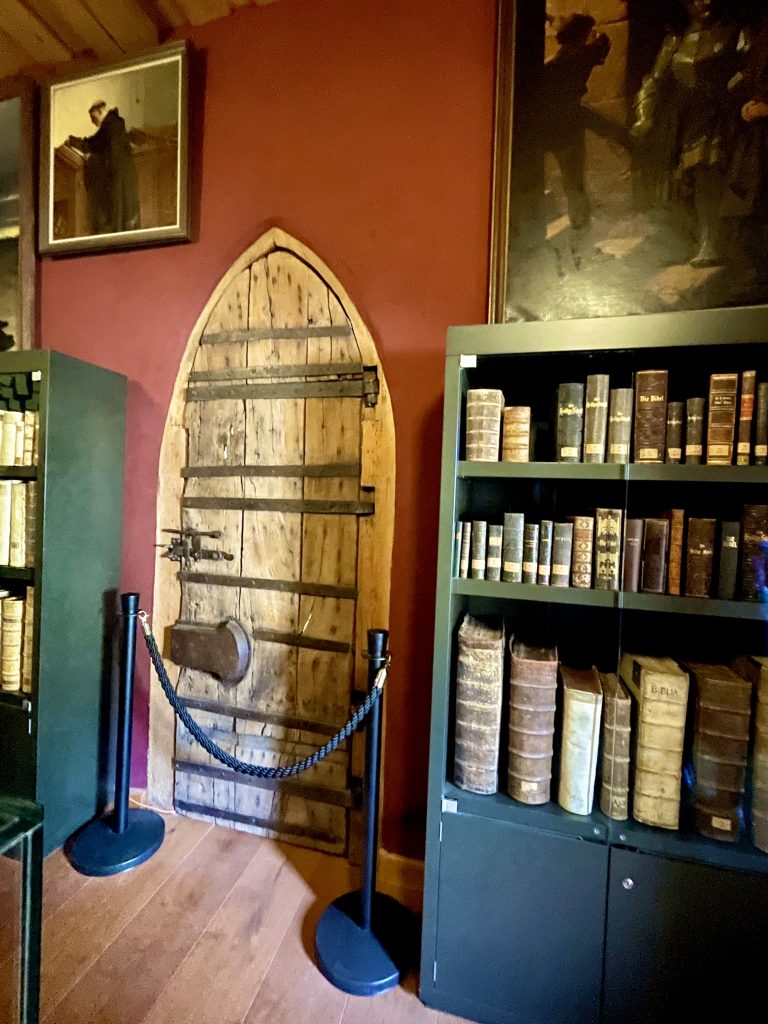
The Lutherhaus is now the world’s largest Protestant Reformation museum. On display are Luther’s pulpit, his monk’s habit, his Bible, and many priceless papers, manuscripts, and pamphlets.
This lectern was used regularly during recurring scholarly debates, so-called disputations. The chairperson of the disputation puts forward theses, which students are to attack or defend. The lowest part shows the coat of arms of the philosophical, the theological, the legal as well as the medical faculties.
A Luther portrait(above) is located in the center. Right above him we see an allegory of faith and the Hebrew name of God.
Lining the walls of the hall containing the lectern are many portraits of famous theologians and Reformers.
Figuring prominently in the room is this painting of Johannes Meisner (1615-1684), who served as a Professor of Theology at the University in 1667.
The Printing Press
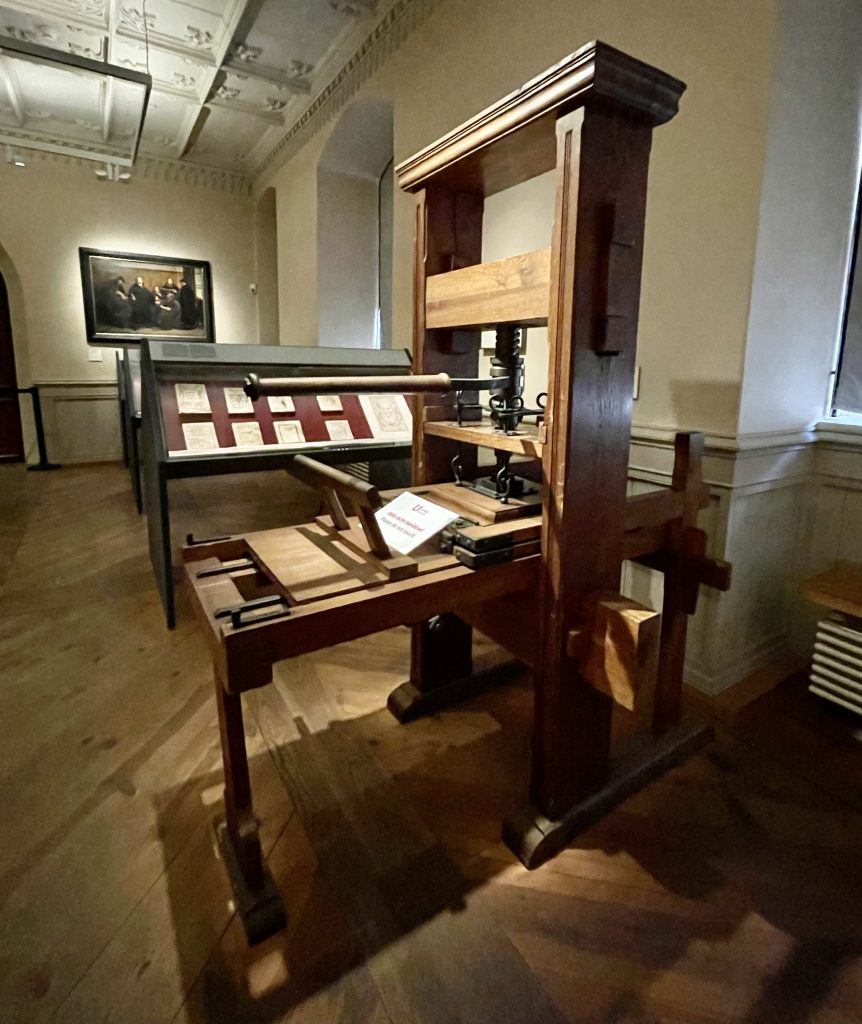
Johannes Gutenberg is known as the “Father of Printing” because he was the first to combine the use of molded movable metal type, a press, and printer’s ink. Although not an original, a replica is displayed at the Lutherhaus.
Luther took full advantage of the modern technology of the printing press to reproduce his translated Bible and many sermons.
Luther’s Prayer Book
Luther’s prayer book was published for the first time in 1522. Beside his Bible translation and the Small Catechism, it was Luther’s most frequently read book.
Thirty-seven more editions were published within Luther’s lifetime. Apart from the Nuremberg print, the copy displayed here at the Lutherhaus is the only other original in existence.
A Mighty Fortress Hymn
The earliest print of Luther’s Autumn 1527 written hymn, “A Mighty Fortress is Our God” can be found in the first edition of Joseph Klug’s hymn book from 1529. Not one single copy of that edition came to the Lutherhaus. In 1932, they acquired the only known copy of this second edition from 1533.
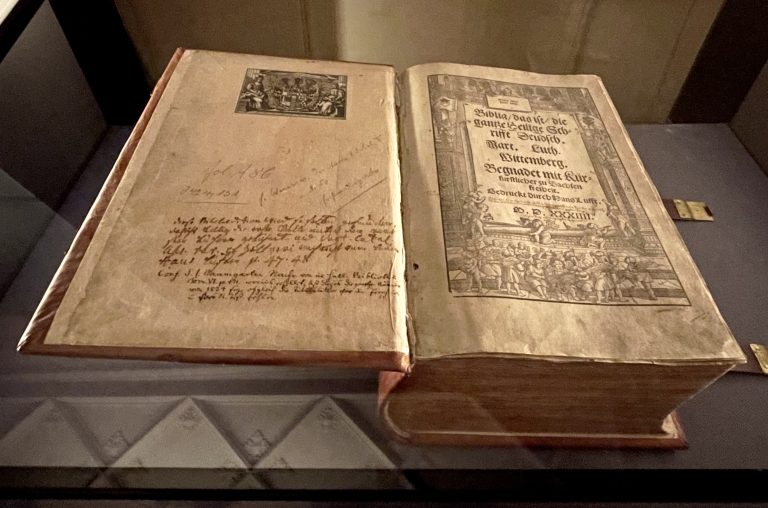
Luther’s Bible
Below is the first complete edition of Luther’s Bible translated in the High German language.
First complete edition of Luther’s Bible translation in High German language
While Luther is best known as the father of that Reformation, he’s also the father of the German language as we know it. Before Luther, there was no single German language — just a series of dialects. Two in particular were dominant: Upper German and Low German. As a child, Luther lived on the linguistic borderlands that divide the two, and his family moved back and forth across the boundary several times.
As Luther translated the Bible into German for everyday worshippers, that fluency helped him craft a version of the language that everyone could understand.
Luther on Indulgences
This was a traditional indulgence chest, where a Franciscan monk or priest read out the text of a papal bull of indulgence at a church. In the center of the wood-cut a citizen would place a coin into the chest, being overseen by another monk.
Believers could purchase this form (above) from indulgence preachers once his payment had been received. The priests taught that this form conferred the right to believers to confess his sins once in his life and at his hour of death to a priest in order to be granted complete absolution, and release from purgatory.
Using the printing press, Luther printed his “Sermon on Indulgence and Grace” (above) which became widely circulated. It contains a clear explanation of grace and God’s righteousness bestowed on believers that do not require works or payment.
Looking back, Luther wrote in 1541: “My theses were truly racing through all of Germany in a matter of two weeks.” Simply standing in front of these documents that literally changed the face of God’s church forever was truly humbling and inspiring.
St. Mary’s Church (Stadtkirche)
From 1512, St. Mary’s was the main place where Martin Luther preached, and the first Protestant service was celebrated there at Christmas 1521. From here, Martin Luther preached his eight famous ‘Invocavit Sermons” in the church.
The towers’ octagonal caps seen today were built in 1556-58 after the Gothic stone pyramids on them had been removed during the Schmalkaldic War so that cannons could be positioned on the platforms.
In 1525, Martin Luther and Katharina von Bora were married in the church by Johannes Bugenhagen, the town’s first Protestant pastor.
The first Protestant priests were ordained here and mass was celebrated in German there for the first time. As a result, St. Mary’s came to be known as the ‘mother church’ of the Reformation.
Additional rebuilding work took place in 1569-71.
In the 19th century and the 1920s, the church’s furnishings were partly replaced. St. Mary’s Town Church was last refurbished between 2010-2016.
The church was named a UNESCO World Heritage Site in 1996.
Stunning chandeliers hang in front of medieval age stained glass around the circumference of the main worship area.
Dappled sunlight beautifully highlights the ornate plaster work high above the pews.
Jesus looks down over the congregation from the highest center point on the ceiling.
The oldest part of St. Mary’s Town Church is the present-day chancel, which was built in around 1281. Construction work on the nave began in 1412.
St. Mary’s famous Reformation alter was built in 1547 by Lucas Cranach the Elder and Lucas Cranach the Younger. On the display side you will find a detailed painting of the Last Supper with Martin Luther as one of the disciples. Philipp Melanchthon and Johannes Bugenhagen have also been immortalized there.
The altar presents the Reformation’s main messages, showing the sermon, Holy Communion, baptism, confession, and Christ’s crucifixion and resurrection at the center of the Christian church.
The baptismal font is an ornately decorated medieval masterpiece by Hermann Vischer, the oldest exhibit in the church. Today, the vibrant St. Mary’s Town Church is the main place of worship of the Protestant community in Wittenberg.
Our group scattered to enjoy lunch in nearby restaurants with plenty of time before strolling to the historic Castle Church.
Castle Church
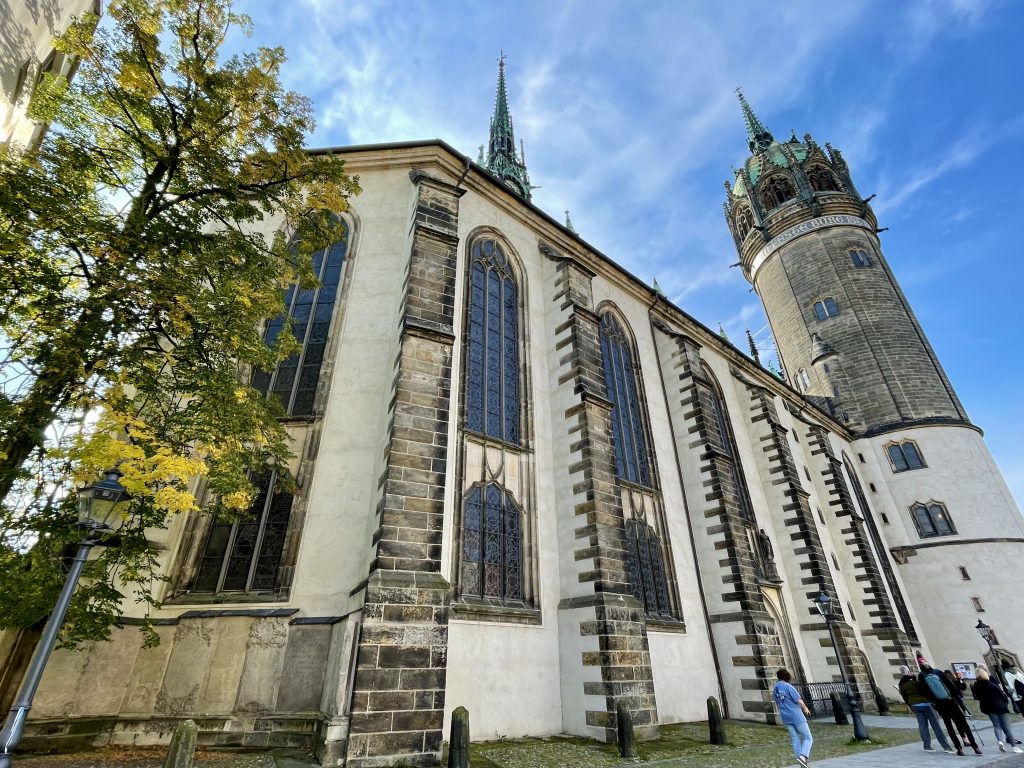
The castle church was built in 1506 on the foundation stones of the original castle of the Elector of Saxony. Construction of the Castle Church was completed in 1525 by Frederick the Wise. The church is most famous as the site where Martin Luther posted his 95 Theses.
The castle tower, visible from afar, is framed by a line from one of Luther’s hymns, “A Mighty Fortress is Our God.” The tower originally belonged to Wittenberg Castle along with a second tower that has been removed.
In 1760, the church was destroyed by a fire resulting from an attack during the Seven Years’ War. The wooden doors on which Luther had posted the Theses were destroyed in the fire. In 1858, King Frederick Wilhelm IV of Prussia replaced them with commemorative bronze doors weighing 2,200 pounds each.
Displayed above the doors is a painting depicting Martin Luther holding a German Bible and Melanchthon holding the Augsburg Confession. Both are kneeling at the cross.
This view from the inside (below) where the doors hang today are not passable by visitors in order to preserve the heavy bronze doors.
Between 1885 and 1892 the church was redesigned in a new gothic style as a Memorial Church of the Reformation.
In 1996 the Castle Church was designated as a part of the UNESCO World Heritage site.
The stunning organ and beautiful frescos add ambience and loveliness to this house of worship.
Martin Luther’s Tomb
Four days after Luther’s death in Eisleben, he was buried in front of the pulpit in the Castle Church. Next to Martin Luther’s grave is the resting place of his friend and fellow reformer, Philipp Melanchthon.
He is laid to rest under a low stone marker right under beautiful stained glass windows. As I taught our group who sat in the pews, the sun shone through the stained glass and cast beautiful colors on the floor around his marker.
The Old Latin School
During our afternoon free time, several of us visited the Old Latin School, which was built in 1564 as the city school for boys. It is managed by the International Lutheran Society of Wittenberg as a non-profit organization in partnership with the Lutheran Church-Missouri Synod. It is yet another bright spot in this beautiful city.
The Old Latin School sits directly adjacent to St. Mary’s Church (Stadkirche) where Martin Luther and other reformers preached a life-changing message of grace alone, faith alone, through Christ alone. Stemming from the new approach to education being taught by the Wittenberg reformers, the Old Latin School. The church and school were truly central birthplaces of the Reformation.
Special Ministry Connection
By the grace of God, I have a special ministry connection to the Old Latin School. Through WordRus ministries in Eurasia, several of my Bible studies have been translated into Ukrainian. As only God can orchestrate, the Old Latin School is currently housing many Ukrainian refugees. During our afternoon break, several in our group walked over to the school to meet Netalyia, who not only runs the school but is a Ukrainian refugee herself.
A Cambridge-educated teacher, she is proficient in English and has been a huge blessing for the refugees as she helps them with their required paperwork and begins the process of teaching them English.
We met her 11-year-old son and 8-8year-old daughter and are amazed at their positive, gentleness after escaping the war that rages in their homeland right now. We had a chance to leave them a financial blessing and pray with them for God to continue blessing their work.
It’s a Good Idea to Visit Wittenberg
Although there are no fairytale castles here like the Neuschwanstein Castle, being in the epicenter of the Protestant Reformation is a thrill of a lifetime. This is a great spot to enjoy rich history and beautiful historic sites within walking distance! This is one of the most charming small towns and hidden gems that I have ever visited.
If you are traveling here, it is an easy road trip or day trip with an early start and train ticket from many locations. Public transportation is easily accessible due to the train station just outside the city. I highly recommend adding it to your Germany itinerary to step back into the Middle Ages.
We concluded our walking tour passed the town hall and city center, then enjoyed a good time exploring the town on our own. We had a great time!
And even though we were here in September, it would be a lovely trip during the sunny days of the summer months. If you prefer medieval towns to bigger cities, don’t miss out on this small city jewel called Wittenberg on your next Germany trip.
{Some of these links are affiliate links. This means if you make a purchase through that link, the ministry may receive a small commission at no extra cost to you. Thank you for your ministry support!}
We arrived in Berlin today on a beautiful 58-degree morning. After breezing through customs, we met our tour guide, Matthias, to begin our Berlin adventures!
We gathered our luggage and boarded a nice coach bus, our transportation for the next eight days. We swung by the hotel to pick up the rest of our group, and 28 adventurers began the first day of our guided tour. As an aside, the city’s train station offers the easiest way to travel if you are not on a Berlin tour and want to save time.
World War II Reminders
As we walked the cobblestone streets toward the Kaiser Wilhelm Memorial Church, Matthias pointed out markers embedded in the cobblestone streets every so often. They mark the spots where a Jewish person (or family) had once lived but had been rounded up and sent to concentration camps for extermination.
Each marker remembers and honors the murdered Jews of Europe. These markers were embedded in front of a business, which used to be this family’s home.
Kaiser Wilhelm Memorial Church
A short walk took us to the first stop of our Berlin itinerary: the Kaiser Wilhelm Memorial Church. Originally constructed in 1895, it was a gift to the German people from Kaiser Wilhelm II. During a World War II bombing raid, the church was partially destroyed. The remnant has been beautifully preserved and offers a great place to see the resilience of the ordinary German citizens.
The rosette and stained glass windows were destroyed, as the damage is still visible in the stone’s pockmarks from shell fragments and absent gargoyles.
It was lunchtime so we dispersed to find the best places to enjoy local food. It was a welcome breather after the previous full day of travel. Several of our travelers tried German beer and discovered new favorites. German homemade noodles covered in cheese with meat were the best I had ever tasted!
Reichstag Building
We continued our walking tour with Matthias to the Reichstag building. Constructed in 1894 to house the Imperial Diet of the German Empire, it was severely damaged by fire in 1933 and fell into disuse after World War II. After its reconstruction in 1999 it again became the meeting place of the German parliament.
The beautiful glass dome visible on the roof has inner circular stairs all the way to the top. However, you can only enter with advanced notice and proper credentials, so be sure to obtain both if you wish to get inside.
Brandenburg Gate
We continued around the corner to the beautiful Brandenburg Gate. A former city gate, the Brandenburg gate was rebuilt in the late 18th century as a neoclassical triumphal arch. It has become one of the most well-known landmarks in Germany and is located in the western part of Berlin’s city center.
The gate suffered considerable damage in World War II and was inaccessible during the Berlin Wall’s use. It was fully restored in 2002. And one of the best things, of course, is that Little Luther had to be part of this historic visit!
Victory Column
We boarded the bus and traveled down the Unter Den Linden (main thoroughfare) through Berlin to view the Berliner Dom (Berlin Cathedral), Nikolai Quarter, and Potsdamer Platz on our way to the Victory Column.
The Victory Column sits in the middle of Berlin’s Tiergarten district. Atop the almost 61m high column, the larger-than-life bronze figure of the winged Victoria sits enthroned with a laurel wreath. The goddess of victory from Roman mythology, Berliners lovingly call her “Goldelse”.
Designed by Heinrich Strack, it was finished in 1873 to memorialize the victories of Prussia in the German-Danish War in 1864, the German War in 1866, and the Franco-Prussian War in 1870-71.
Four fluted column drums rise up on a roundabout with pillars, which gradually taper upwards. The first three drums are decorated with 60 gun barrels that were captured in the three wars, now covered in gold plating. Climbing up inside the Victory Column is the best way to see a panorama of West Berlin.
Checkpoint Charlie
Now located in the Allied Museum, “Checkpoint Charlie” was named by the Western Allies for this Berlin Wall crossing point. This is the location where Soviet and American tanks briefly faced off during the Berlin Crisis of 1961. This original sign still stands to mark the spot of crossing.
Memorial to the Murdered Jews of Europe
On a site covering 19,000 square meters, New York architect Peter Eisenman placed 2711 concrete slabs of different heights to fully immerse yourself in the open spatial structure. The memorial is on a slight slope and its wave-like form is different wherever you stand.
Walking the uneven cobbled pavers and losing your bearings among the taller slabs gives many visitors feelings of uncertainty such as the Jews would have felt.
Its openness and abstractness give you space to confront the topic of the holocaust in your own personal way. It was one of the popular areas for spending a lot of time in personal reflection and remembrance of the horrors of war. People can sit on the slabs, but standing on them is against the law.
Berlin Wall Memorial
Constructed by East Germany on August 13, 1961, this wall completely cut off West Berlin from surrounding East Germany. Lined with guard towers, a death strip, and closely monitored checkpoints, the wall served to prevent massive emigration and defection of East Germans.
Our tour guide, Matthias, grew up in East Germany for over 20 years, where some of his family were separated from them in West Berlin. He describes it as a very dark period in his life, where even as a young boy he knew that what was happening was wrong. Everything was gray and sad with the absence of hope.
The wall was finally opened on November 9, 1989, to great applause and celebrations of freedom in Germany and around the world. By 1990, the wall had been completely destroyed except for a few sections saved for historical purposes as a reminder of the damage of divisiveness (like above). Double cobblestone pavers running through the middle of Berlin now mark where the wall used to stand.
This was our full day tour of Berlin, the capital of Germany! We had a wonderful time and were definitely ready to see our hotel rooms after a very busy day. God is so good!
On future visits, especially if it is your first time to Berlin, I would recommend including a beer garden, the Charlottenburg Palace, Jewish Museum, Holocaust Memorial, Hackescher Markt, Soviet War Memorial, and at least one UNESCO World Heritage site.
{Some of these links are affiliate links. This means if you make a purchase through that link, the ministry may receive a small commission at no extra cost to you. Thank you for your ministry support!}
Inching its way into our subconsciousness, our media-driven culture subtly and inevitably draws us into the comparison trap. Such comparisons can generate negative thoughts and low self-esteem.
The Comparison Trap
We tend to compare gardens, homes, health, families, good works, careers, outward appearance, education, churches, and even denominations. Perhaps we are tempted to go so far as to determine our “lovable” quotient based on these external things. So what does the Bible say?
We can even fall into the comparison game with people in the pages of Scripture. Perhaps we see the faith of Esther, Hannah, Rahab, or Ruth and compare our faith level to theirs. We see the bravery of Daniel, Joseph, or David and compare our strength to theirs.
And at whatever level we indulge in comparison tends to directly impact how we feel about ourselves if we do not let Scripture remind us of our worth in Christ as a child of God. It is important to cultivate those dear friends who remind us that God’s greater love is the true love that we cannot live without.
Loving Yourself
The spiritual collateral damage of the comparison trap is believing that anything external determines your inward value in Christ. It comes down to loving yourself based on the fact that you are made in the image of God through the sheer grace of God.
“Loving yourself” or “self-love” may sound like a feel-good, psychological sound bite, but there is much truth to it as Christ-followers. Believing by faith how much Jesus loves us enables us to embrace loving ourselves as He does.
Culture’s idea of self-love and being lovers of pleasure can lead to a multitude of sins. Such self-centered love focuses on our own happiness.
There is a huge difference between being lovers of God and lovers of self. Loving God means loving yourself through His eyes. Being lovers of self means loving yourself through external measures and leaving God out of the equation altogether.
So if you struggle to love yourself in the way God loves you or feel worthy of love, allow these fifty best Bible verses about His love for us and loving others to sink deep into your soul.
Old Testament Verses
“For you formed my inward parts; you knitted me together in my mother’s womb. I praise you, for I am fearfully and wonderfully made. Wonderful are your works; my soul knows it very well. My frame was not hidden from you, when I was being made in secret, intricately woven in the depths of the earth” (Psalm 139:13-15).
“Though the mountains be shaken and the hills be removed, yet my unfailing love for you will not be shaken nor my covenant of peace be removed,” says the Lord, who has compassion on you (Isaiah 54:10).
“How priceless is your unfailing love, O God! People take refuge in the shadow of your wings” (Psalm 36:7).
“You are altogether beautiful, my love; there is no flaw in you” (Song of Solomon 4:7).
“Because of the Lord’s great love we are not consumed, for his compassions never fail. They are new every morning; great is your faithfulness” (Lamentations 3:22-23).
“Whoever gets sense loves his own soul; he who keeps understanding will discover good” (Proverbs 19:8).
“Know therefore that the LORD your God is God; he is the faithful God, keeping his covenant of love to a thousand generations of those who love him and keep his commandments” (Deuteronomy 7:9).
“Because your love is better than life, my lips will glorify you” (Psalm 63:3).
“For I know the plans I have for you,” declares the Lord, “plans to prosper you and not to harm you, plans to give you hope and a future” (Jeremiah 29:11).
“But you, Lord, are a compassionate and gracious God, slow to anger, abounding in love and faithfulness” (Psalm 86:15).
“You shall not take vengeance or bear a grudge against the sons of your own people, but you shall love your neighbor as yourself: I am the Lord” (Leviticus 19:18).
“Help me, Lord my God; save me according to your unfailing love” (Psalm 109:26).
“The Lord your God is with you, the Mighty Warrior who saves. He will take great delight in you; in his love he will no longer rebuke you, but will rejoice over you with singing” (Zephaniah 3:17).
“Give thanks to the God of heaven. His love endures forever” (Psalm 136:26).
“The Lord appeared to us in the past, saying: “I have loved you with an everlasting love; I have drawn you with unfailing kindness” (Jeremiah 31:3).
New Testament Verses
“For God so loved the world that he gave his one and only Son, that whoever believes in him shall not perish but have eternal life” (John 3:16).
“The Father himself loves you because you have loved me and have believed that I came from God” (John 16:27).
“Whoever does not love does not know God, because God is love” (1 John 4:8).
“For no one ever hated his own flesh, but nourishes and cherishes it, just as Christ does the church” (Ephesians 5:29).
“But God demonstrates his own love for us in this: While we were still sinners, Christ died for us” (Romans 5:8).
“And over all these virtues put on love, which binds them all together in perfect unity” (Colossians 3:14).
“Greater love has no one than this: to lay down one’s life for one’s friends” (John 15:13).
“But because of his great love for us, God, who is rich in mercy, made us alive with Christ even when we were dead in transgressions—it is by grace you have been saved” (Ephesians 2:4-5).
“So do not fear, for I am with you; do not be dismayed, for I am your God. I will strengthen you and help you; I will uphold you with my righteous right hand” (Isaiah 41:10).
“I have been crucified with Christ and I no longer live, but Christ lives in me. The life I now live in the body, I live by faith in the Son of God, who loved me and gave himself for me” (Galatians 2:20).
“We love because He first loved us” (1 John 4:19).
“Love is patient and kind; love does not envy or boast; it is not arrogant or rude. It does not insist on its own way; it is not irritable or resentful; it does not rejoice at wrongdoing, but rejoices with the truth. Love bears all things, believes all things, hopes all things, endures all things. Love never ends. As for prophecies, they will pass away; as for tongues, they will cease; as for knowledge, it will pass away” (1 Corinthians 13:4-8).
“May the Lord direct your hearts into God’s love and Christ’s perseverance” (2 Thessalonians 3:5).
“So that Christ may dwell in your hearts through faith. And I pray that you, being rooted and established in love, may have power, together with all the Lord’s holy people, to grasp how wide and long and high and deep is the love of Christ, and to know this love that surpasses knowledge—that you may be filled to the measure of all the fullness of God” (Ephesians 3:17-19).
“Dear friends, let us love one another, for love comes from God. Everyone who loves has been born of God and knows God” (1 John 4:7).
“See what kind of love the Father has given to us, that we should be called children of God; and so we are” (1 John 3:1).
“No, in all these things we are more than conquerors through him who loved us. For I am convinced that neither death nor life, neither angels nor demons, neither the present nor the future, nor any powers, neither height nor depth, nor anything else in all creation, will be able to separate us from the love of God that is in Christ Jesus our Lord” (Romans 8:37-38).
“Let no one despise you for your youth, but set the believers an example in speech, in conduct, in love, in faith, in purity” (1 Timothy 4:12).
“Owe no one anything, except to love each other” (Romans 13:8).
“And so we know and rely on the love God has for us. God is love. Whoever lives in love lives in God, and God in them” (1 John 4:16).
“And now these three remain: faith, hope and love. But the greatest of these is love” (1 Corinthians 13:13).
“As the Father has loved me, so have I loved you. Now remain in my love” (John 15:9).
“And hope does not put us to shame, because God’s love has been poured out into our hearts through the Holy Spirit, who has been given to us” (Romans 5:5).
“Humble yourselves, therefore, under God’s mighty hand, that he may lift you up in due time. Cast all your anxiety on him because he cares for you” (1 Peter 5:6-7).
“This is how God showed his love among us: He sent his one and only Son into the world that we might live through him. This is love: not that we loved God, but that he loved us and sent his Son as an atoning sacrifice for our sins” (1 John 4:9-10).
“But I say to you who hear, Love your enemies, do good to those who hate you” (Luke 6:27).
“A new commandment I give you: Love one another. As I have loved you, so you must love one another. By this everyone will know that you are my disciples, if you love one another” (John 13:34-35).
“Keep yourselves in God’s love as you wait for the mercy of our Lord Jesus Christ to bring you to eternal life” (Jude 1:21).
“There is no fear in love. But perfect love drives out fear, because fear has to do with punishment. The one who fears is not made perfect in love” (1 John 4:18).
{Some of these links are affiliate links. This means if you make a purchase through that link, the ministry may receive a small commission at no extra cost to you. Thank you for your ministry support!}
The Philistines had captured David in Gath. And even though he was a prisoner of war during that difficult time, David penned these beautiful words: “You keep track of all my sorrows. You have collected all my tears in your bottle. You have recorded each one in your book” (Psalm 56:8, NLT).
David had every reason to cry and experience sorrow. He could have easily slung anger in God’s direction. Instead, he turned his face toward God to receive comfort.
But his words may raise a question. Did David mean that God used literal bottles as tear catchers, or was it simply a figure of speech?
It Takes a Lot of Tears to Fill a Bottle
Life happens, and as a result, so do tears. Whether we shed tears of joy or sadness or simply when God moves us in our soul, every tear holds meaning to Him. Pause to allow that truth to sink in for a moment. With seven billion plus people on the planet, God not only knows your name but notices each and every time you shed a tear.
In other words, our tears are not futile. They are not silly or a sign of weakness. Nor are they a waste of time as we impatiently desire to simply move on. Shedding tears reminds us of our humanity and vulnerability. We would be hard-pressed to recall every time we shed tears throughout our lifetime. But our heavenly Father remembers.
Tear Bottles in Antiquity
A quick history of the tear bottle in ancient Rome is in order. Around the time of Christ, Roman tear bottles were fairly common. Mourners in Roman times would capture their tears in small glass bottles and leave them in burial tombs as a symbol of respect.
Legend even says that during the Roman period sometimes women were paid to capture their tears in bottles as they accompanied the funeral procession of a deceased person. The more they cried and the more tears they captured, the more they were compensated, according to legend in biblical times.
Tear Bottles in the Victorian Era
Also known as lachrymatory bottles, tear bottles appeared once again during the 19th century in the Victorian era as a sign of mourning lost loved ones:
“The Victorian era is also known for its fascination with death. Elaborate rituals surrounded the everyday occurrences of dying and grieving, and it was in this environment that tear bottles re-surfaced as a popular icon of grief and grieving.”
Tear Bottles During America’s Civil War
Since the U.S. Civil War happened during the Victorian era, the resurgence of a tear vial or tear jar goes hand-in-hand with that tragic time in our country’s history:
“Stories of soldiers leaving their wives or new brides with a tear bottle can be found in the literature of the day. Some husbands are said to have hoped that the bottles with special stoppers would be full upon their return, as an indication of their wives’ devotion. Sadly, many of these men never made it back home.”
Is David’s Reference to God’s Tear Bottle Based on Fact?
As David endured that dark season in his life, he poured out the words of Psalm 56 to the Lord. Were David’s words simply wishful thinking, poetic language, or the fact that God actually bottles our tears?
Scholars generally agree that King David was using the metaphor of a small bottle to signify remembrance. By capturing the image of God catching our tears, we are reminded that God remembers and cares about our suffering.
In writing those words, David expresses a deep, abiding trust in God and His watch care over His children. Even when no one around us sees our tears, God sees each one. And David calls attention to that truth in the very next verse: “This I know, God is for me” (Psalm 56:9, ESV).
This I know.David knew that God was for him and never against him. As God’s beloved children, this we know, as well. Such knowing transcends the hurts and tears of this world to embrace the light and joy of eternity.
God is on Our Side
David initiated Psalm 56 with a guttural grasping for God amidst enemy attack: “Be gracious to me, O God, for man tramples on me; all day long an attacker oppresses me” (Psalm 56:1, ESV). That may describe you this very day. It has certainly described many of my days where I have lost count of my tossings. He keeps account of my wanderings.
Then David turns his attention from his attackers onto God: “In God I trust, I shall not be afraid. What can man do to me? (Psalm 56:11, ESV). Such comfort! Such truth!
The Apostle Paul reminds us of our ultimate enemy’s identity: “For we do not wrestle against flesh and blood, but against the rulers, against the authorities, against the cosmic powers over this present darkness, against the spiritual forces of evil in the heavenly places” (Ephesians 6:12, ESV).
The only One who can fight and defeat our ultimate enemy is God. And David knew that. God’s people are engaged in a battle in the spiritual realm requiring spiritual armor. Stepping on the battlefield in our own strength is a recipe for decimation.
So David turned his face and surrendered his sorrow to God alone. We do not know if David was in solitary confinement, but David knew that he was never alone. The God of the heavenly armies stood with him.
When We Suffer Because We Are His Disciples
If you have walked your faith journey for any length of time, you have experienced attack and sorrow simply because you follow Jesus Christ. In fact, Jesus took time in the New Testament to warn and encourage His disciples about that very fact:
“Everyone will hate you because of me” (Luke 21:17, ESV).
“For I will show him how much he must suffer for the sake of my name” (Acts 9:16, ESV).
“Then they will deliver you up to tribulation and put you to death, and you will be hated by all nations for my name’s sake” (Matthew 24:9, ESV).
Such sorrow, loss, and suffering generate real tears. And as God’s image-bearers, Jesus feels our sorrow and is moved to tears: “Jesus wept” (John 11:35, ESV). The tears of our Lord speak volumes about His dispensation of grace. His dear friend, Lazarus, died. Jesus wept in that mourning period.
God may not have an actual bottle where He keeps our tears or a book of remembrance where He records our sorrows. However, He remembers all the things that happen in our lives, including the suffering endured for His sake.
Tears Speak Their Own Language
Tears speak a language all their own. They reveal what moves our souls. Tears of compassion often precede reaching out to help one another. Tears of joy often precede hugging the stuffing out of the nearest human being. Tears of sorrow often precede us straining after the soul comfort that only comes from God.
According to scientists, shedding tears is physically healthy: “Tears contain natural antibiotics called lysozymes. Lysozymes help to keep the surface of the eye healthy by fighting off bacteria and viruses. Because the cornea has no blood vessels, the tears also provide a means of bringing nutrients to its cells.”
What soap is for the body, tears are for the soul. For dirt, there is soap. For despair, there are tears. God does not forget the flood of sacred tears that have streamed down our cheeks. God remembers and sends His comfort without fail.
Our Future Tears
Our tears hold significant meaning for God. In fact, He goes so far as to reassure us: “He will wipe every tear from their eyes. There will be no more death or mourning or crying or pain, for the old order of things has passed away” (Revelation 21:4).
God sees when we ugly cry. It is a direct result of living in this sinful world. But in the presence of our Savior, tears are replaced by eternal light and joy that never ends. Ever. In the New Heaven and the New Earth, crying, pain, and death will be replaced with happiness, joy, and love.
Jesus’ Ultimate Pain Offers Us Ultimate Freedom
When Jesus took our nails on the cross, He also took on all of our sins. Every sin we have committed, are currently committing and will commit for the rest of our lives.
For the glory of God, Jesus experienced great sacrifice to relieve us from the eternal burden of sorrow and separation from God. And on the third day, when God raised Jesus from the dead, He also offered the hope of forgiveness and restoration in Christ Jesus.
As long as God keeps us here on earth, we will experience the pain of this life. But we do not suffer without hope. And hope is the game-changer.
Take Heart
If you are experiencing hard times or if this season of dark times, take heart. God sees your pain. He feels the sorrow and depression you experience. Reach out to Him in prayer. Journal your thoughts and feelings.
And one day, He will faithfully remove all of it in the light of His glorious grace. Lifted by the wings of His love, there will be no more pain one day.
In the meantime, like David’s confidence in Psalm 56, we keep turning our faces to the Source of all comfort and hope in the midst of our suffering. My life verse speaks directly about this hope: “Now faith is the assurance of things hoped for, the conviction of things not seen” (Hebrews 11:1).
When life crashes hard and the tears flow, O Lord, enable us to stand strong on the Rock of Ages.
{Some of these links are affiliate links. This means if you make a purchase through that link, the ministry may receive a small commission at no extra cost to you. Thank you for your ministry support!}