13 Best Bible Study Methods

Whether you are a new or seasoned Christian, knowing how to study the Bible and where to start are daunting tasks. Been there. Done that. What are the best Bible study methods?

Technology allows us to have the Bible at our fingertips 24/7. Smartphones, tablets, and laptops enable us to access God’s Word just about anywhere in the world.

We can attend church online, listen to sermons and podcasts as we drive, or experience worship through music videos without leaving our homes.

The entire Bible is more accessible than at any other point in history, yet “How to Study the Bible” is searched online over 8,500 times each month.

Access to the Word of God is not the issue. Yet our knowledge of its contents is decreasing.

Where Do I Start?

I will say it again: knowing how to study the Bible and where to start are daunting tasks. Our spiritual growth stagnates the longer we wait. Many Christians lack practical tools to study the Bible effectively.

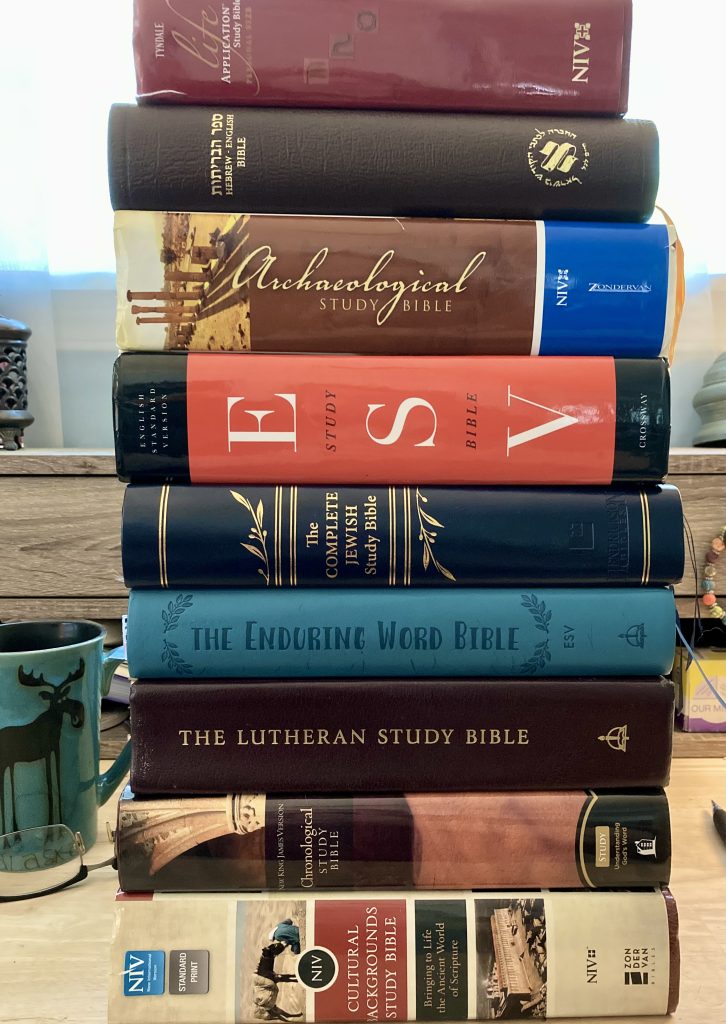
It takes time to incorporate a new habit, discover the best way to study, and the best study bibles to utilize on this new journey.

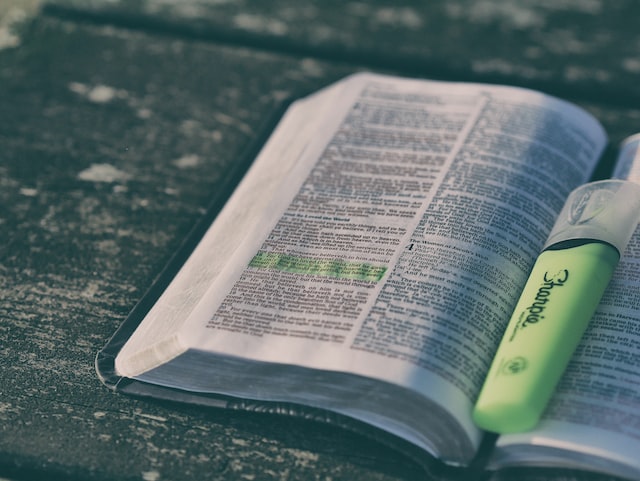
Related: What to Highlight in the Bible and the Best Way To Do It

What to Highlight in the Bible

Why Is Knowing Scripture Important?

Studying Scripture changes our lives from the inside out. We learn how to love like God. Forgive like Jesus. And treat enemies with kindness. Counter-cultural to say the least.

Most importantly, the Bible reveals God’s beautiful truth that He sent His only Son to rescue us from sin, death, and the grave!

I first started studying Scripture after becoming a Christian at age 23. I did not know anything about the Bible. There’s an Old Testament and a New Testament? You get the gist.

Some days, I felt that my basic questions were off-putting to mature Christians. I lacked a good starting point, a good study bible, or a good direction on which steps to take first.

Over the past thirty-four years, God has cultivated in my daily life solid tools to study, memorize, and apply Scripture every day. I am passionate about biblical literacy.

Bible study methods

Participating in church or small group Bible studies along with Sunday sermons is important. However, taking a personal lead in developing effective self-study methods stokes that flame of faith.

Some of these methods may work better for you than others. Invest some time trying each one to discover which works best for your personality and schedule.

First Things First: Start with Prayer

Scripture is God’s breath exhaled onto the page. Focusing your mind and thoughts on Him comes first and foremost. Always begin your study time with prayer.

Perhaps, one similar to this one:

Dear Lord, as I open my Bible today, open my heart to hear your words of truth. I pray that your Word comes alive in me. Remove all distractions right now. Open my mind to gain understanding as your words heal, teach, inspire, convict, and restore my heart. Enable your words to take root, grow and blossom in my life. Bring your light of understanding and peace that passes all understanding. In Jesus’ name, Amen.

Method #1: Study One Book of the Bible

I suggest starting with a small book from the New Testament. The books of James, 1 Peter, and 1 John are all good choices for first-time studies.

Depending on your schedule, plan to spend 3-4 weeks studying the book you have chosen. Take time to read through the entire book more than once.

Look for themes that may be woven throughout the chapters. For example, the book of James contains an obvious theme of persevering through hard circumstances. Write down the verses around each theme.

Also, make a note of life application principles within the book. In James, a clear life application is that words need to result in action. Saying that we forgive is vastly different from moving toward forgiveness.

As you meditate on the themes and life application principles, allow God’s Word to speak to you personally. Where can those themes or applications apply to your life right now?

Related: How Many Chapters Per Day to Read the Bible in a Year?

How Many Chapters Per Day To Read The Bible Each Year

Method #2: Read Straight Through the Bible

Reading the Bible straight through (without taking notes) allows us to “hear” it like Israel’s nomadic tribes. Individuals did not have parchment, so the Bible stories were shared verbally.

Note that you do NOT have to start at the beginning of the Bible. The Bible contains 66 separate books compiled into one. You can start anywhere you like, just use a checklist to ensure you read through all 66.

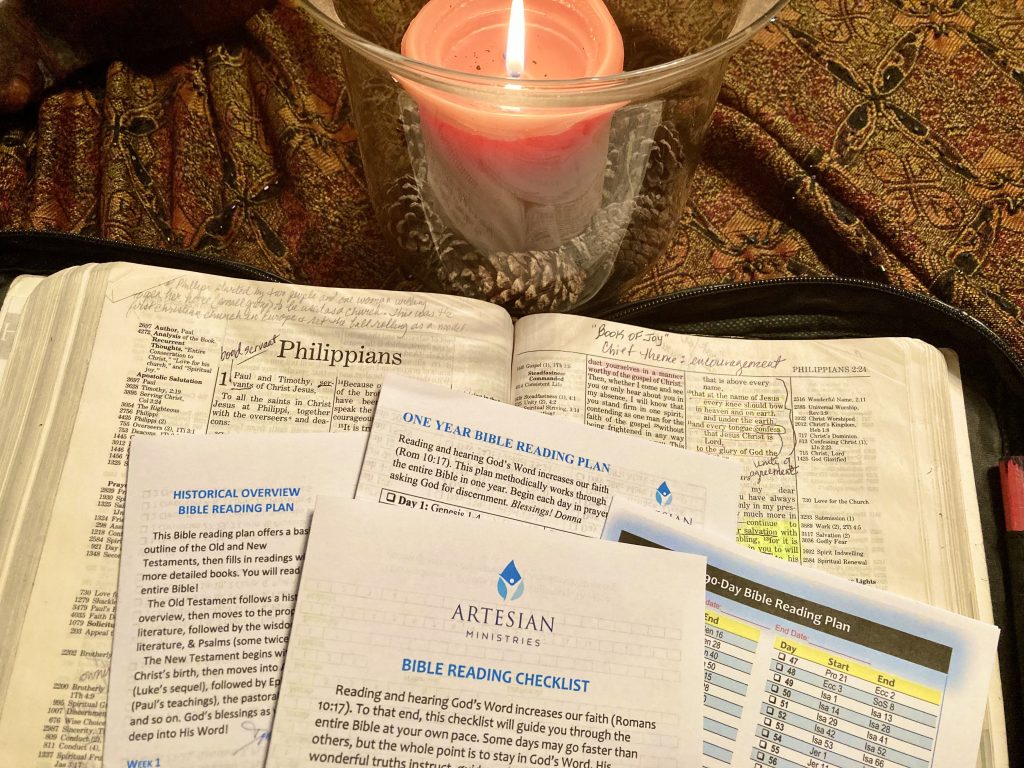
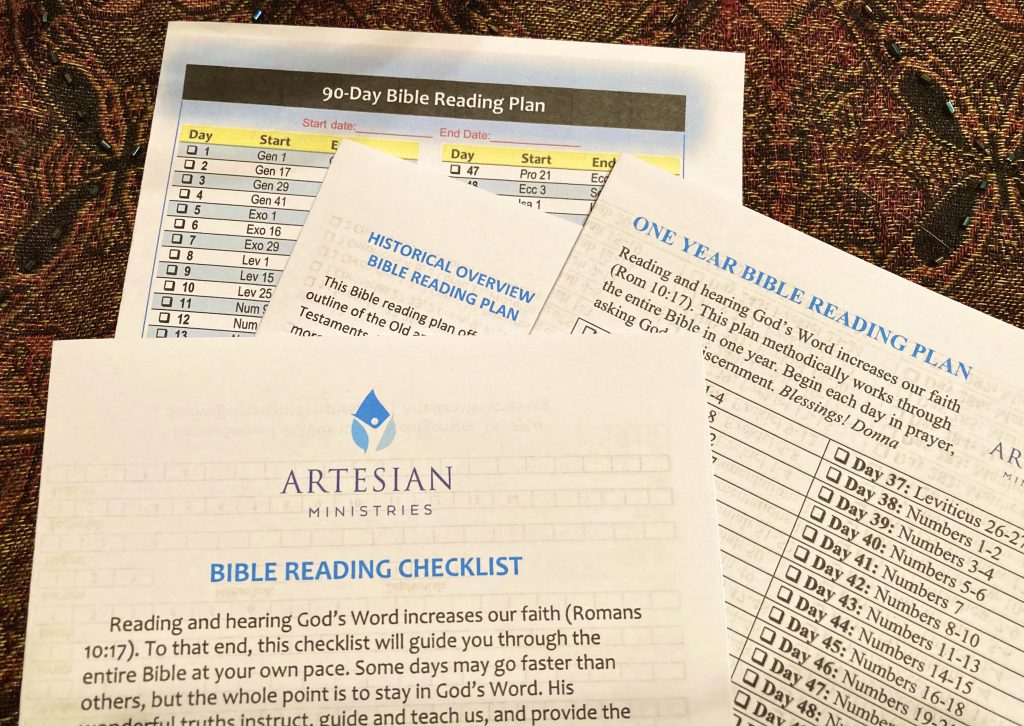
Also, choose a Bible version that is easy to read. Let’s face it, if you don’t understand it, you won’t get far. Use one of these free Bible reading plans.

There are dozens of translations and different versions of God’s Word, but the King James version is probably the most difficult. For clear reading, I suggest the English Standard Version (ESV), New Living Translation (NLT), or The Message versions.

As you settle down for uninterrupted reading, imagine story time around an evening campfire. Or story time in the afternoon with milk and cookies. (Flashback to elementary school.)

This method allows us to see and hear the overarching story of God’s love and goodness to His children from Genesis to Revelation. His passionate, relentless pursuit of us toward salvation comes across with beautiful clarity.

Related: Free Bible in One Year Reading Plans – Printable

bible reading plans

Method #3: Write Out Parts of the Bible

Our culture moves at lightning speed. Since we are technologically driven (for the most part), we desire things to move fast – such as food, lines, and traffic.

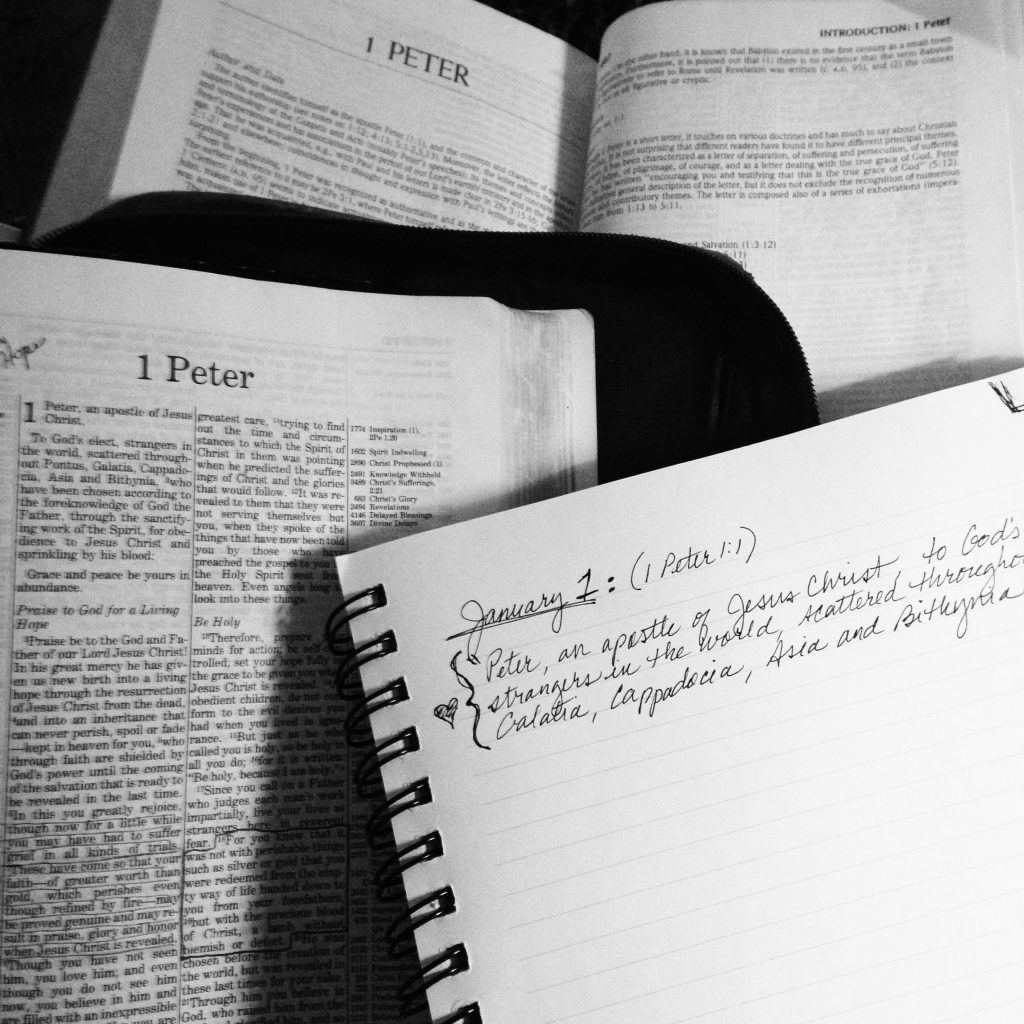
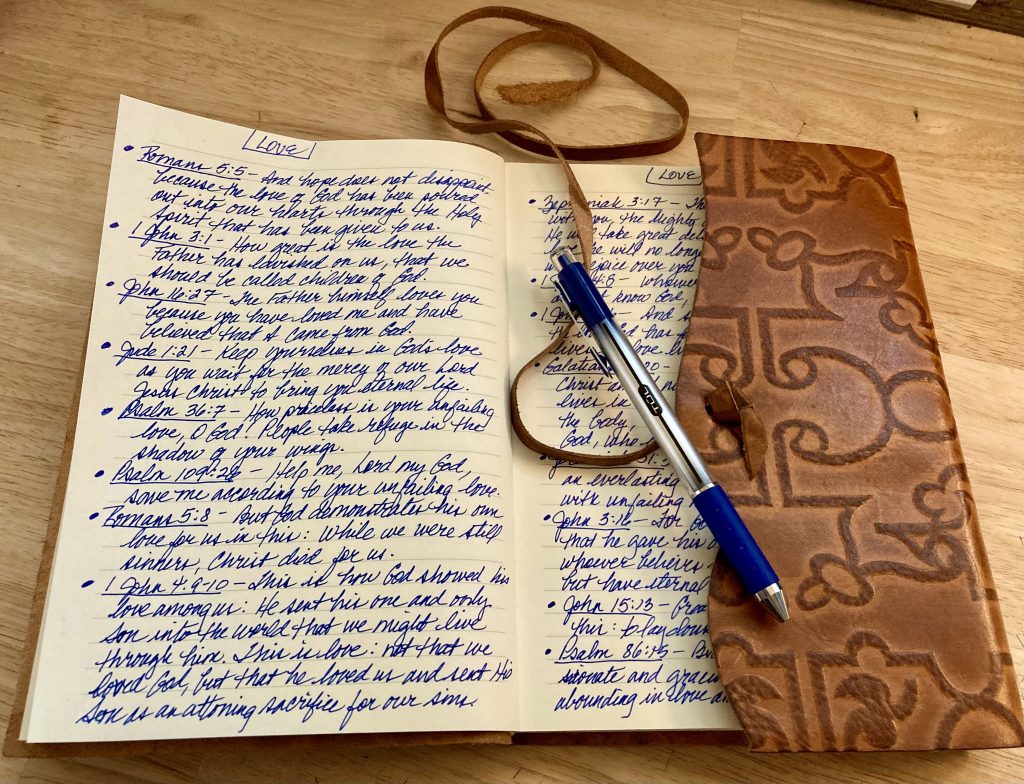
Absorbing Scripture into the marrow of our bones takes time. Breathing space. Quiet surroundings. That’s where grabbing a pen, your Bible and a journal plays a vital role.

The rhythm of physically writing slows us down to absorb the words. Words have a chance to stick with us past the moment – especially if you want to memorize particular verses.

As an author, I love the steady cadence of writing out God’s Word. That cadence resounds in my soul to retain those life-giving words. I recently started once again with the book of Matthew.

Make writing fun! I use my favorite Tul pens and a variety of colorful journals that are readily available and inexpensive.

Related: Best Pens and Supplies for Ultimate Bible Journaling

bible journaling

Method #4: Character Study

One of the most frequently asked questions is, “Who’s who in the Bible?” The follow-up question is usually, “Why do they matter?”

I love reading current biographies of historical great men and women because they lend insight into the person. Doing character studies throughout Scripture accomplishes much the same with an added bonus: we glimpse the character of Christ.

For instance, Scripture contains only two books named after women: Ruth and Esther. My quest to understand Esther using this method turned into a full-blown, published Bible study. Talk about an amazing woman of faith that God used mightily! We can learn invaluable life lessons from Esther.

https://cph.idevaffiliate.com/idevaffiliate.php?id=110&url=334

Studying characters matters because their examples teach us how to actually live a life of faith:

  • Moses steadfastly led the Israelites through the desert for forty years.
  • Joseph never complained about being thrown into prison after refusing Potiphar’s wife.
  • Mary did not doubt when God told her that she would be the virgin mother of our Savior.

Character studies allow us to see how God moved in their life. How He provided for their needs, disciplined them toward success, and loved them beyond measure. He still does that today with you and me.

Related: Characteristics and Faith of Abraham in the Bible

Characteristics and Faith of Abraham in the Bible

Method #5: Topical Bible Study

This method is similar to the Character Study method listed above. However, instead of a person, pick a topic. Temptation, peace, addiction, and forgiveness are a few that could be tackled.

I remember as a new Christian being confused by what it meant to be “quenched” or “hydrated” by the Lord. What does “living water” mean? Years later, I used this topical Bible study method and turned that personal quest into another full-blown Bible study.

https://www.artesianministries.org/book/quenched-christs-living-water-for-a-thirsty-soul/

What topic do you long to know more about how God instructs His children? Use the concordance in the back of your Bible to find where that topic appears in Scripture. Then grab a notepad.

Read and/or write down all of those passages. What does God teach about that topic? Are common misconceptions debunked? Most importantly, meditate on how God can apply those truths to your spiritual journey.

Related: What is the Spiritual Meaning of Rain in the Bible?

spiritual meaning of rain in the bible

Method #6: Memorize Scripture

Hiding God’s Word in our hearts is vital. When the enemy knocks us to the ground, God brings relevant verses to mind to comfort us and bring His peace. Scripture memorization is a crucial line of defense.

One of the first portions of Scripture I memorized was the Armor of God from Ephesians 6:10-18. The evil in this world is evident – just turn on the evening news. As His children, we need to know God has protected us from head to toe.

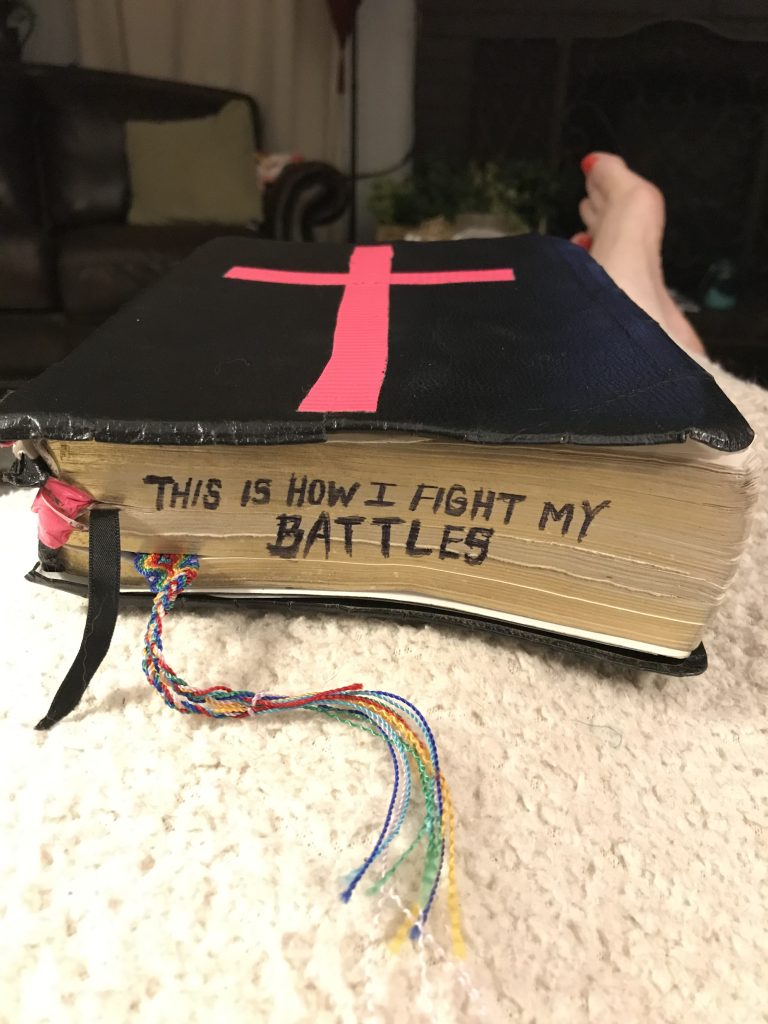
If you are facing a particular battle right now start with verses that speak to that situation. If you are experiencing joyful circumstances, start with passages that praise God. I wrote an entire Bible study on the armor of God because it is that important.

Yes, all of Scripture is worthy of memorizing. However, focusing on ones that directly apply to your current situation will be more meaningful. Memorization and real-time application will come easier.

Related: Best Bible Verses to Memorize – Plus Free Download

Best Bible Verses to Memorize

Method #7: Bible Journaling (the SOAP Method)

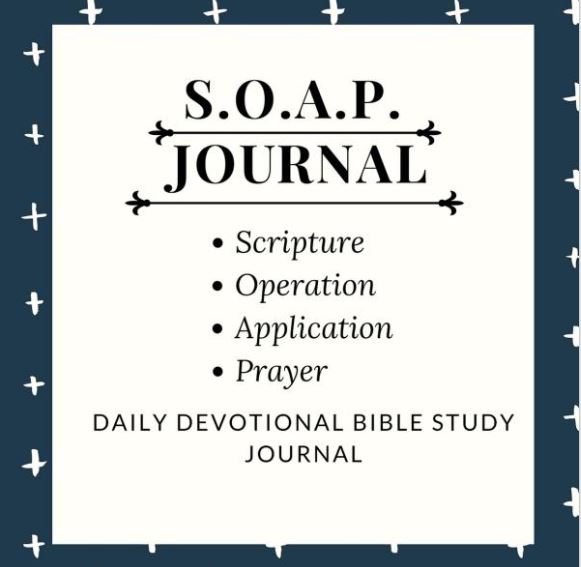
A vital step in our faith journey is applying Scripture to our lives. A popular, helpful method appeared a few years ago called “S.O.A.P.” It stands for Scripture, Observation, Application, and Prayer.

Bible study methods

I used this method effectively when writing The God of All Comfort based on 2 Corinthians 1:3-7. Paul teaches how God comforts us in our affliction, which enables us to also offer His compassionate comfort to others.

The S.O.A.P. method is simple. Pick a section of Scripture each morning or evening during your devotion time. Using a notepad or SOAP journal:

  • Write down the Scripture passage.
  • Read through it again and record your Observations.
  • Jot down how you can Apply those truths in your life.
  • Close with Prayer asking God to make that verse personal to you.

When you come across your S.O.A.P. journals later in life and read through them, you will be amazed and encouraged by God’s faithfulness along your journey.

Related: 15 Top Prayer Card Ideas With Verses and Prayers

Prayer card with bible verses and prayers

Method #8: Single Word Study

Have you ever wondered what the Bible says about fear? Love? Humility? Kindness? Such wondering offers a perfect opportunity to undertake a single-word study.

When I experienced divorce in 2010, I did not feel very loved (to say the least). One of my pastors challenged me to read through the Bible and write out every passage that talked about God’s love. WOW!

That undertaking left me without a trace of doubt about how much God loves me, even when people may not. Writing all of those love passages consumed an entire journal. If I am ever feeling unloved, I still pull out that journal. I don’t feel unloved for long.

If you desire to be more kind, I challenge you to search for every instance in Scripture where God talks about kindness. Write them out in a journal. Ask the Lord to enable you to be more kind. God will blow you away as He works through this discipline.

Method #9: Coloring Scripture (Bible Marginalia)

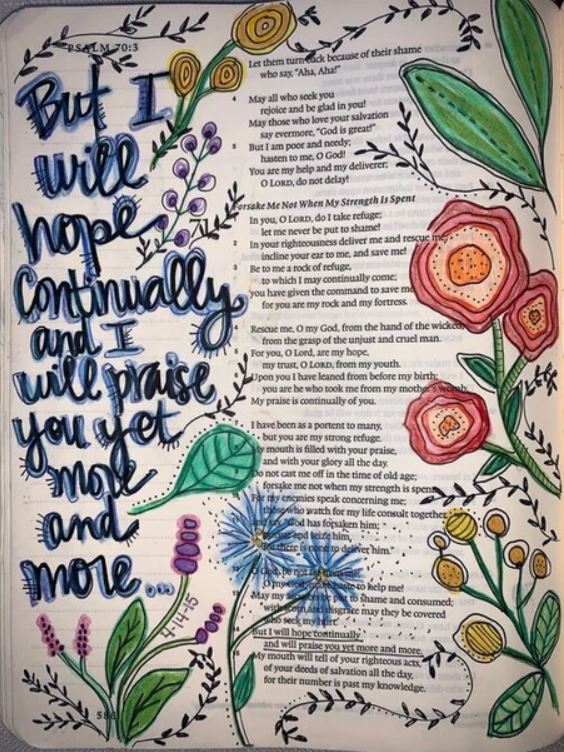
Bible marginalia appeared on the scene a few years ago and has exploded in popularity. If you are an artistic person, this method is a great tool.

The premise is to meditate on a Bible verse as you highlight, color, and create art around it.

https://www.visualfaithmin.org/bible-journaling

Friends of mine have a hugely popular Visual Faith® Ministry. There are hundreds of free graphics and ideas (where I downloaded the one above) that include examples of how to highlight, color, and visually enhance your Bible reading experience.

The Bible is God’s inspired Word – a TEXT full of grace and love to you. Think of the margins as your invitation to text back your response of love, gratitude, praise, or devotion. Adding a date to your pages creates a story of your spiritual journey – and leaves behind a legacy of faith for your children and grandchildren.

Visual Faith® Ministry

The goal is to utilize your God-given artistic gifts to engage with and meditate on Scripture. Be sure to keep in mind the main purpose: meditate on that passage(s) as you use your artistic talents.

Method #10: Read Scripture Like a Novel

Right from Genesis 1, Scripture opens as an epic, cosmic tale about the heavens and the earth. We see God creating everything out of nothing. We see marital drama between Adam and Eve. Blessings and curses. Covenants. Promises. Murder. Adultery. Betrayal. War. Political subversion. Even cinematic-worthy battles.

If you are a writer or wannabe screenwriter, simply look at the account of David’s battle with Goliath in 1 Samuel 17. You can’t make that stuff up. It flat out reads like an award-winning novel.

https://cph.idevaffiliate.com/idevaffiliate.php?id=110&url=379

There are main characters, metanarrative, and deep plot development that become clearer when reading the Bible like a novel. The settings are both intimate and dramatic. The important difference? Scripture is non-fiction.

The overarching message of the Bible becomes crystal clear: God’s love towards us never fails.

If you love stories, read through the Bible like a novel. Mentally insert yourself into those stories. Visualize your surroundings. See how God challenges and rescues. Scripture comes alive!

Related: Powerful Bible Verses to Start Your Day with God

Bible Verses to Start Your Day with God

Method #11: Pray Through the Psalms

As a new 20-something Christian struggling with how God could love someone like me, a godly mentor pointed me to the Psalms.

The Psalms put into words the hurricane of thoughts whirling in my head that I could not verbalize. She suggested that I use the Psalms as a prayer guideline.

It was a spiritual game-changer.

Every emotion that we experience can be found in the Psalms. Anger. Love. Bitterness. Praise. Confusion. Hurt. Thanksgiving. You name it, and it’s in the Psalms.

This method can be written out in a prayer journal, as well as spoken aloud. Since prayer is spoken aloud, start by reading the psalm aloud. You will hear the emotion of each psalmist.

Why do emotions matter?

God created us with emotion to move our hearts and soul beyond our comfort zones. What emotions are in the psalm? The key to relating to the Psalms is putting yourself in the place of the psalmist. Speak as if you were writing it from your own experience. Joy. Heartbreak. Victory. Loss.

King David penned almost half of the psalms. He poured his heart out to God in his writing. And as he wrote, God’s peace and comfort faithfully surrounded him. And his writing reflected it.

Related: 25 Best Prayers and Reflections for Lent

Lent prayers

How to pray?

As you pray the Psalms aloud, God’s peace and comfort also surround your everyday life. We are verbally handing over our worries and concerns to the only One who has the power to change them.

The Psalms are also infused with worship. Worship was an integral part of the Israelite’s life. Consequently, the Psalms overflow with adoration and worship of God. If your circumstances leave you without words to worship, speak those worship Psalms aloud.

Praying and worshiping through the Psalms continues to be one of the most powerful spiritual tools that God has given us.

Method #12: Pull Out Your Biblical Maps

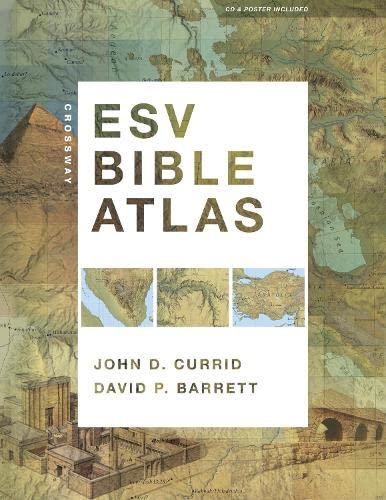
Understanding the geography around Biblical stories adds an important layer to studying Scripture. Years ago, a friend gave me an ESV Bible Atlas as a birthday gift and it is never far from reach.

For example, when Jacob sent his favorite son Joseph to check on his shepherding brothers, a map reveals that Joseph’s journey was between 50-60 miles. Not just up the road! Such insights lend a greater understanding of the hardships and blessings of Biblical characters.

When you realize that the Sea of Galilee is only eight miles wide by twelve miles long, we can visualize how the crowds tracked Jesus’ boat as they followed Him along the shore to experience the miraculous feeding of the five thousand (Matthew 14:13-21).

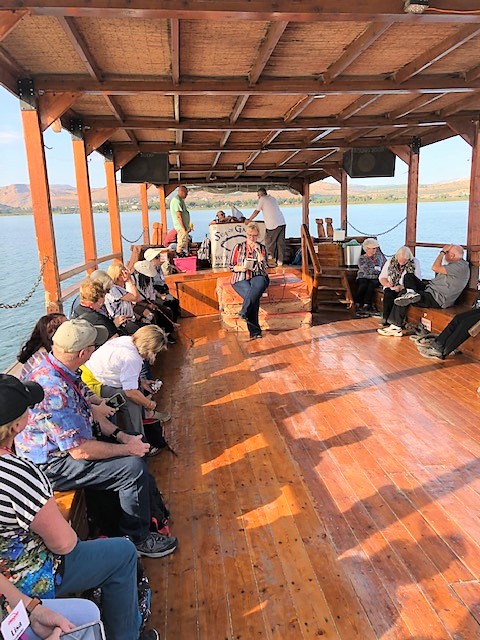
I regularly lead tours through the Holy Land. One comment repeatedly stated is that they had no idea the close proximity of some locations to others. For instance, Magdala, Tiberius, Capernaum, and the Mount of Beatitudes can be seen from an anchored boat on the Sea of Galilee.

Holy Land Tour

If you love maps, this is a very effective method of diving deeper into Scripture. Grab a Bible atlas, pick a story from Scripture, and track the character’s movements. This is particularly eye-opening in Exodus.

I have spent many hours lost in the pages of that Bible atlas seeing Scripture come to life through geography.

Method #13: Use Bible Flash Cards

Flashcards are not just for school students. As a bona fide lifelong learner, flashcards are an invaluable way to study Scripture.

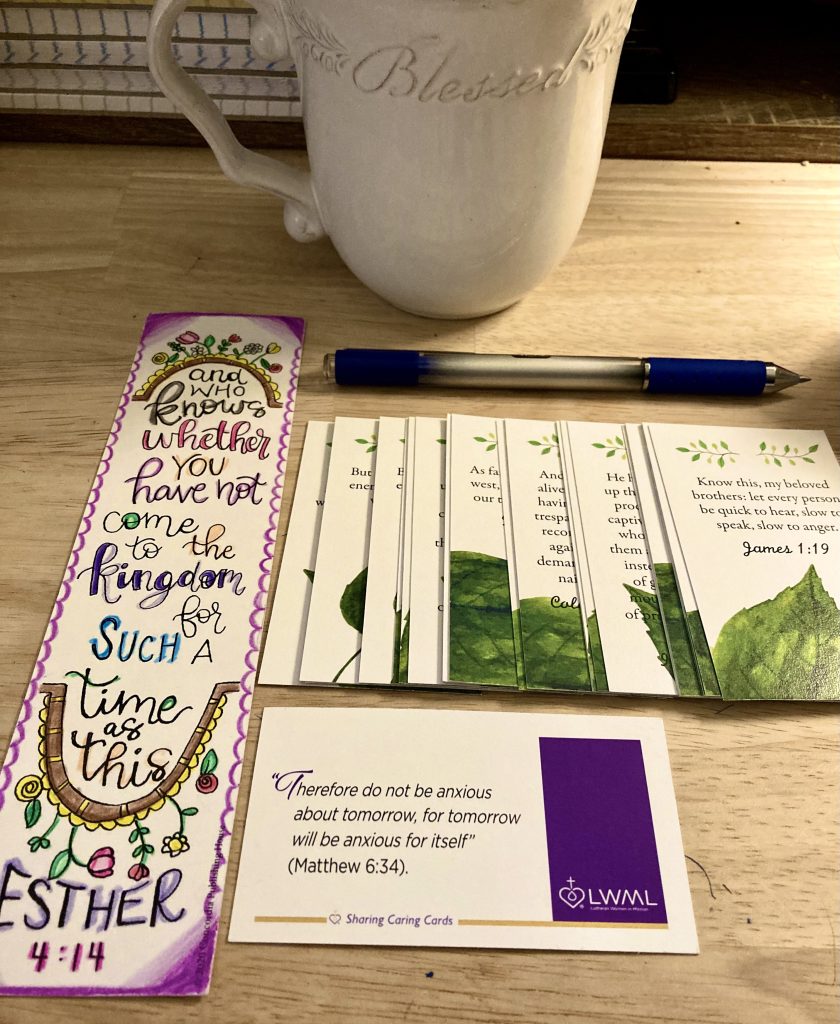
When my Forgiveness Bible study was released, the publisher had the brilliant idea of offering Scripture memory cards as a companion study tool. I still keep those cards close as a reminder to keep a short account of hurts. Life is short. Forgiveness is commanded.

If you are new to the Bible in general, there are flashcards for learning the books of the Bible, significant characters, and even timelines.

This study method is a great resource if you do not have much daily time for in-depth study.

The Bottom Line

The Bible is our only true source of wisdom and knowledge. Regular studying of God’s Word provides a firm foundation to grow and strengthen your faith.

Remember to give yourself some grace as you study Scripture. You are learning the spiritual riches of a personal relationship with the Creator of the universe. It takes a lifetime.

The Bible is a life manual for all Christians. God’s Word is life-giving and life-changing. There is a reason that it is the world’s best-selling book of all time.

Above all, diligent Bible study will remind you time and again of the assurance of salvation through Jesus Christ alone. God bless your study time!

Related Posts:

About the Author
Donna is a sought-after speaker, multi-published author, and Bible teacher. Her path from unchurched to becoming passionate about sharing Jesus was difficult. Read about her God-breathed journey: “From Unchurched to Becoming a Multi-Published Author and Sought-After Speaker.” If you want to send Donna a quick message, visit her here.

Donna Snow in Israel

{Some of these links are affiliate links. If you purchase through that link, the ministry may receive a small commission at no extra cost to you.}
Code Blue and Ash Wednesday

Once again, the darkened wee hours are startled awake as “Code Blue!” rings loud over the hospital’s ICU intercom. The staff rushes as one to battle the emergency.

I selfishly thank God that they are not rushing into mom’s room.

It’s 3am as I hear them working to save a life. As my prayers ascend each time Code Blue rings out, I know that God is already in each room.

God was in mom’s room before we were, as well. And He will be there after we are gone, whether the inhabitants acknowledge Him or not.

Prayer moves the heart of God, but faith reminds us that God is already moving.

The season of Lent begins this week with Ash Wednesday. Isaiah 53:5 tells us, “He was wounded for our transgressions, He was crushed for our iniquities; the chastisement for our peace was upon Him, and by His stripes we are healed.”

Jesus was crushed for our sin. And the most amazing thing? He did it willingly. He deliberately put Himself in harm’s way to save our lives – literally.

God positioned Jesus in a certain place and time to be the Savior of the world. Before Jesus’ sacrifice on the cross, we were in a spiritually life-threatening situation.

We weren’t going to make it out alive.

We were bleeding to death in our sin.

We were going to lose the fight for life.

But because our Savior stepped in to take God’s wrath on our behalf, we have been extended the extraordinary promise to have eternal life.

If you would like to ponder more deeply the ultimate sacrifice that Jesus made for you and me, you can download my 4-lesson Bible study on Isaiah 53:5.

DOWNLOAD HERE.

Jesus loves us more than we can possibly imagine. God’s blessings as you travel toward Calvary during Lent.

Tidbit Thursday: Bible Reading Checklists

As 2022 approaches, many people resolve to read the Bible daily – or at least more often. Recently, I have been asked repeatedly what guide I use for reading through the Bible.

Reading, studying, and memorizing God’s Word is vital to how we love, forgive, and serve as Christ followers. Hebrews 4:12 tells us: “For the word of God is living and active, sharper than any two-edged sword, piercing to the division of soul and of spirit, of joints and of marrow, and discerning the thoughts and intentions of the heart.”

Scripture is not just a Christian checklist – it is hope on the page. “For whatever was written in former days was written for our instruction, that through endurance and through the encouragement of the Scriptures we might have hope” (Romans 15:4).

Encouragement and hope.

Who doesn’t need more of both? Especially nowadays.

Whether we need the grace in Romans or the love in John’s Gospel, we need God’s Word to take root in our heart. I don’t know about you, but as I read the Bible, it often reads me. Convicts me. Transforms me. That is precisely what it is supposed to do through the Holy Spirit’s power.

God faithfully guides us to the precise verse we need each day – often before we realize just how much we needed it. Sometimes He equips us with a verse that someone around us needs to hear that day.

God always knows our needs.

Years ago, I created four Bible study checklists that I still use interchangeably to this day. I have already printed fresh copies for when the calendar turns to 2022.

The four choices are: (1) a general Bible Reading Checklist to read at your own pace; (2) a 90-Day Bible Reading Plan to hear Scripture’s overarching story; (3) an Historical Overview Bible Reading Plan that is lined out a bit differently; and (4) a One Year Bible Reading Plan.

Download one or all four here.

If you have resolved to read the Bible more in 2022, I pray that these tools are useful along your journey. Share them with a friend or two. They just might want to walk the journey with you.

Advent blessings!

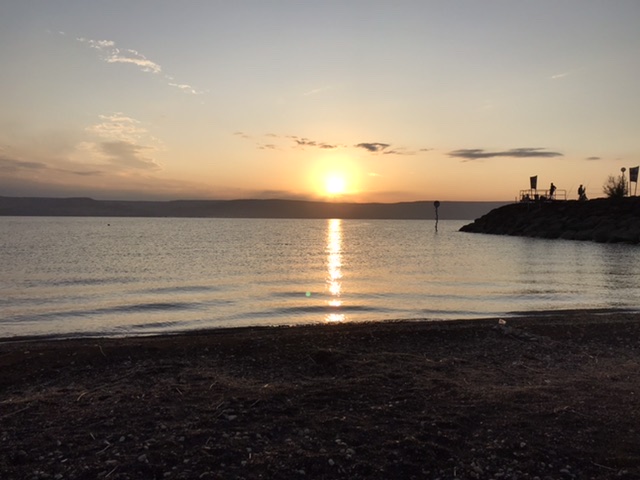
Sunrise on the Sea of Galilee

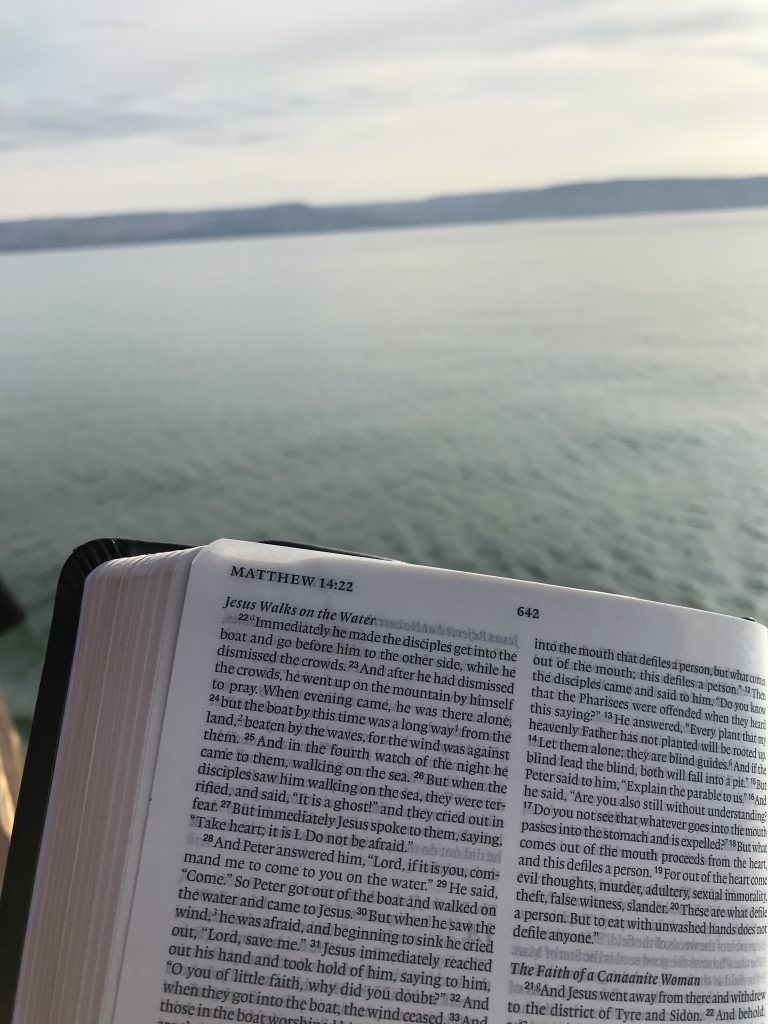
Today was simply incredible! My morning began by watching the sun rise over the Sea of Galilee as its cool breezes and lapping waves provides the soundtrack to my prayers. As I looked out over the calm waters, the realization hit home hard: Jesus walked on THIS water. Jesus performed miracles on and around THIS water. Jesus preached by THIS water. JOY!!

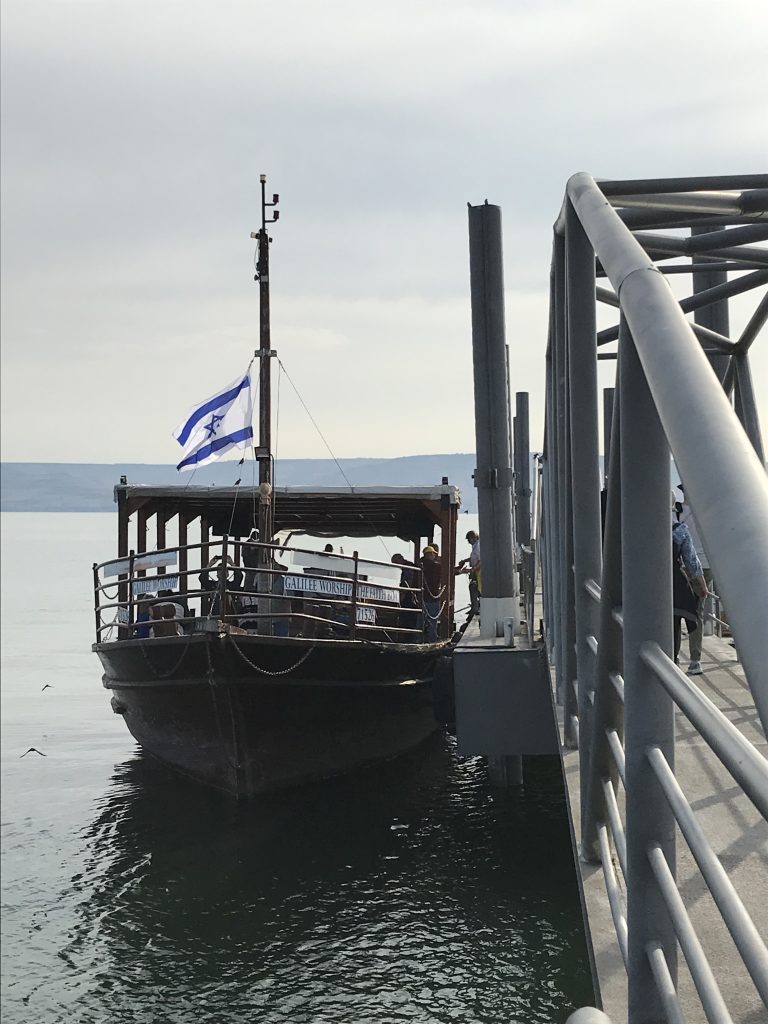
We enjoyed another incredible breakfast at the hotel, then it was “All Aboard!” in a replica wooden “Jesus boat” to set sail across the Sea of Galilee. The captain welcomed us by turning the boat into an American vessel for our journey by playing the Star Spangled Banner. The American and Jerusalem flags waved majestically side-by-side in the morning sun as we sang our national anthem.

I read the account from Matthew 14 of Jesus (and Peter) walking on the very waters on which we sailed. The captain played several familiar worship songs as we sang, visited, sat in silent awe, or let emotions roll down our cheeks. Meanwhile, these words rang fresh in our minds: And when they got into the boat, the wind ceased. And those in the boat worshiped him saying, “Truly you are the Son of God.” Matthew 14:32-33

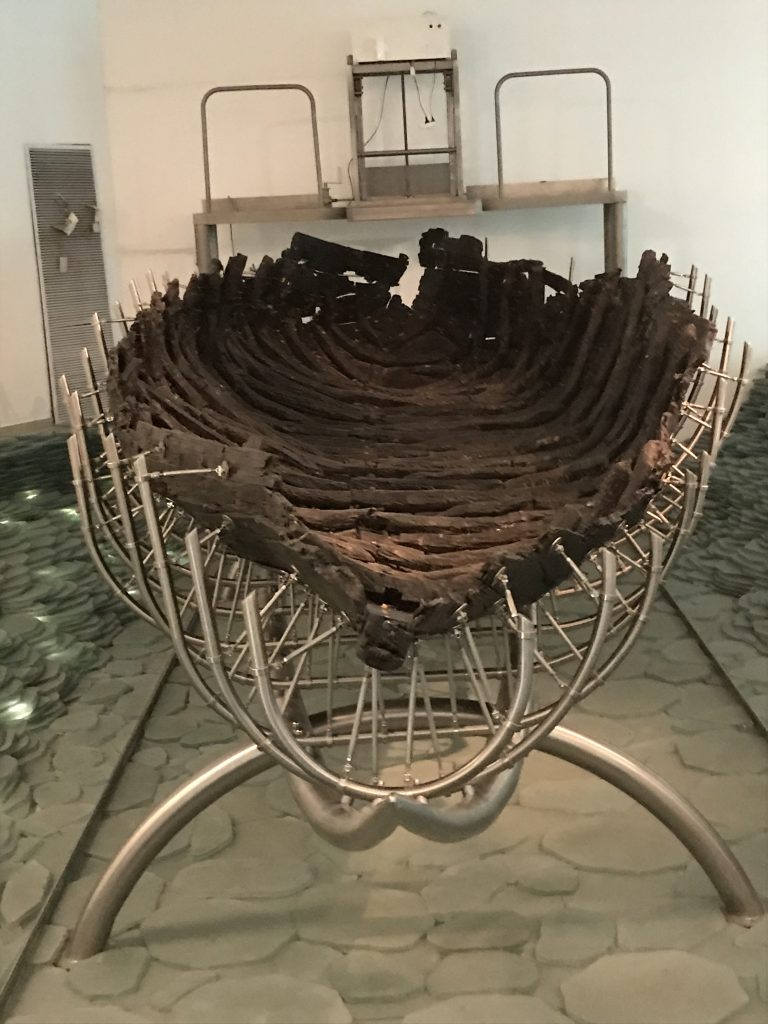
We disembarked to tour through the Jesus boat museum where we saw a beautifully preserved fishing boat that had been discovered and excavated in the 1980s that dated back to Jesus’ day. The archaeologists identified 12 different types of wood used on that boat, indicating its constant fishing use over a long period of time. There is a good chance that Jesus knew or came in contact with the owners of this very boat!

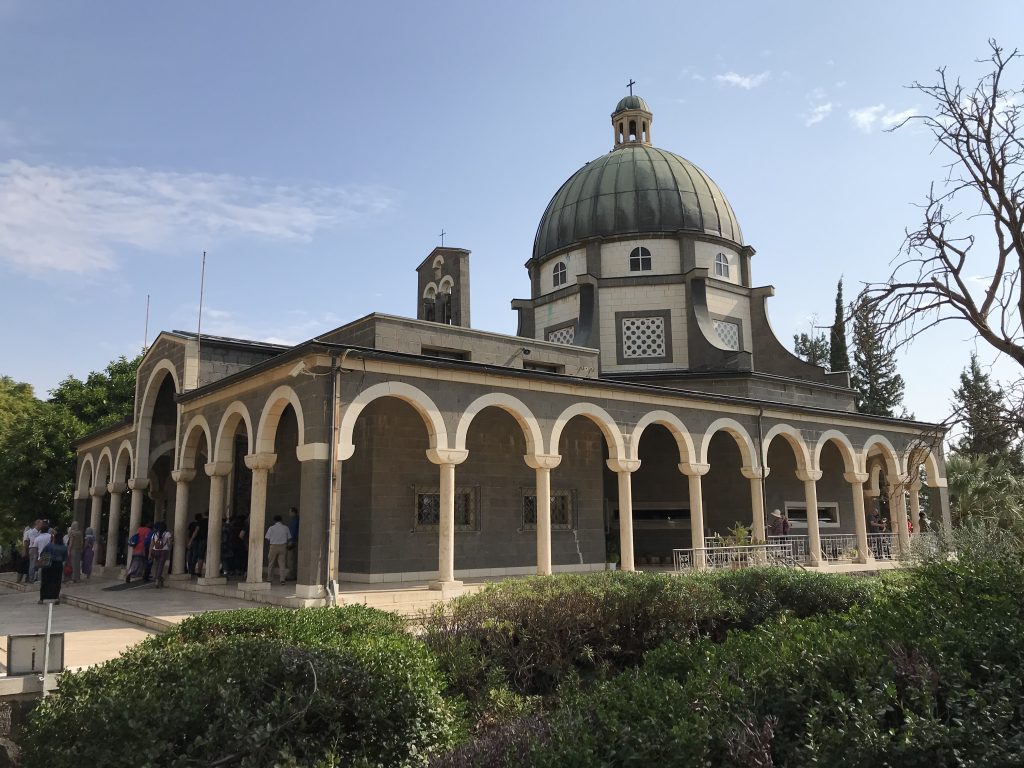
By 10:30 am, we were back on the bus headed to the Mount of Beatitudes. It was a busy, bustling place. Wayne gathered us on the steps facing the front of the church and led a powerful devotion while reading the beatitudes from Matthew 5.

As we drove away from the Mount of Beatitudes toward Capernaum, the panoramic view of the rolling hills and mountains around the Sea of Galilee was simply stunning.

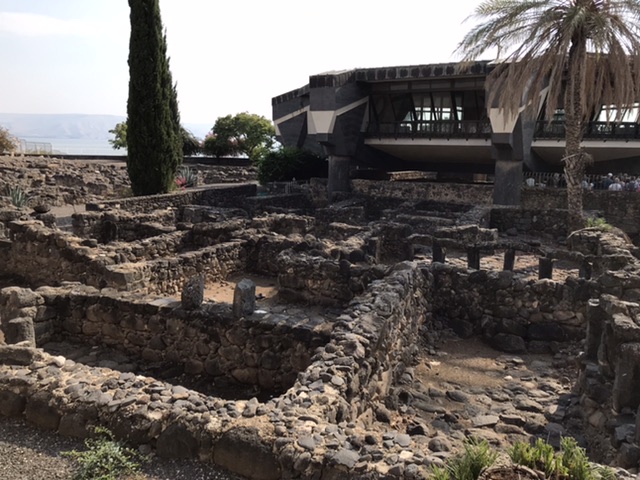
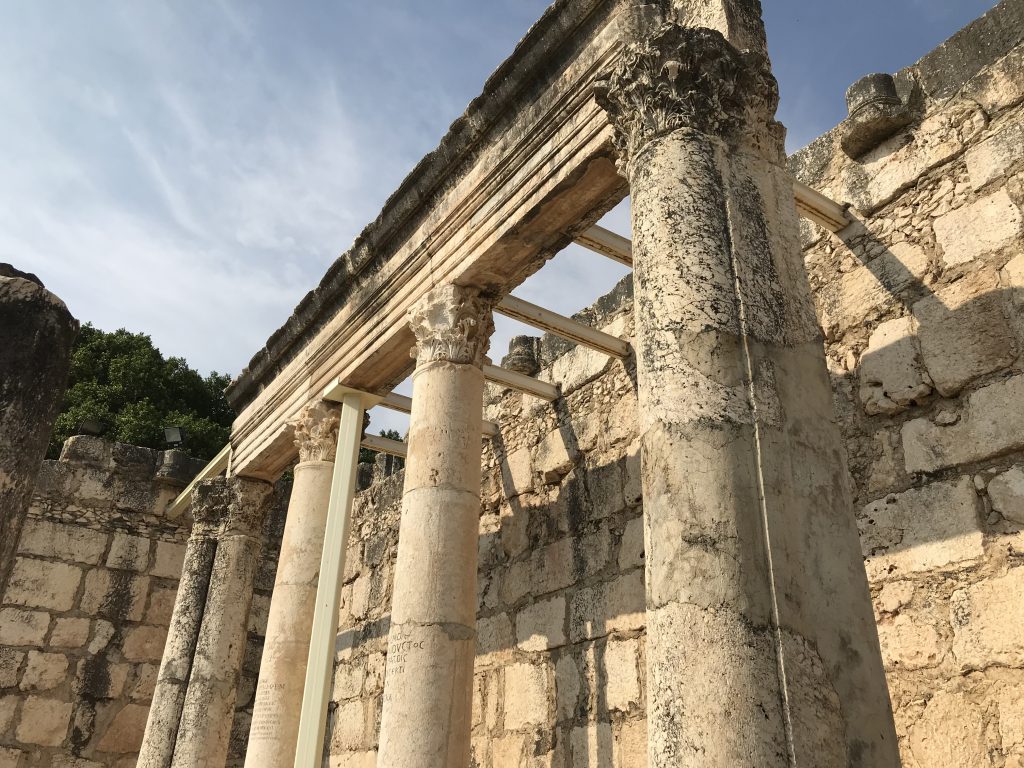
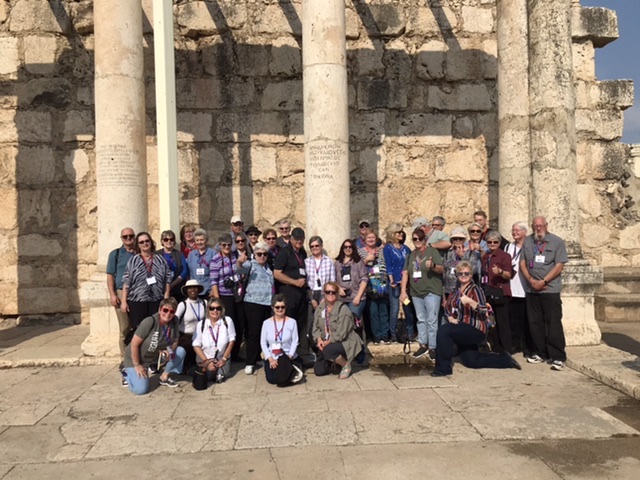
Capernaum is the seaside location where Jesus spent much time with Peter and teaching in the synagogue. Built over the original black stone synagogue of Jesus’ day, the remains of a white stone synagogue stood dramatically. A boat-shaped church has been built over the site of Peter’s home to help preserve it.

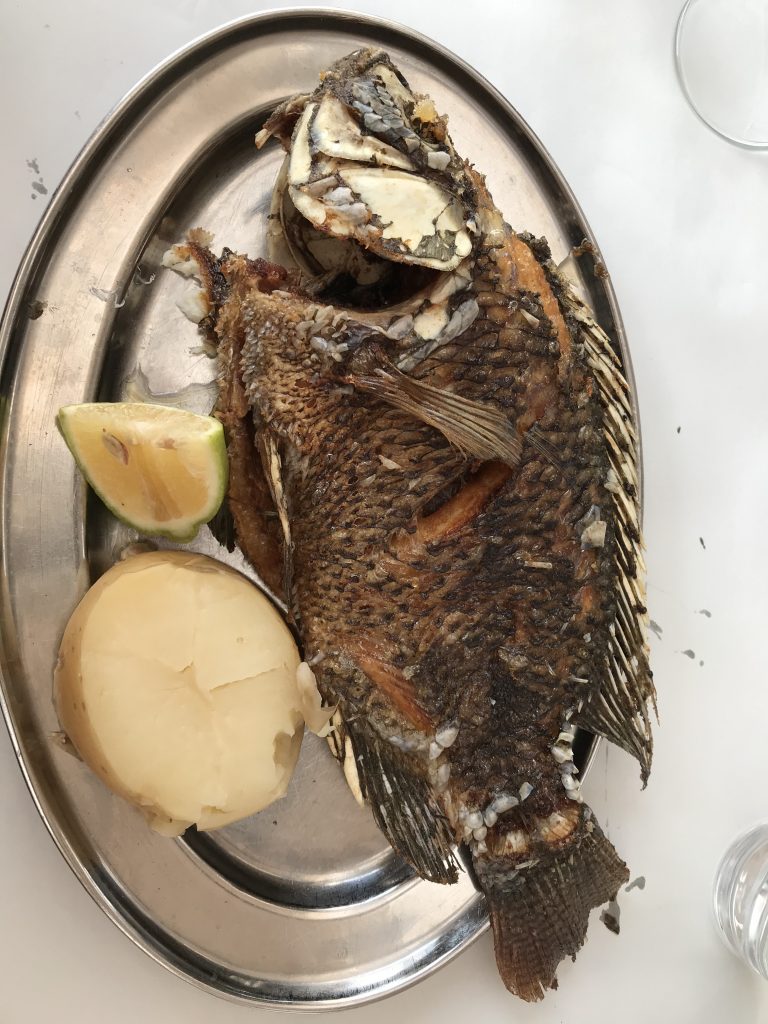
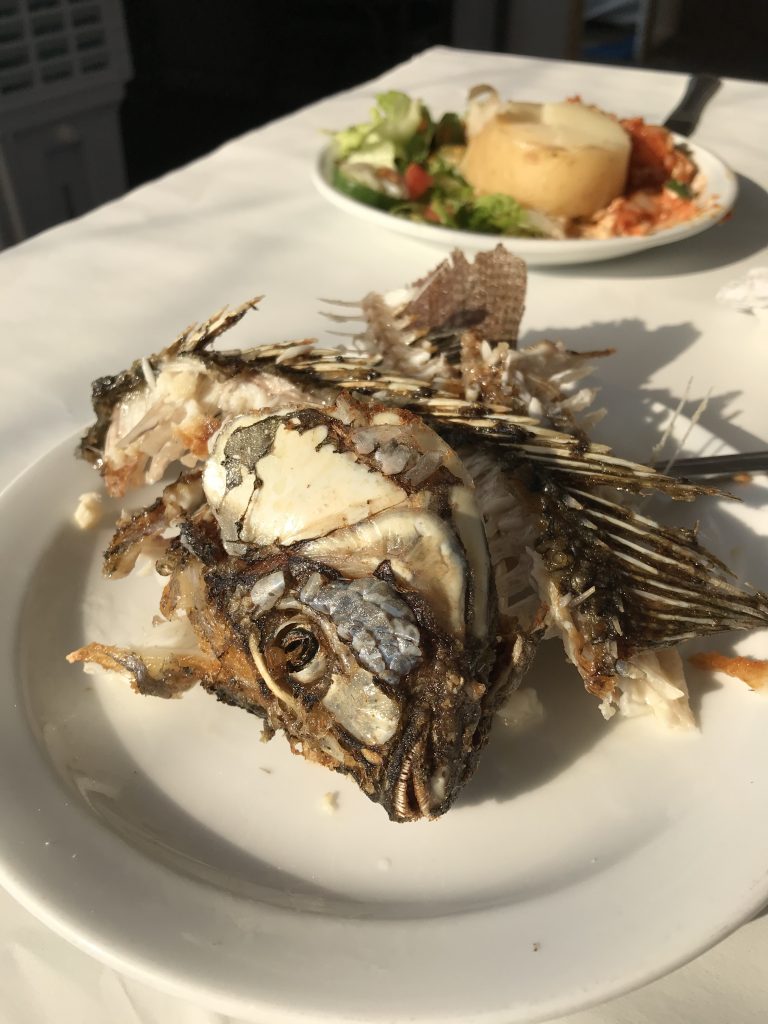
We had worked up quite an appetite, so we stopped at a local establishment and ordered the famous “Peter’s Fish.” Yes, they serve it head and all! I’m not accustomed to my food staring back at me, but this was a special exception.

All gone! 😂

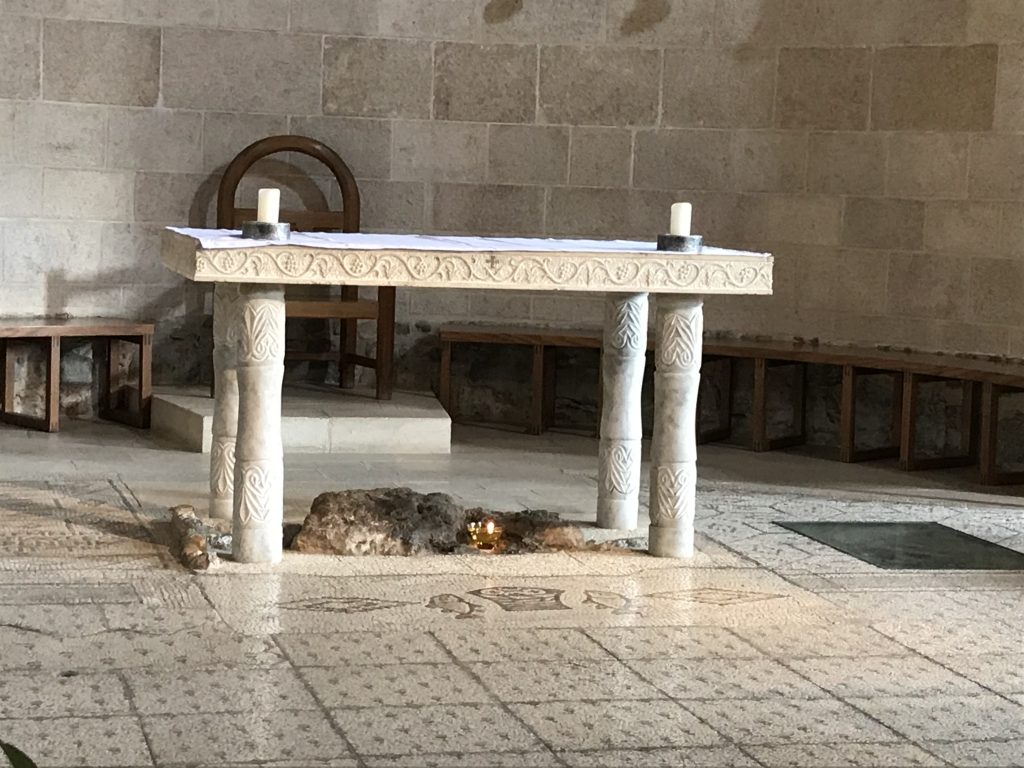
Our next stop was Tabgha, a Byzantine church dating from 350 AD, commemorating the place where Jesus multiplied the loaves and fishes to feed the 5,000. We walked on intricate mosaic tiles that were over 1,500 years old!

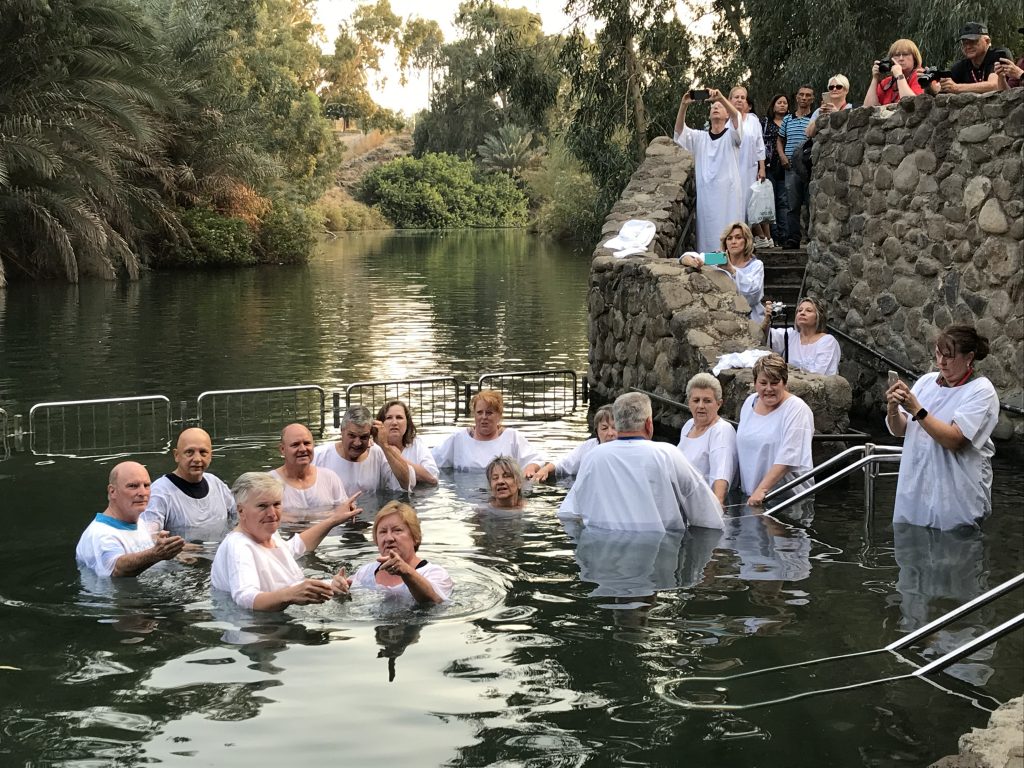
Our final stop for the day was at the Jordan River where John the Baptist baptized Jesus. We remembered our baptisms in a special ceremony in the Jordan River. God’s gift of baptism was celebrated with joy, tears, and raw, beautiful emotion. How very appropriate that the Jordan River ends at the Dead Sea — the lowest place on Earth. “Our sins are carried to the depths of the sea to be remembered no more.” Micah 7:18-20

We are back at the hotel on the Sea of Galilee for the night, my mind still whirling at what we experienced today. It is sobering and surreal to walk the very same places as Jesus and His disciples walked over 2,000 years ago. Sweet dreams, fellow disciples.

Holy Land Pilgrimage: It’s Finally Here

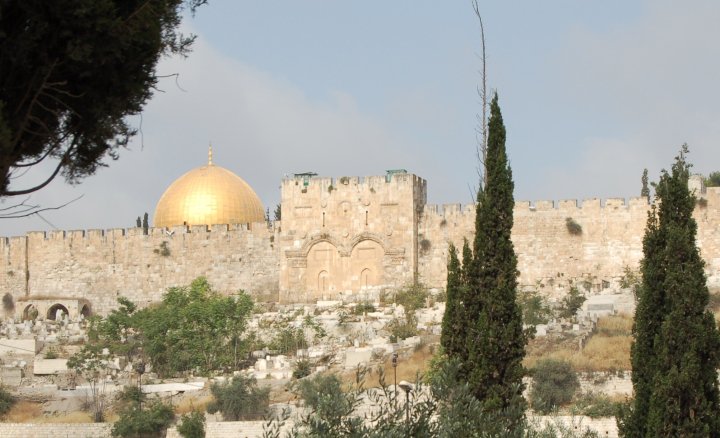
My view of Jerusalem in 2010 as I walked across the Kidron Valley toward the East Gate.

After eighteen months of planning and preparation, my group and I leave for Israel on Wednesday!

Pastor Wayne Graumann and I will be teaching at various locations as our group of 35 pilgrims make our way through the Holy Land. Here are the dates and locations during our journey:

Wednesday, Nov. 13 – Depart the USA, arriving in Tel Aviv on Nov. 14th
Thursday, Nov. 14 – Jaffa, Caesarea
Friday, Nov. 15 – Megiddo, Mt. Carmel, Nazareth, Cana, Mount of Precipice
Saturday, Nov. 16 – Mount of Beatitudes, Capernaum, boat ride on the Sea of Galilee, Bethsaida, Jordan River, Tabgha, Church of Primacy of St. Peter
Sunday, Nov. 17 – Caesarea Philippi, Tel Dan, Gideon Springs, Beit Shean, Jerusalem
Monday, Nov. 18 – Western Wall, Temple Mount, Via Dolorosa, Southern Steps, Bethlehem
Tuesday, Nov. 19 – Qumran, Ein Gedi, Dead Sea (swim/float), Jericho
Wednesday, Nov. 20 – City of David, Shrine of the Book, Model City, Hezekiah’s Tunnel, Pool of Siloam, St. Peter Gallicantu, Garden Tomb
Thursday, Nov. 21 – Mount of Olives, Palm Sunday Road, Elah Valley and the Garden of Gethsemane
Friday, Nov. 22 – Depart the Holy Land to return home forever changed

Wayne and I will both be blogging (with photos) each day along our journey and we would love for you to follow along. My posts will appear here and Wayne & Kathy’s posts will be here: https://gofarther.me/

We would covet your prayers as our group of 35 walks the very places where Jesus walked. The spiritual growth that each of us will experience simply cannot be overstated. We carry you in our hearts with us!

Next stop: ISRAEL

Bible Study Winners and An Exciting Announcement

This past weekend I attended the LWML Texas District Convention where this brand new study was officially launched. Your incredibly supportive response has been overwhelming!

So many of you sent emails and messages of encouragement. Your comments on the giveaway blog post brought tears to my eyes as you wrote about the women and places where you wanted to share this study.

Thank you so much. 

The two winners of a DVD/workbook set each are:
1) Arla Mae Luther
2) Meridee (Canada)

Congratulations!! I will be reaching out to you by email later today.

NOW FOR THE EXCITING ANNOUNCEMENT

After much prayer and planning, I will be leading a tour of the Holy Land, along with Rev. Wayne & Kathy Graumann, in November 2019! WOOHOOOO!!!

As many of you know, my initial visit to Israel in 2010 truly changed my spiritual journey. Receiving communion while looking at the empty tomb is forever etched in my soul.

Won’t you join us on this 10-day Biblical tour of Israel? Pastor Graumann and I will tag-team teach at various sites as we visit them throughout the Holy Land.

Registration is open RIGHT NOW (on my website’s “Events” page or with links below) to give you 16 months to plan, save, invite friends, and ask the Lord prepare your hearts.

Detailed Information and Itinerary
Registration Form

You will hear more information about this tour as time goes on. I pray that you will consider joining us for a life-changing adventure through the places from Scripture.

Dear friends, it is grace upon grace to be able to serve the Lord and you.

Launch Day! “Where Love Abides” Bible Study

I have been waiting for this wonderful day for the better part of two years!

Today, it is a JOY to offer my latest DVD Bible study series in partnership with the LWML, “Where Love Abides.” It is an in-depth study of John 15, where Jesus talks with His disciples about God’s vineyard and our place in it.

Here is a quick snippet from the study’s back cover:

Seasons matter in vineyards. They also matter in our spiritual journey. We experience winter seasons that seem prolonged and harsh. We endure seasons of pruning where God removes the superfluous to nurture deep roots in Him.

We also experience bountiful seasons of harvest where we, through the power of the Holy Spirit, experience the abundance of God’s beautiful fruit. But this fruit is not just for believers to sit back and enjoy. God calls us to go into all the world and share it.

Jesus, our Vine, lovingly invites us to abide in Him (John 15:4) as He abides in us. What does that mean? What does it look like amidst our modern, fast-paced days?

As you walk through His Word with this study, you will gain a clear understanding of both the blessing and responsibility of being chosen for God’s vineyard.

Jesus said, “Love one another as I have loved you.” When we abide in Him through the faith He gives, He draws us into an intimate relationship with Him as branches in His vineyard — that beautiful place Where Love Abides.

LET’S DO A GIVEAWAY!

I’m giving away TWO sets of this new Bible study. WooHoo! To enter, simply:

  1. Leave a comment below and let me know how/where you plan to use this study;
  2. Sign up (look to the right) to receive my weekly devotions;
  3. Share this post on your social media outlets (and let me know where so I can share your posts and tweets)!

I will pick two winners and share them in this coming Tuesday’s blog post right here.

Today is a day of praise to God for what He is doing through the LWML as they continue to offer Christ-centered, in-depth resources to build an intimate relationship with our Lord and Savior!!

God’s blessings as you dive into and share this new Bible study in your homes, churches, and communities. To God be the glory!

Appointed to Go

Ten months after I began working at my first law firm as a file clerk, the firm acquired a small New York firm to expand its practice in the northeast. All of the acquired firm’s client files then needed to be integrated into our firm’s conflicts, filing, and docketing systems.

The task was gargantuan, so my boss appointed me to accompany her to New York to get the job done. We spent two weeks in those dusty New York file rooms inputting information into our computer system, generating new labels, and organizing all of the files according to our firm’s standards.

But there was a great perk: the hotel where we stayed sat in the heart of Manhattan and we had a weekend between the two work weeks to explore. Talk about fun!

I was twenty-three and had never been to New York. It was October, so she and I enjoyed crisp fall weather, ate at great restaurants, and spent our free weekend visiting the Empire State Building, taking in a Broadway show, and visiting the Statue of Liberty and Ellis Island.

Even though the work was tedious, being appointed to go to New York was one of the best experiences of my working career. Why tell you this?

Because you and I have been appointed by God.

He chose us as branches for His vineyard and appointed us to bear fruit that lasts. Our work in His vineyard may be tedious at times, but it is rooted toward His mission from the very start. Our effectiveness as His missionary fruit-bearer rests in Jesus, the true Vine, working in and through us.

Jesus willingly set aside the privileges of heaven for over thirty years to invest Himself in disciples who would continue His message following His death and resurrection. As soon as Jesus began calling disciples to become fishers of men, their appointed work was not classroom study but active practice.

During three-years of earthly ministry, Jesus taught us that workers of all vocations were to be laborers in the vineyard (John 4:36).

Jesus made it clear that the disciples would play a real, active part in the Great Commission beyond His time here on earth (Luke 24:45-53). Over and over in the New Testament, we see Jesus appointing His disciples to go bear fruit. We see this first and foremost in the Great Commission (Matthew 28:16-20).

Jesus sent the disciples into the world with the specific mission to witness what God had done in Jesus, not to be preservers of man-made traditions which can divide.

Our effectiveness as His disciples (branches of the true Vine) rests in Jesus’ working through us. And even though Jesus’ hands-on discipleship training was confined to His earthly ministry, He appoints us without reservation to a worldwide ministry.

When Jesus ascended to heaven He sent the Holy Spirit ─ just like He promised ─ so that we could carry out the Great Commission. Being chosen by God means that you and I are part of Team Jesus. Now, as part of His team, we have been appointed.

For instance, I was chosen to be an employee of the law firm. However, once an employee, I was then appointed to go to New York to help set up the new office. Being appointed is specifically task-based.

You and I are chosen to be branches in His vineyard, but each of us is appointed to complete varying tasks within. His vineyard.

When He created each of us, God gifted us with certain abilities and skills. When He appoints us to specific tasks He provides the opportunity to grow and to develop those skills. All disciples are grown and matured to bear fruit for the glory of God, and the sweetest fruit comes from our areas of God-given giftedness.

What abilities and skills has God given you? How are you leveraging them to bear fruit for His glory?

For example, I have served as a vocalist in my church’s music ministry. However, don’t ever ask me to run anything technical. That is definitely not my gift. I am pretty sure that I would short circuit the whole church and plunge us into darkness.

Yet when God brings all technical and vocal arts to work together, each appointed in their areas of giftedness, He creates beautiful music to draw people to glorify Him.

Being appointed is not something to fear but a privilege to embrace as we go about doing His work.

Going involves movement and momentum.

I pray that God uses both to strengthen and to grow your gifts as you bear fruit for His glory.


Brand new DVD Bible study releasing on July 5, 2018:

Friends, Not Servants

“No longer do I call you servants, for the servant does not know what his master is doing; but I have called you friends, for all that I have heard from my Father I have made known to you.” John 15:15

In the first century Roman culture that surrounded Jesus, the term “slave” did not necessarily mean mistreatment or indentured servitude associated with the oppression of any particular race.

Slaves under Roman rule often held positions of authority and power. Oftentimes, they had been enslaved as foreign prisoners-of-war or enslaved due to non-Roman families who had sold them into slavery to repay a debt. It was a common practice in those days.

While serving his master, a slave could earn wages, enter into contracts, and even buy and sell property. Some slaves even owned slaves themselves.

In Jesus’ day, slaves could serve in many different capacities, including a hairdresser, midwife, or even a cook. They also served in chain gangs, as well (which is how we understand slavery from our American history courses).

It was typical for Roman slaves to strive for release from servitude by the time they reached thirty-years-old, as was the usual practice. Once freed, they could live out their lives as ordinary, free citizens, carrying with them the wealth and/or possessions acquired during slavery.

Believers in the Old Testament were called servants of God: Moses (Psalm 105:26), Joshua (Joshua 24:29), and David (2 Samuel 7:5), among others. The apostle Paul even used the term slave or servant to describe his work as a messenger and agent of God (Romans 1:1, 1 Corinthians 4:1).  

A servant in the first century culture was simply an agent doing whatever his master commanded, even if he did not understand the purpose.

That scenario makes me think of a bank teller today. If the bank manager asks a teller to transfer money from one account to another, the manager does not owe the teller an explanation or a reason for the request. The teller is merely an employee who follows instructions without question.

So how can we be assured that we are friends of Jesus, not slaves? Look back at John 15:15 above. Being a friend of Jesus means that He reveals to us what the Father revealed to Him (John 3:11, 3:32).  

Jesus testifies about what He has seen and heard, and His message is truth (John 8:40). Jesus did not hold back anything from us that the Father made known to Him in order that you and I would be fully equipped. Through the power of the Holy Spirit, He enables us to obey all He commands us: love one another as He loves us.

Even though there are still hidden things of God that we do not know, Jesus relates all that He does know.

The intimate relationship that Jesus enjoys with the Father, He expands to include His friends.

We can share our joys, our struggles, and our doubts.

When you and I abide in the true Vine we are granted access to a relationship with and knowledge from the vineyard Owner – God Himself. Servants or slaves would never be given such unfettered access in their master’s house; friends alone receive such privilege.

As branches abiding in Christ our true Vine, we are not simply granted access into the Master’s vineyard. We are welcomed into His family as adopted sons and daughters (Ephesians 1:5; 2 Corinthians 6:18).

Usually when something is bought at a price it becomes a possession. Yet Jesus did not sacrifice His life to gain us as trophies.

He sacrificed His life and calls us friends.

What an incredible blessing it is to be a friend of Jesus!


Brand new DVD Bible study releasing on July 5, 2018:

Abiding Prayers

When I was a little girl, I always knew that God was “up there somewhere.” Our family really did not attend church, but Mom always led us in grace before dinner each evening: “God is great, God is good, let us thank Him for our food. Please take care of our family, please take care of everyone. Amen.”

Although acknowledging in prayer that God is great and good, our family’s evening meal prayer was not a picture of abiding. It did not provide a clear picture of who God is or what Jesus accomplished on the cross.

I did not know a single verse of Scripture, so His Word did not abide in me. I had a small Bible that my grandmother gave me as a Christmas gift when I was a young girl, but I never opened it. I tucked it away in my keepsake box and there it remained … for decades.

Oh, how I wish now I’d opened His Word to meet my Savior!

The Lord’s words are LIFE and we abide in Christ through communion with Him and the study of His Word.

If you abide in me, and my words abide in you, ask whatever you wish, and it will be done for you.” John 15:7

This verse is not a promise of reward, but rather a statement of relationship. When we abide in this way, our prayers are much different than that meal prayer of my childhood. The prayers of believers who abide will be of such a nature that they are in full accordance with the counsel of His Word.

Such abiding prayers lean toward fruitfulness.

When Christ and His Word abide in us, prayer becomes a powerful tool for change ─ not for our glory, but for the Father’s glory (John 15:7-8). The power of prayer is dependent upon the faith given to us (His disciples) by God.

The power of prayer is unlimited to those who abide in Christ ─ unlimited power because we have been connected to the ultimate Source of all power.

Scripture contains numerous special exhortations to pray (Matthew 7:8, John 14:13, John 16:24), yet many Christians admit they do not regularly pray.

Perhaps some days we feel that our prayers are like droplets in an ocean. We wonder if they are making any difference to anyone at all. Doubting questions takes our eyes off the One who hears our prayers. You know, questions like:

How can God hear my question above the millions uttered each second? Why should my prayer matter? What difference does it make?”

I have asked all of these questions, and then some, but Scripture tackles all of our doubts. God always answers the prayers of His people: “When he calls to me, I will answer him; I will be with him in trouble; I will rescue him and honor him.” Psalm 91:15.

God answers our prayers. Period.
He is not deaf.
He is not ignoring us.
He is not too busy to listen.

Our prayers may not be answered the way in which we like or ask, but God always answers them in accordance with His will and His plan for our life.

Prayer is an integral, inseparable part of our life in God’s vineyard.

In 1 Thessalonians 5:17, we are reminded to pray continually.

God longs for that personal, quiet time with you ─ His precious child.

Consistent, abiding prayer enables every believer to live in abundant freedom with the One who breathed life into you, redeemed you, and loves you like no other.


Brand new Bible study coming on July 5, 2018: