Fallen Angels in the Bible – How Many Were There?

The topic of fallen angels in the Bible has fascinated believers and scholars for centuries. Questions about their number, origin, and current status arise frequently among those studying spiritual warfare and biblical demonology. 

fallen angels in the Bible

Hollywood and popular culture have created elaborate mythologies around these beings. What does the Bible actually reveal about fallen angels? 

This comprehensive examination explores the scriptural evidence regarding how many fallen angels exist and what we can know about them from God’s Word. 

Understanding Fallen Angels: Who They Are

Before determining how many fallen angels exist, we must first understand what fallen angels are according to Scripture.

Fallen angels are spiritual beings (not human beings) originally created by God as part of the angelic host who rebelled against their Creator and were cast out of heaven. These beings, led by Satan (also called Lucifer, the devil, or the great dragon), chose to reject God’s authority and were subsequently judged.

These evil angels who were cast down with the fall of Satan are classified differently than holy angels who still worship God. The Bible indicates that angels were created as ministering spirits with specific purposes in God’s kingdom. “Are they not all ministering spirits sent out to serve for the sake of those who are to inherit salvation?” (Hebrews 1:14

However, some of these angels chose to abandon their proper dwelling as heavenly beings and rebel against God. Jude 6 states, “And the angels who did not stay within their own position of authority, but left their proper dwelling, he has kept in eternal chains under gloomy darkness until the judgment of the great day.”

Related: What Do Forgiveness and Repentance Mean in the Bible?

forgiveness and repentance in the bible

The Nature of Angels

Angels are spirit beings created by God before the creation of humanity. They possess intelligence, will, and the ability to make choices. 

Scripture reveals they exist in vast numbers and serve various functions in God’s kingdom. The fact that some angels fell demonstrates that they were created with free will and the capacity to choose rebellion and everlasting chains over obedience.

The Original Rebellion: How Angels Fell

Scripture provides glimpses into the original angelic rebellion. The most commonly referenced passage regarding Satan’s fall is Isaiah 14:12-15, which describes the downfall of the “morning star” or Lucifer: 

“How you have fallen from heaven, morning star, son of the dawn! You have been cast down to the earth, you who once laid low the nations! You said in your heart, ‘I will ascend to the heavens; I will raise my throne above the stars of God; I will sit enthroned on the mount of assembly, on the utmost heights of Mount Zaphon. I will ascend above the tops of the clouds; I will make myself like the Most High.’ But you are brought down to the realm of the dead, to the depths of the pit.”

Ezekiel 28:12-17 provides additional insight into Satan’s original status and his fall. These passages describe him as an anointed guardian cherub who was in Eden, the garden of God, but whose heart became proud because of his beauty.

Satan’s Influence on Other Angels

Satan did not fall alone. Scripture indicates that the ancient serpent led a rebellion that took other angels of God with him. It stuns the mind to try and imagine that time of trouble and the spiritual battles that raged against good and evil in the heavenly places.

Revelation 12:4 provides a symbolic description: “His tail swept down a third of the stars of heaven and cast them to the earth. And the dragon stood before the woman who was about to give birth, so that when she bore her child he might devour it.” 

In biblical apocalyptic literature, stars often represent angels. This suggests that Satan’s rebellion influenced a significant portion of the angelic host.

Related: 15 Powerful Bible Verses and Prayers for Bad Dreams

Powerful Bible Verses and Prayers for Bad Dreams

The Number of Fallen Angels: What Scripture Reveals

Examining how many fallen angels exist begins by acknowledging that Scripture does not provide an exact count. However, several passages (many from the Book of Revelation) give us important clues about their number.

The most direct biblical indication of fallen angels’ number appears in Revelation 12:4, where John describes the dragon’s tail sweeping “a third of the stars out of the sky.” If we interpret “stars” as angels (as is common in biblical symbolism), this passage suggests that approximately one-third of the original angelic host fell with Satan.

This interpretation is widely accepted among biblical scholars and theologians. If one-third of the angels rebelled, this indicates a substantial number of fallen angels, though we cannot determine an exact figure without knowing the total number of angels God created.

The Total Number of Angels

To understand an approximate number of how many angels fell, we would need to know how many angels exist in total. The Bible describes the angelic host as vast and innumerable. 

Daniel 7:10 states, “A stream of fire issued and came out from before him; a thousand thousands served him, and ten thousand times ten thousand stood before him; the court sat in judgment, and the books were opened.”

Hebrews 12:22 reveals, “But you have come to Mount Zion and to the city of the living God, the heavenly Jerusalem, and to innumerable angels in festal gathering.” 

Revelation 5:11 describes angels this way: “Then I looked, and I heard around the throne and the living creatures and the elders the voice of many angels, numbering myriads of myriads and thousands of thousands.” 

A close look at these descriptions emphasize the immense number of angelic beings rather than providing precise counts.

Mathematical Implications

If we take the biblical descriptions literally and conservatively estimate millions of angels exist, then one-third would represent a significant number of rebellious angels. That adds up to potentially millions of demonic beings controlled by the ruler of this world. 

However, we must remember that these numbers are symbolic and meant to convey vastness rather than provide census data. There is no clear reference regarding the exact number of angels. The context of Genesis begins after the fall of Lucifer. The “smoke after the great tribulation” so to speak when they were cast out of God’s presence.

Related: The Valley of Dry Bones: Complete Biblical Meaning
valley of dry bones ezekiel bible

Specific Fallen Angels Named in Scripture

While the Bible indicates many angels fell, very few are specifically named. Understanding the named fallen angels helps us grasp their hierarchy and roles.

Satan (Lucifer)

The most prominent fallen angel is Satan himself. He is also called Lucifer, the devil, Beelzebub, the evil one, the prince of this world, the father of lies, and the accuser. 

He is the leader of the fallen angels and the primary adversary of God and His people (sons of God). Multiple books of the Bible reference Satan from Genesis through Revelation. His goal is the complete destruction of those who follow God to keep them in chains of darkness for eternity.

Demons and Evil Spirits

The New Testament frequently mentions demons or evil spirits. Those terms are generally understood to refer to fallen angels. Jesus and the apostles encountered numerous demons during their earthly ministries, casting them out of afflicted individuals. 

While specific demons are rarely named, their presence and activity are well-documented throughout Scripture.

Abaddon/Apollyon

Revelation 9:11 says, “They have as king over them the angel of the bottomless pit. His name in Hebrew is Abaddon, and in Greek he is called Apollyon.” Abaddon (Hebrew) or Apollyon (Greek word), mean “destroyer.” He is described as “the angel of the Abyss” who serves as king over demonic locusts released during the end times. 

The Absence of Names

The Bible’s reluctance to name most fallen angels is likely intentional. Scripture focuses on God’s redemptive work through Jesus Christ rather than cataloging evil beings. 

Providing extensive information about demons might lead to unhealthy fascination or fear rather than faith in God’s sovereignty.

Related: Who Was the Wisest Man in the Bible Who Ever Lived?

Wisest Man in the Bible

The Current State of Fallen Angels

Understanding the present condition and location of fallen angels provides important context for their number and influence.

Active on Earth

Many fallen angels, described as demons or evil spirits in Scripture, are currently active on earth. Throughout the Gospels, Jesus encountered and cast out demons. This demonstrates their present reality and activity. 

Ephesians 6:12 issues a bone-chilling, truthful confirmation of their ongoing operations. “For we do not wrestle against flesh and blood, but against the rulers, against the authorities, against the cosmic powers over this present darkness, against the spiritual forces of evil in the heavenly places.”

Imprisoned and Awaiting Judgment

Scripture indicates that some fallen angels are already imprisoned, awaiting final judgment. Second Peter 2:4 states, “For if God did not spare angels when they sinned, but cast them into hell and committed them to chains of gloomy darkness to be kept until the judgment.” 

Similarly, Jude 6 says, “And the angels who did not stay within their own position of authority, but left their proper dwelling, he has kept in eternal chains under gloomy darkness until the judgment of the great day.”

Some scholars believe these imprisoned angels may be those referenced in Genesis 6:1-4. They committed particularly grievous sins by abandoning their proper dwelling and cohabiting with human women, producing the Nephilim.

The Abyss

Revelation describes an abyss or bottomless pit where certain demonic beings in the supernatural world are confined until appointed times. Revelation 9:1-11 describes the opening of this abyss during the end times, releasing demonic forces for a limited period.

Verses 7-9 say: “In appearance the locusts were like horses prepared for battle: on their heads were what looked like crowns of gold; their faces were like human faces, their hair like women’s hair, and their teeth like lions’ teeth; they had breastplates like breastplates of iron, and the noise of their wings was like the noise of many chariots with horses rushing into battle” (Revelation 9:7-9).

The Hierarchy and Organization of Fallen Angels

Scripture suggests that fallen angels maintain some form of organization and hierarchy under Satan’s leadership.

Ephesians 6:12 describes various ranks within the demonic realm: “rulers,” “authorities,” “powers of this dark world,” and “spiritual forces of evil in the heavenly realms.” 

This language indicates structure and organization among these supernatural beings, with different levels of authority and function.

Related: Your Strong Suit: Bible Study on the Armor of God

Your Strong Suit by Donna Snow

Satan’s Kingdom

Jesus acknowledged that Satan has a kingdom, implying organized structure and purpose among fallen angels. “And if Satan casts out Satan, he is divided against himself. How then will his kingdom stand?” (Matthew 12:26)

Daniel 10:13 says: “The prince of the kingdom of Persia withstood me twenty-one days, but Michael, one of the chief princes, came to help me, for I was left there with the kings of Persia.” This provides a picture of a demonic power that opposed God’s angelic messenger. It also suggests territorial assignments among fallen angels.

The Destiny of Fallen Angels

The number of fallen angels is substantial. However, Scripture is clear about their ultimate fate.

Matthew 25:41 reveals, “Then He will say to those on his left, ‘Depart from me, you cursed, into the eternal fire prepared for the devil and his angels.” This confirms that eternal punishment awaits the father of lies and all his fallen angels.

Revelation 20:10 describes Satan’s final judgment: “And the devil who had deceived them was thrown into the lake of fire and sulfur where the beast and the false prophet were, and they will be tormented day and night forever and ever.”

Unlike humanity, for whom Christ died to provide salvation, Scripture offers no indication that redemption is available for fallen angels. Their rebellion appears final, their judgment certain, and their fate sealed.

Related: Powerful Bible Verses For Sharing Your Testimony

Powerful Bible Verses for Sharing Your Testimony

Practical Implications for Believers Today

Understanding fallen angels is not merely academic. Acknowledging their existence has practical implications for Christian living today.

Believers should be aware of spiritual warfare and the reality of demonic forces without becoming obsessed with the demonic realm. 

First Peter 5:8 warns, “Be sober-minded; be watchful. Your adversary the devil prowls around like a roaring lion, seeking someone to devour.” Awareness leads to preparedness.

Victory Through Christ

Fallen angels are numerous and organized. But never fear because believers have victory through Jesus Christ. Colossians 2:15 declares that the Son of God “disarmed the powers and authorities, he made a public spectacle of them, triumphing over them by the cross.” 

God assures us: “Little children, you are from God and have overcome them, for He who is in you is greater than he who is in the world” (1 John 4:4). Because of Jesus’ great love for us, believers will spend eternal life in His presence.

Ephesians 6:10-18 instructs believers to put on the full armor of God to stand against demonic schemes. This includes truth, righteousness, the gospel of peace, faith, salvation, God’s Word, and prayer. These represent spiritual resources that far exceed demonic power.

The Biblical Perspective on Fallen Angels

The Bible does not provide an exact count of fallen angels, but Revelation 12:4 suggests approximately one-third of the angelic host fell with the old serpent in his rebellion against God. Given the vast number of angels described in Scripture (potentially millions or more) indicates a substantial number of fallen angels exist.

However, Scripture’s focus is not on quantifying demons but on affirming God’s sovereignty, Christ’s victory, and believers’ security in Him. While fallen angels are real, active, and numerous, they are defeated foes whose judgment is certain and whose power is limited.

Related: Biblical Meaning of INRI on the Cross of Jesus Christ

Meaning of INRI

Bottom Line

For believers today, the key is not to fear the number or power of fallen angels but to trust in the One who created them, who defeated them at the cross, and who will ultimately judge them. 

Our confidence rests not in our ability to calculate demonic forces but in the finished work of Jesus Christ, who has all authority in heaven and on earth.

As we study what Scripture reveals about fallen angels, we grow in discernment, strengthen our spiritual vigilance, and deepen our appreciation for the salvation we have in Christ. It’s a salvation that angels desire to look into (1 Peter 1:12) and that guarantees our victory over every spiritual enemy.

Related Posts:

About the Author

Donna is an award-winning author, sought-after speaker, and Bible teacher. Her path from unchurched to becoming passionate about sharing Jesus was difficult. Read about her God-breathed journey: “From Unchurched to Becoming a Multi-Published Author and Sought-After Speaker.” If you want to send Donna a quick message, visit her here.

Donna Snow in Israel

{Some of these links are affiliate links. If you purchase through that link, the ministry may receive a small commission at no extra cost to you.}

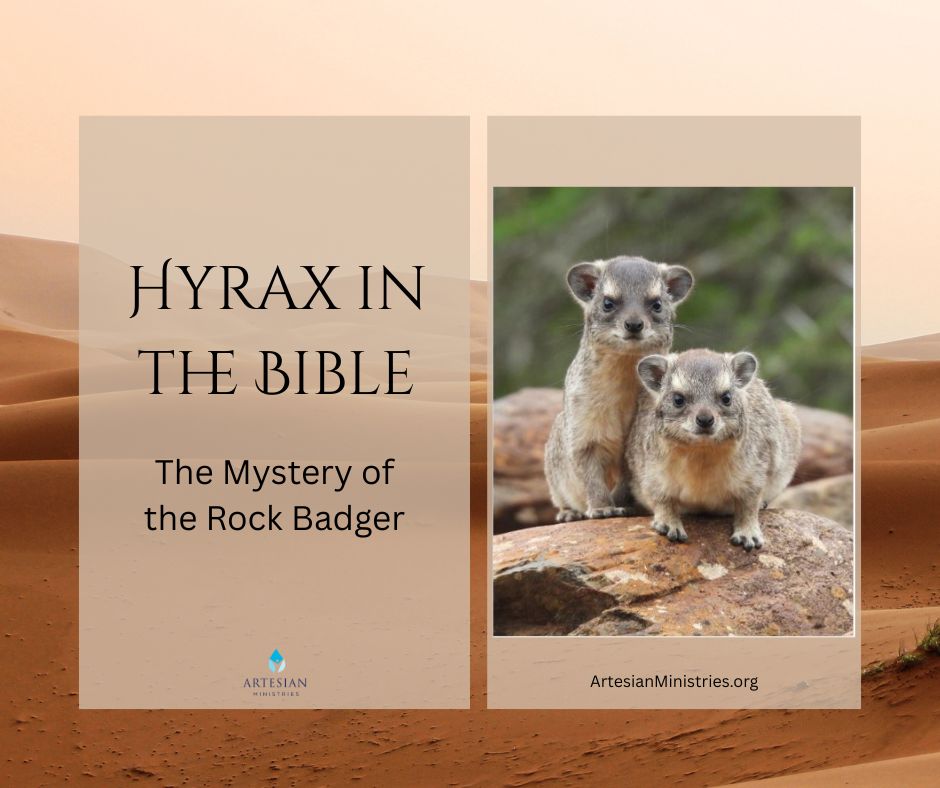
Hyrax In The Bible-The Mystery Of The Rock Badger

When reading through the Bible, especially the Old Testament, you may encounter references to an unusual creature that modern translations call a “rock badger,” “coney,” or by its scientific name, the “hyrax.” What is a hyrax in the Bible?

Hyrax in the Bible the mystery of the rock badger

This small, furry mammal appears in several biblical passages, yet many readers today have never seen one or know little about it. Understanding what a hyrax is and why it appears in Scripture provides valuable insight into the natural world of biblical times and the practical wisdom God communicated through His Word.

Biblical References to the Hyrax

The hyrax appears in four primary passages in the Bible. The first time  they are mentioned is in Leviticus 11:5. Moses lists the hyrax among the unclean animals that the Israelites were forbidden to eat: “And the coney, because he cheweth the cud, but divideth not the hoof; he is unclean unto you.” The same prohibition appears in Deuteronomy 14:7, reinforcing the dietary laws given to God’s people.

Beyond the dietary laws, the hyrax receives mention in two other significant passages. Psalm 104:18 describes God’s provision for His creation: “The high hills are a refuge for the wild goats; and the rocks for the conies.” This poetic passage celebrates how God designed specific habitats for different creatures. 

Perhaps most memorably, Proverbs 30:26 praises the wisdom of the hyrax: “The conies are but a feeble folk, yet make they their houses in the rocks.”

Related: Praying Mantis in the Bible: Symbolism and Meaning

Praying Mantis in the Bible

What Exactly Is a Hyrax?

The hyrax are scientifically known as Procavia capensis, rock badgers, or rock hyraxes. They are a small mammal roughly the size of a rabbit, typically weighing between four and twelve pounds.

Despite its rodent-like appearance, the hyrax is surprisingly related to elephants and manatees, sharing certain skeletal and dental features with these much larger animals. This connection demonstrates the incredible diversity of God’s creation.

These creatures have compact, furry bodies with short legs, small rounded ears, and no visible tail. Much like a guinea pig. Their fur ranges from brown to gray, providing excellent camouflage among the rocky environments they inhabit.

They are creatures of little power and small size who live in rocky terrain and clefts of the rocks. Some of these small animals are even found in high mountains.

Hyraxes possess specialized padded feet with moist, rubbery soles that create suction, enabling them to climb steep rock faces and cliffs with remarkable agility. This physical design perfectly suits their habitat, as Scripture notes. God’s providential care of all different animals reflects His attention to every detail and His great love.

Related: What is the Spiritual Meaning of Rain in the Bible?

spiritual meaning of rain in the bible

Habitat and Behavior

Hyraxes are native to Africa and the Middle East, including the land of Israel where the biblical events took place. They live in colonies among rocky outcrops, cliffs, and boulder fields, exactly as the Bible describes. The African Wildlife Foundation provides much information about the hyrax.

These social animals typically gather in groups of ten to eighty individuals, with a dominant male leading the colony. Isn’t that just like our Heavenly Father to create social community even among little creatures? Their choice to dwell in rocks of desert cliffs provides protection as easy prey from predators such as leopards, eagles, and snakes.

The behavioral patterns of hyraxes align with the biblical descriptions of their wisdom. Despite being small and physically vulnerable, they survive through intelligent use of their environment. They post sentries in their rocky crags to watch for danger while others feed. They retreat quickly into rock crevices as a safe refuge when threatened. 

This demonstrates the practical wisdom praised in Proverbs. They compensate for physical weakness through strategic living in their natural habitat and difficult terrain. God’s care of these little wise creatures beautifully reflects God’s love.

Related: Joshua Tree Reference in the Bible: What Does It Mean?

Joshua Tree Biblical Meaning

Coney, Rock Badger, or Hyrax?

Different Bible translations use various terms for the hyrax, which can create confusion for modern readers. The King James Version uses “coney,” an old English word for rabbit. Other translations employ “rock badger,” “rock hyrax,” or simply “hyrax.” 

The original Hebrew word is “shaphan.” In terms of its biblical name it means “the hidden one” or “one who hides.” It perfectly describing this obscure creature’s habit of disappearing into rock crevices and rocky cliffs when danger approaches.

Historical translations faced challenges because translators in England and Europe had never encountered hyraxes since they don’t live in those regions. They used familiar animals as substitutes, leading to terms like “coney” or “rock coney.” 

Modern English translations benefit from better zoological knowledge and typically use more accurate terminology. But the variety of names can still perplex readers unfamiliar with Middle Eastern wildlife.

The Dietary Law Classification

The Word of God lists the hyrax as unclean for consumption which has sparked discussion among scholars. Leviticus states that this animal of the desert “chews the cud” but doesn’t have a divided hoof. 

Scientifically, hyraxes are not true ruminants and don’t chew cud in the technical sense that cattle do. However, they do practice a behavior called refection, moving their jaws in a chewing motion and re-ingesting certain materials, which to ancient observers would appear similar to cud-chewing.

This classification system helped the Israelites maintain their distinct identity as God’s chosen people. They promoted health practices that set them apart from surrounding nations. Whether the description represents phenomenological language (describing what appears to be) or addresses the hyrax’s actual digestive behaviors, the dietary restriction was clear and purposeful.

Related: The Valley of Dry Bones: Complete Biblical Meaning

valley of dry bones ezekiel bible

Lessons from the Hyrax

The biblical mentions of the hyrax contain practical spiritual applications for believers today. Proverbs 30:24-28 lists four creatures, including the hyrax, as examples of wisdom despite apparent weakness. The hyrax teaches us that physical strength isn’t necessary for survival and success—wisdom, community, and proper use of resources matter more.

The “rock rabbit” finds safety in the rocks, just as believers find refuge in God, our Rock. Psalm 18:2 declares, “The LORD is my rock, and my fortress, and my deliverer; my God, my strength, in whom I will trust.” The parallel is striking. Just as the hyrax would perish without rocky refuges, believers need God as their foundation and protection.

Modern Understanding and Biblical Accuracy

Archaeological and zoological research has confirmed the presence of hyraxes throughout Israel’s history and today. Visitors to Israel today can still observe hyrax colonies living among the rocks at sites like Ein Gedi, Masada, and various locations throughout the Judean wilderness.

These observations validate the biblical descriptions and demonstrate Scripture’s reliability in describing the natural world.

The accuracy of biblical references to the hyrax, including its habitat, behavior, and characteristics, strengthens confidence in Scripture’s overall trustworthiness. God’s Word speaks truthfully about all subjects it addresses, from salvation to zoology.

Related: How Tall and Big Were Giants in the Bible?

Giants in the Bible

Bottom Line

The hyrax in the Bible represents far more than a curious footnote in Scripture. This small mammal illustrates important principles about wisdom, refuge, and God’s creative design. Understanding what a hyrax is enriches our reading of passages like Proverbs and Psalms, connecting ancient wisdom to observable creation. 

Whether called a coney, rock badger, or hyrax, this remarkable creature continues pointing readers toward practical wisdom and the greater truth that our ultimate refuge is found not in rocks, but in the Rock of Ages, Jesus Christ.

Related Posts:

About the Author

Donna is an award-winning author, sought-after speaker, and Bible teacher. Her path from unchurched to becoming passionate about sharing Jesus was difficult. Read about her God-breathed journey: “From Unchurched to Becoming a Multi-Published Author and Sought-After Speaker.” If you want to send Donna a quick message, visit her here.

donna snow

{Some of these links are affiliate links. If you purchase through that link, the ministry may receive a small commission at no extra cost to you.}

Best Bible Verses To Put On Christian Gravestones

When a Christian loved one passes away, choosing the right words for their gravestone is a deeply meaningful decision. So what are the best Bible verses to put on Christian gravestones?

Best Bible Verses To Put On Christian Gravestones

A well-selected Bible verse can capture the essence of their faith. It provides comfort to those who visit and serves as a lasting testimony to God’s promises. 

Many families still today continue to turn to Scripture for these permanent memorials marking a loved one’s final resting place. These verses are both concise enough to fit on a headstone and profound enough to honor a life lived in faith.

Why Scripture Belongs on Christian Gravestones

The tradition of placing Bible verses on Christian gravestones dates back centuries and serves multiple important purposes. When someone we hold dear receives their crown of life, we know the presence and steadfast love of the Lord holds them until we see them again.

First and foremost, Scripture on a gravestone proclaims the deceased person’s faith in Christ Jesus and their hope in eternal life. These verses remind visitors that death is not the end for believers but rather a transition to eternal glory.

Second, they offer comfort those who grieve. Bible verses on gravestones provide ongoing comfort to family members and friends who visit the grave. Each time they come to remember their loved one, they encounter God’s promises of hope, resurrection, and reunion. 

These words can speak peace into moments of grief. They remind mourners that their loved one is not truly gone but has simply moved ahead to their eternal home in everlasting life. They also provide assurance of things promised to God’s children.

Related: 10 Powerful Prayers of Peace After Death of a Loved One

Prayers of Peace

Witness to Others

A gravestone with Scripture also serves as a witness about the love of God to others who walk through the cemetery. Visitors may be searching for God’s ever-present hope in their own difficult times. 

A well-chosen verse can plant seeds of faith or remind fellow believers of God’s unchanging promises. Even when a loved one’s time on earth may have been cut short, the everlasting love of God never fades.

Although a Christian funeral service provides a meaningful way to hear about the kingdom of Heaven, the perfect headstone inscription provides continual comfort during lengthy times of mourning.

The Bible verse you choose becomes part of your loved one’s permanent legacy. It summarizes what they believed, what sustained them in life, and what they trusted in for eternity to the glory of God. This makes the selection process for the perfect inscription both sacred and significant.

Top Short Bible Verses for Christian Gravestones

The following verses are among the most popular choice for Christian memorials. Each of these favorite verses offer profound truth in a brief format suitable for engraving. They will fit on granite headstones, bronze plaques, or even a memorial plaque.

“I am the resurrection and the life.” John 11:25

This powerful declaration from Jesus Himself is one of the most frequently chosen gravestone verses. It directly addresses the reality of death while proclaiming Christ’s power over it. 

The full verse continues with Jesus promising that whoever believes in Him will live, even though they die. This verse is perfect for a gravestone because it focuses attention on Christ rather than death, emphasizing the Christian hope of resurrection.

“Well done, good and faithful servant.” Matthew 25:21

This phrase comes from Jesus’s parable about faithful stewardship. It represents the ultimate commendation from the Lord to those who have served Him faithfully throughout their lives. Families often choose this verse for loved ones who demonstrated consistent faith and service. 

It’s particularly meaningful for those who served in ministry, missions, or who simply lived their daily lives as devoted followers of Christ. “In loving memory” simply does not cover how much we value a person’s life that was rooted in the Word of the Lord.

“To live is Christ, to die is gain.” Philippians 1:21

Paul’s words perfectly capture the Christian perspective on both life and death. This verse is ideal for gravestones because it acknowledges that while life is valuable when lived for Christ, death is not something to fear. What comfort God provides!

For believers, death is rather a gain—a promotion to the presence of God and His great love. It’s a particularly comforting choice for families processing the loss of someone who truly lived for Jesus.

“Absent from the body, present with the Lord.” 2 Corinthians 5:8

This verse provides direct comfort by explaining where believers go when they die. It’s concise yet complete, offering assurance that death is not emptiness or uncertainty but immediate entrance into God’s presence. 

Many families appreciate this verse because it helps them visualize their loved one in heaven rather than simply in the grave. The name of the Lord in this verse serves as a beautiful reminder of God’s love and kind heart. He is our true Source of comfort.

“In Christ alone.” (Various References)

While not a direct quote from a single verse, this phrase captures the essence of passages like Acts 4:12 and Galatians 2:20. It’s beautifully simple yet theologically complete. It is a perfect Bible verse to honor the beautiful memory of a Christian’s next adventure with God in heaven.

It emphasizes that salvation and hope of eternal life are found exclusively through Jesus Christ. This brevity makes it ideal when space is limited.

Related: Encouraging Bible Verses for When You Feel Alone

Encouraging Bible Verses for When You Feel Alone

“Blessed are the pure in heart, for they will see God.” Matthew 5:8

From the Beatitudes, this verse is particularly appropriate for those who demonstrated genuine faith and integrity throughout their lives. In times of trouble when we lose a loved one on earth, this reminds us that God’s unfailing love will shine directly on their faces in heaven.

It points to the ultimate blessing of seeing God face to face. It affirms the reality for believers who have passed from this life into the Kingdom of God.

“For me to live is Christ.” Philippians 1:21a

Some families prefer to use only the first portion of Philippians 1:21, which focuses on how the person lived rather than on death itself. 

This choice celebrates a life devoted to Christ and can be especially meaningful for those whose faith was central to their identity. Life eternal is promised to all who believe that Jesus lived, died, and rose again to wipe their sins away to the glory of the Father.

“Safe in the arms of Jesus.”

While this is more of a hymn lyric based on biblical themes rather than a direct Scripture quote, it beautifully captures the biblical truth of believers being secure in Christ’s care. 

This quote is particularly popular for children’s graves. However, it is also appropriate for adults, conveying both peace, protection, and God’s ever-present help. 

“Until we meet again.”

Based on the biblical promise of reunion in heaven, this phrase offers hope to grieving family members. The gift of God is eternal life, so even though we miss our loved ones, by faith we will see them again. 

It acknowledges the temporary nature of separation and points forward to the eternal reunion promised in 1 Thessalonians 4:17.

“Peace, perfect peace.” Isaiah 26:3

This verse speaks to the peace that God provides, which is especially meaningful for those who suffered illness or struggled before death. In times of loss, good things seem scarce. But God’s peace covers us every single day.

This verse does not simply spot kind words. It proclaims that your loved ones are now experiencing the perfect peace that only God can give.

Related: The Valley of Dry Bones: Complete Biblical Meaning

valley of dry bones ezekiel bible

How to Choose the Right Verse

Selecting a Bible verse for a gravestone requires thoughtful consideration. Here are important factors to guide your decision.

Did your loved one have a favorite Bible verse or passage that was particularly meaningful to them? Perhaps they quoted it often, had it displayed in their home, or mentioned it as a source of strength. Using their personal favorite verse makes the memorial even more authentic and representative of their faith journey.

Think about verses that capture how your loved one lived or what characterized their faith. Was mercy their hallmark? Consider Matthew 5:7. Were they known for their love? Perhaps 1 Corinthians 13:13 or John 13:35 would be appropriate. Matching the verse to their character creates a gravestone that truly represents who they were.

While you want a meaningful verse, practical considerations matter too. Gravestones have limited space, and longer verses may require smaller text that becomes difficult to read. Shorter verses or well-known phrases often make better choices because they’re easier to engrave clearly and remain readable over time.

Theological Clarity and Comfort

Choose verses that clearly express Christian truth about death, resurrection, and eternal life. Avoid obscure passages that might confuse visitors or fail to communicate the hope of the Gospel. The gravestone verse should proclaim faith clearly and unambiguously.

Consider which verses will provide ongoing comfort to those who visit the grave. Some families find verses about reunion particularly comforting, while others prefer verses that emphasize the deceased’s present happiness in heaven.

Related: Top 50 Encouraging Psalms in the Bible for Every Day

Encouraging Psalms

Practical Considerations for Gravestone Inscriptions

Most gravestones have limited space for inscriptions. After including the person’s name, birth and death dates, and perhaps a brief description or maiden name, remaining space is often limited. This makes short verses essential. Work with your monument company to understand exactly how much text will fit legibly.

The font you choose affects readability and how much text you can include. Traditional serif fonts often work well for Bible verses, conveying both dignity and readability. Your monument company can show you samples of how different verses look in various fonts and sizes.

Always verify the exact wording and reference of your chosen verse. Small errors in Scripture quotations or incorrect verse references can be embarrassing and permanent. Have multiple people proofread the inscription before finalizing it with the engraver.

Decide which Bible translation to use. The King James Version is traditional and formal, while more modern translations like the NIV or ESV may be more understandable to contemporary readers. Consider your loved one’s preferred translation or which version is most familiar to your church community.

Additional Meaningful Short Verses

“The Lord is my shepherd.” Psalm 23:1

This beloved opening to the 23rd Psalm immediately evokes the entire psalm’s comfort and assurance. It’s universally recognized and speaks to God’s guidance and care.

“God is love.” 1 John 4:8

Brief yet profound, this verse summarizes God’s character and can be particularly appropriate for those who exemplified love in their lives.

“Forever with the Lord.” 1 Thessalonians 4:17

This phrase directly addresses the believer’s eternal state, offering comfort and certainty about where they are now.

“In my Father’s house are many mansions.” John 14:2

While slightly longer, this verse is often shortened to “In my Father’s house” and points to the heavenly home Jesus prepared for believers.

“Precious in the sight of the Lord is the death of His saints.” Psalm 116:15

This verse reminds us that God values His children and their homecoming to heaven, though it may be slightly longer for some gravestones.

Related: Biblical Meaning of INRI on the Cross of Jesus Christ

Meaning of INRI

The Good Fight

Choosing a Bible verse for a Christian gravestone is a sacred responsibility and a final gift you can give to honor your loved one’s memory. The right verse will provide comfort for decades to come, proclaim the hope of the gospel to all who pass by, and serve as a lasting testimony to a life lived in faith.

Take time to pray about your decision, consult with family members, and consider what would best represent your loved one’s faith and character. Whether you choose one of the classic verses mentioned here or another passage that holds special meaning for your family, let Scripture be the foundation of this permanent memorial.

Bottom Line

Today, as throughout church history, God’s Word remains “living and active” (Hebrews 4:12), able to speak hope and comfort even from a gravestone. The verse you choose will continue ministering to hearts long after it’s engraved, making it one of the most important decisions in the memorial process.

Remember that while the body rests in the grave, the believer’s spirit is already enjoying the presence of God. The gravestone, then, is not primarily about death but about the victory over death that Christ secured. 

Let the Scripture you choose reflect that glorious truth and point all who read it toward the hope we have in Jesus Christ, the resurrection and the life.

Related Posts:

About the Author

Donna is an award-winning author, sought-after speaker, and Bible teacher. Her path from unchurched to becoming passionate about sharing Jesus was difficult. Read about her God-breathed journey: “From Unchurched to Becoming a Multi-Published Author and Sought-After Speaker.” If you want to send Donna a quick message, visit her here.

Donna Snow in Israel

{Some of these links are affiliate links. If you purchase through that link, the ministry may receive a small commission at no extra cost to you.}

How Did Queen Esther Die According to the Bible?

Queen Esther stands as one of the most courageous and influential young women in biblical history. But how did Queen Esther die?

What Happened to Queen Esther in the Bible? Her Life, Legacy, and Death

Her story, preserved in the Book of Esther in the Hebrew Bible and Christian Old Testament, recounts how a young Jewish woman rose to become queen of Persia and saved her people from genocide. 

While the biblical text provides detailed accounts of her heroic actions, many wonder what ultimately happened to Queen Esther and how she died. So let’s explores both the biblical narrative and historical sources to shed light on the life, legacy, and death of this remarkable queen.

Who Was Queen Esther?

Esther, originally named Hadassah, was a Jewish orphan raised by her cousin Mordecai in the Persian capital of Susa during the reign of King Ahasuerus. This Persian king, identified by most scholars as King Xerxes I, ruled from 486 to 465 BCE. The Book of Esther describes her as beautiful in form and appearance, qualities that would eventually lead to her selection as queen.

The biblical account explains that King Ahasuerus, being full of the royal wine, deposed Queen Vashti for refusing to display herself before his guests during a great banquet. Such public rejection did not sit well with the king of Persia. At his wise men’s suggestion, he ordered a search throughout his kingdom for a new queen. 

Related: Chosen: A Study of Esther

chosen - a study of esther

The Miss Persia Contest

Beautiful young virgins were brought to the king’s palace, and young Esther was among them. She found favor with Hegai, the custodian of the women. After twelve months of beauty treatments overseen by the king’s eunuch, it was Esther’s turn to be presented to the king. 

One night with the king changed this young woman’s life forever. Ahasuerus loved Esther more than all the other women. Consequently, the king’s edict turned Esther’s role into queen in Vashti’s place. Placing the royal crown on her head meant that Esther’s life in the royal palace began.

Esther’s Hidden Identity

Before Esther was swept into the king’s palace, her older cousin Mordecai instructed her to conceal her Jewish identity and heritage. This hidden identity would become pivotal to the biblical story‘s dramatic turn of events and ironic reversals. Living in the Persian court while secretly being part of a minority religious group required tremendous courage and discretion. 

We can only speculate, but had the other beautiful young women who were in the running for queen ever discovered Esther’s Jewish heritage, they likely would have exposed it to take her out of the running. The fate of those not chosen was to be relegated to the king’s harem for the rest of their lives. Once the king touched them, no other man could.

Related: Queen Esther in the Old Testament

queen esther in the bible

The Crisis That Defined Queen Esther’s Legacy

The central drama of Esther’s story in the citadel of Susa would not be complete without one of the main characters being a villain. So the official Haman slithers in from stage left. He is the perfectly evil villain in the form of a high-ranking official. King Ahasuerus promoted this wicked Haman above all other nobles. 

Esther’s older cousin Mordecai, son of Jair, was a Jewish man. Despite historical evidence that Mordecai was a court official in the time of Xerxes, he was a man who understood God’s purpose. 

When Mordecai refused to bow down to Haman based on his godly convictions, Haman became enraged. Rather than simply targeting Mordecai, Haman’s fury expanded to encompass all Jewish people throughout the Persian Empire.

Haman’s Genocidal Plot

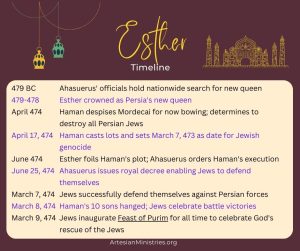
Haman manipulated King Ahasuerus into issuing a decree that on the thirteenth day of the twelfth month of Adar. It declared that all Jews throughout the kingdom would be killed and their property plundered. Haman cast lots, or “pur” in Persian, to determine the most auspicious single day for this massacre. The royal decree was written, sealed with the king’s signet ring, and sent throughout the empire. 

“Letters were sent by couriers to all the king’s provinces with instruction to destroy, to kill, and to annihilate all Jews, young and old, women and children, in one day, the thirteenth day of the twelfth month, which is the month of Adar, and to plunder their goods” (Esther 3:13).

While this decree caused Susa to be thrown into confusion, what did Haman and the king do? “And the king and Haman sat down to drink, but the city of Susa was thrown into confusion” (Esther 3:15).

That’s pretty cold-hearted to sit and clink glasses after the announcement of mass murder. Haman’s plot seemed to be working. Yet God’s plan was bigger.

Related: Who Was the Strongest Man in the Bible and Why?

strongest man in the Bible

Esther’s Dangerous Decision

When Mordecai learned of the decree, he sent word to Esther, urging her to approach the king and plead for her people. This request placed Esther in mortal danger. Persian law forbade anyone from approaching the king unsummoned under penalty of death.

“All the king’s servants and the people of the king’s provinces know that if any man or woman goes to the king inside the inner court without being called, there is but one law—to be put to death, except the one to whom the king holds out the golden scepter so that he may live. But as for me, I have not been called to come in to the king these thirty days” (Esther 4:11). 

After initially expressing her fears, Esther’s response reveals her character and faith. She accepted the challenge with the famous words: “Go, gather all the Jews to be found in Susa, and hold a fast on my behalf, and do not eat or drink for three days, night or day. I and my young women will also fast as you do. Then I will go to the king, though it is against the law, and if I perish, I perish” (Esther 4:16). 

This collective fasting represented both spiritual preparation and communal solidarity. It’s a beautiful reflection of godly behavior and trust in God’s plan.

Related: Fasting in the Bible: A Powerful Scripture Guide

fasting-scriptures-bible-guide

Esther’s Strategic Approach

Rather than immediately revealing the plot, Esther demonstrated remarkable wisdom and strategic thinking. She fully dressed in her royal queen apparel and approached the king. He extended his scepter and offered to grant her request up to half his kingdom. Instead of making her petition immediately, she invited the king and Haman to a private banquet. At this first banquet, she invited them to a second banquet the following day.

“And when the king saw Queen Esther standing in the court, she won favor in his sight, and he held out to Esther the golden scepter that was in his hand. Then Esther approached and touched the tip of the scepter. And the king said to her, ‘What is it, Queen Esther? What is your request? It shall be given you, even to the half of my kingdom.’ And Esther said, ‘If it please the king, let the king and Haman come today to a feast that I have prepared for the king'” (Esther 5:2-4).

This strategy built suspense and allowed her to prepare her case carefully. Including Haman in the invitation elevated Haman’s pride before his fall, and gave God time to orchestrate events in her favor. 

Two Banquets Make the Difference

During the night between the two banquets, the king could not sleep and ordered the royal chronicles to be read to him. He discovered that Mordecai had once uncovered and reported an assassination plot against him but had never been rewarded.

At the second banquet, Esther finally revealed both her Jewish identity and Haman’s genocidal plot. The king’s fury led to Haman being hanged on the very gallows he had prepared for Mordecai. Persian law prevented the king from revoking the original decree, so he issued a new decree allowing the Jews to defend themselves. On the appointed day, the Jews triumphed without any loss of life.

Related: The Valley of Dry Bones: Complete Biblical Meaning

valley of dry bones ezekiel bible

Jewish Festival of Purim

The overarching theme of the Book of Esther is God’s deliverance of His people from destruction. The result is a wonderful celebration known as the Feast of Purim. This feast is not mentioned in Leviticus or anywhere else in Mosaic Law. However, were it not for the Book of Esther, we would not know how today’s Purim celebrations came about.

The Feast of Purim was established to commemorate God’s deliverance of His chosen people through the courageous bravery of Esther and her cousin Mordecai. Although only mentioned in the Book of Esther in Scripture, Purim has been faithfully celebrated by the Jewish people from the time of Esther until today.

Today, Purim is a carnival-type atmosphere where festival-goers dress up as characters from the book. An important part of Purim is the traditional of charitable giving of food and drink to the poor. Purim is one of the only two festivals designated apart from Mosaic Law that is still celebrated by Jewish people today. The other one is the Festival of Lights (Hanukkah) found in John 10:22.

Related: What Does Hanukkah Mean According to the Bible?

Hanukkah According to the Bible

What the Bible Tells Us About Esther’s Later Life

The Book of Esther concludes with the establishment of the festival of Purim to commemorate the Jews’ deliverance. Mordecai became second in rank to King Ahasuerus among the royal officials, taking the place of Haman. However, the biblical text provides limited information about what happened to Queen Esther after these dramatic events.

The story of Esther in the Bible ends at the end of the book of Esther. Therefore, the best place to seek additional information comes from extrabiblical resources, historical facts, and archaeological writings during the time period in which she lived.

Esther’s Continued Influence

The final chapters of the Book of Esther indicate that Esther continued to exercise influence in the Persian court. Esther 9:29-32 describes how “Queen Esther, daughter of Abihail, along with Mordecai the Jew, wrote with full authority to confirm this second letter concerning Purim.”

This suggests she maintained her position and authority as queen and worked alongside Mordecai to ensure the proper observance of Purim among future generations.

The text also mentions that Mordecai’s acts and his might were written in the chronicles of the kings of Media and Persia, indicating that both he and presumably Esther remained influential figures in the Persian government for some time.

Unfortunately, those chronicles mentioned in Esther have never been found nor recovered. Imagine the wealth of insights, information, and wonders we would know if they are one day uncovered!

Related: Powerful Bible Verses for Self-Esteem and Self-Worth

bible verses for self-esteem

Historical Sources on Esther’s Death

The canonical Book of Esther does not record how or when Queen Esther died. Various Jewish traditions and historical sources provide additional perspectives, though these should be understood as traditional rather than definitively historical accounts.

Jewish Rabbinic Traditions

The Talmud and other rabbinic literature offer some traditions about Esther’s later life. Some rabbinic sources suggest that Esther lived a long life and remained queen for many years. The Talmud includes discussions about Esther among the prophets and righteous women of Israel, indicating her enduring importance in Jewish tradition.

According to some Jewish traditions, Esther may have returned to the Jewish community after King Ahasuerus died, though the biblical text gives no indication of this. Other traditions suggest she remained queen until her death, fulfilling her role as an advocate from her royal throne for her people within the Persian court.

Persian Historical Context

Historical records from the Persian Empire during the reign of Xerxes I do not mention Queen Esther by name. This omission has led to scholarly debates about the historical nature of the Book of Esther. 

However, the absence of extra-biblical sources does not necessarily negate the biblical account. Many ancient records have been lost. Royal harems of the period often included multiple queens and consorts whose names may not have been comprehensively recorded.

Xerxes I died in 465 BCE, assassinated in a palace conspiracy. If Esther was indeed his queen, she would have experienced this traumatic event. What happened to her afterward remains unknown from historical records.

Later Traditions and Legends

Some later Christian and Jewish traditions place Esther’s tomb in Hamadan, Iran, at a site that also claims to house Mordecai’s tomb. This shrine has been a pilgrimage site for Persian Jews for centuries. However, the authenticity of this burial site cannot be verified through historical or archaeological evidence.

Medieval Jewish sources sometimes expanded on Esther’s story, with various embellishments about her later life, but these should be understood as Midrashic literature, religious interpretation and storytelling rather than historical documentation.

Related: Sons of Noah in the Bible and What Happened to Them

sons of Noah in the Bible 

The Enduring Legacy of Queen Esther

Regardless of the specific details of her death, Queen Esther’s legacy has endured for over two millennia. Her story continues to inspire people around the world. The festival of Purim remains an important celebration in Jewish communities worldwide. 

Esther’s willingness to risk her life for her people, exemplified in her statement “If I perish, I perish,” has made her a symbol of courage in the face of injustice. She demonstrated that even those in positions of privilege have a responsibility to speak up for the oppressed, even at great personal cost.

Notably, the Book of Esther is unique among biblical books in that it never explicitly mentions God. Yet the entire narrative demonstrates divine providence working through human choices and circumstances. Mordecai’s words to Esther, “Who knows whether you have not come to the kingdom for such a time as this?” (Esther 4:14) suggest a belief in purposeful positioning and divine timing.

Remembering Queen Esther

While the Bible does not provide specific information about Queen Esther’s death, her life and actions are thoroughly documented in Scripture. God transformed Esther from an orphaned Jewish girl to the Queen of Persia, using her position to save her people from annihilation. 

The establishment of Purim ensures that her courage and faith are remembered annually by Jewish communities worldwide.

The lack of details about her death in many ways emphasizes that Esther’s importance lies not in how she died, but in how she lived. She was willing to risk everything for justice. We see her strategic wisdom and faithfulness to her people and heritage. We see extraordinary courage in the face of potential death. Those define her legacy far more than the circumstances of her eventual passing.

Related: How Old Was Noah When He Died According to the Bible?

How old was Noah when he died?

Bottom Line

Queen Esther remains a powerful example of how one person, regardless of their background or circumstances, can change history. The ingredients include courage, faith, and decisive action.

Her story encourages believers and non-believers alike to consider how they might be positioned “for such a time as this” to make a difference in their own spheres of influence. 

Esther’s story continues to resonate in contemporary contexts. It inspires discussions about ethnic identity, assimilation, standing against genocide and systemic injustice. It opens dialogue regarding the role of women in leadership, and the intersection of faith and political action.

Her narrative provides a framework for thinking about how individuals can make a difference even within corrupt or dangerous systems.

We may never know precisely how Queen Esther died. But we can be certain that her life continues to speak powerfully across the centuries, inspiring each generation to stand courageously for justice and truth.

Related Posts:

About the Author

Donna is an award-winning author, sought-after speaker, and Bible teacher. Her path from unchurched to becoming passionate about sharing Jesus was difficult. Read about her God-breathed journey: “From Unchurched to Becoming a Multi-Published Author and Sought-After Speaker.” If you want to send Donna a quick message, visit her here.

Signing book contract

{Some of these links are affiliate links. If you purchase through that link, the ministry may receive a small commission at no extra cost to you.}


Best Christian Happy Valentine’s Day Quotes for Dads

Valentine’s Day isn’t just for romantic love. It’s a beautiful opportunity to celebrate all the meaningful relationships in our lives. That includes the bond between children and their fathers.

While February 14th typically focuses on romantic partners, expressing love and appreciation for your dad on this special day can create lasting memories and strengthen family bonds. 

Whether your father is still with you or you’re honoring his memory, these heartfelt Christian-inspired quotes and Valentine messages will help you express your gratitude for the gift of fatherhood.

Why Celebrate Your Dad on Valentine’s Day

Valentine’s Day presents a perfect moment to expand our understanding of love beyond romance. For many people, their father was their first hero, protector, and example of unconditional love.

The Bible remind us that love comes in many forms, and the love between parent and child reflects God’s love for His children. First Corinthians 13:4-7 describes love as patient, kind, and enduring. Those qualities define exceptional fathers.

Celebrating your dad as a good father on Valentine’s Day acknowledges his sacrifices, guidance, and unwavering support throughout your life. It’s an opportunity to break away from commercial traditions and create meaningful family moments with a special message to honor the men who shaped who we are today. 

Many fathers feel overlooked on holidays focused on mothers or romantic relationships, making your Valentine’s Day gesture even more impactful. A heartfelt message on this special occasion means more than you know.

Related: Best Good Luck and Encouraging Blessing Bible Verses

Best Good Luck and Encouraging Blessing Bible Verses

Christian Valentine’s Day Quotes for Dad

1. Biblical Blessings for Your Father

“Dad, you have shown me the Father’s love through your wonderful example. Happy Valentine’s Day to the best dad who let me glimpse God’s grace through your actions.”

“As Proverbs 20:7 says, ‘The righteous who walks in his integrity—blessed are his children after him!’ Thank you, Dad, for being that righteous man and my best friend. Happy Valentine’s Day.”

“Dad, your sacrificial and patient love reflect Christ’s love. I’m blessed to call you my dad and thank God for the special bond we share on Valentine’s Day and every day.”

“Dad, you’ve been my earthly shepherd, guiding me toward the Good Shepherd. This is a perfect time to thank you for pointing me toward Jesus. Happy Valentine’s Day with all my love.”

“The greatest gift you gave me, Dad, wasn’t wrapped in paper. It was your example of walking with God and saying the right words when I needed to hear them. Happy Valentine’s Day to my first spiritual mentor.”

2. Faith-Based Appreciation Messages

“Thank you, Dad, for praying over me, providing for me, and pointing me toward Jesus. You hold a special place in my heart and are loved beyond measure this Valentine’s Day.”

“Dad, you’ve shown me that true strength comes from faith, and true love comes from God. Happy Valentine’s Day to my hero in Christ.”

“Your footsteps led me to church, your words led me to Scripture, and your love led me to understand God’s love. You are my biggest supporter and pillar of strength. Happy Valentine’s Day, Dad.”

“I thank God for giving me a father who loves like Jesus, full of compassion, forgiveness, and grace. Happy Valentine’s Day, Dad.”

“Dad, Psalm 103:13 says, ‘As a father shows compassion to his children, so the Lord shows compassion to those who fear him.’ You’ve shown me both kinds of love. Happy Valentine’s Day with all my love.”

Related: Who Was the Wisest Man in the Bible That Ever Lived?

Wisest Man in the Bible

Heartfelt Fatherhood Quotes for Valentine’s Day

1. Celebrating His Role and Sacrifice

“To the man who worked tirelessly so I could dream endlessly. Happy Valentine’s Day, Dad. Your sacrifices never went unnoticed.”

“Dad, you didn’t just give me a wonderful life and a great sense of humor. You taught me how to live it with purpose, integrity, and love. Happy Valentine’s Day to my greatest teacher.”

“Every lesson you taught me, every moment you spent with me, every sacrifice you made all add up to a lifetime of love. Happy Valentine’s Day, Dad.”

“You may not wear a cape, but you’ve always been my superhero and biggest fan. Happy Valentine’s Day, Dad, to the strongest, kindest man I know.”

“Dad, fatherhood looks beautiful on you. Thank you for being present, patient, and purposeful in my life. Happy Valentine’s Day with lots of love.”

2. Honoring His Love and Guidance

“Dear Dad, the love you’ve given me has shaped the person I’ve become. I carry your wisdom and God’s light in my heart always. Happy Valentine’s Day, Dad.”

“Dad, you showed me that love isn’t just words. Love is showing up, staying committed, and never giving up. Happy Valentine’s Day!”

“Your hugs fixed my broken days. Your words lifted my discouraged heart. And your presence made me feel safe. Happy Valentine’s Day, Dad. I love you very much.”

“To my first love, my forever hero. Thank you for being the dad every child deserves. Happy Valentine’s Day, Dad.”

“Dad, the older I get, the more I appreciate everything you did for our family. Your love was never loud, but it was always present. Happy Valentine’s Day.”

Related: Father’s Day Quotes for Christian Brother-In-Law

Best Christian Father's Day Quotes for Brother-in-Law

Valentine’s Day Messages for Dads in Heaven

1. Remembering and Honoring His Memory

“Though you’re celebrating in heaven, your love still surrounds me here on earth. Happy Valentine’s Day, Dad. I miss you every day.”

“Even though you’re with Jesus now, but my heart holds you forever. Sending love to heaven this Valentine’s Day, Dad.”

“Dad, not a day passes that I don’t think of you. Your legacy of love continues in everything I do. Happy Valentine’s Day in heaven.”

“I know you’re watching over me from above. Thank you for being my guardian angel. Happy Valentine’s Day, Dad, to my forever valentine. Until we meet again.”

“Heaven gained an incredible man and I’m so thankful that I will see you again one day. Your love transcends the distance between us. Happy Valentine’s Day, Dad.”

2. Faith-Filled Remembrance Quotes

“Dad, you’re now in the presence of our Heavenly Father, and that brings me peace. Happy Valentine’s Day in paradise. I love you forever.”

“Though I cannot see you, you are in the right place with Jesus. I feel your love in every blessing God sends my way. Happy Valentine’s Day to my dad in heaven.”

“You taught me that love never dies; it just changes form. Your love lives on in my faith and in my heart. Happy Valentine’s Day, Dad.”

“One day we’ll reunite in our Father’s house. Until then, I’ll honor your memory and Christ’s love with how I live. Happy Valentine’s Day in heaven, Dad.”

“Your earthly journey ended, but your influence continues. Thank you for the foundation of faith you built in our family. Happy Valentine’s Day, Dad.”

Related: 10 Powerful Prayers of Peace After Death of a Loved One

Prayers of Peace

Creative Ways to Share These Quotes with Your Dad

1. Handwritten Cards and Letters

In our digital age, a handwritten card carries special significance. Choose a quality Valentine’s Day card and transcribe one of these quotes inside. The perfect message always includes your personal thoughts about specific memories or lessons your dad taught you. Include your favorite Bible verse. The time and effort of handwriting shows intentionality that touches hearts deeply.

2. Social Media Tributes

Share a photo of you and your dad on social media accompanied by one of these quotes. This public acknowledgment not only honors your father but also encourages others to celebrate the fathers in their lives. Use hashtags like #ValentinesDayDad, #ChristianFatherhood, and #DadLove to reach a broader audience.

3. Prayer and Scripture Reading

On Valentine’s Day morning, pray these quotes over your father or read Scripture passages about fatherhood together. This spiritual connection deepens your bond and centers your celebration on faith rather than commercialism. The most important thing is to create a day of love as the perfect Valentine’s Day gift.

4. Custom Gifts with Quotes

Consider having one of these quotes engraved on a watch, printed on a photo frame, or inscribed on a bookmark. Expressing your love for dad goes far beyond a Father’s Day card by making Valentine’s Day special, too. Physical reminders of your love become treasured keepsakes your dad will appreciate for years.

5. Family Dinner Sharing

Gather your family members for a special Valentine’s Day dinner and have each person share why they appreciate Dad using these quotes as inspiration. It’s a perfect opportunity to pull out the family photos to remember the little moments and special relationship you share. This is a great way to show dad his importance in everyone’s lives.

Related: Happy Father’s Day in Heaven Messages From Daughter

Happy Father's Day in Heaven Messages From Daughter

The Theology of Fatherhood and Love

Christianity places special emphasis on the father-child relationship as a reflection of God’s relationship with humanity. Throughout Scripture, God is referred to as Father, establishing the sacred nature of fatherhood. Earthly fathers have the profound responsibility and privilege of demonstrating God’s character, protection, provision, discipline, and unconditional love.

Ephesians 6:4 instructs fathers: “Fathers, do not provoke your children to anger, but bring them up in the discipline and instruction of the Lord.” This verse highlights that fatherhood is a spiritual calling, not just a biological role. Celebrating fathers on Valentine’s Day acknowledges this divine appointment.

The Prodigal Son parable in Luke 15 beautifully illustrates a father’s love. In those passages we see waiting, watching, running to embrace, forgiving completely, and celebrating restoration. Good fathers embody these qualities, making them worthy of honor not just on Father’s Day but on Valentine’s Day and every day.

Teaching Children to Honor Their Fathers

Valentine’s Day offers parents an excellent opportunity to teach children the biblical principle found in Exodus 20:12: “Honor your father and your mother, that your days may be long in the land that the Lord your God is giving you.” This commandment comes with a promise, emphasizing its importance in God’s design for families from the Bible.

Help children create handmade valentines for their dad or grandfather using these quotes as inspiration. Guide them in choosing words that express genuine appreciation. These early lessons in gratitude and honor shape character and strengthen family bonds across generations.

Related: Top 50 Encouraging Psalms for Every Day

Encouraging Psalms

For Single Dads: You Are Seen and Valued

Single fathers often carry double burdens. They fulfill both parental roles while managing work, household responsibilities, and their children’s emotional needs. Valentine’s Day can feel particularly challenging when romantic relationships are absent or complicated. These quotes affirm that forms of love aren’t limited to romance. Love flourishes in the sacred space between father and child.

Single dads, your sacrifices matter. Your consistent presence shapes your children’s understanding of commitment, undying love, and faithfulness. You’re modeling Christ’s dedication to His bride, the church, through your dedication to your children. This Valentine’s Day, receive these words as affirmation: you are enough, you are loved, and your fatherhood is a beautiful gift.

Expanding Love’s Definition This Valentine’s Day

As we celebrate Valentine’s Day, let’s broaden our perspective on love to include the foundational relationships that shaped us. Fathers deserve recognition for their often-quiet sacrifices. Though we may never see our father’s tears, their steady presence and faithful guidance never falter. 

Whether your dad is beside you, far away, or celebrating in heaven, taking time to express your love honors both him and our God who designed the father-child bond. The love of God our Father for each of us covers the pages of Scripture.

These heartfelt Christian quotes provide language for emotions that sometimes feel too deep for words. They connect biblical truth with personal gratitude, creating messages that resonate spiritually and emotionally. Your father may not expect Valentine’s Day recognition, which makes your gesture even more meaningful.

Bottom Line

This February 14th, make your dad feel valued, loved, and appreciated. Share a quote that captures your heart, spend quality time together, or simply say the words he needs to hear: “I love you, Dad. Thank you for everything.” In doing so, you’ll create a Valentine’s Day memory that transcends chocolate and roses, touching the eternal reality of family love rooted in faith.

Remember, love is patient, love is kind, and love never fails. This is especially true of the love between a father and child, forever anchored in the perfect love of our Heavenly Father.

Related Posts:

About the Author

Donna is an award-winning author, sought-after speaker, and Bible teacher. Her path from unchurched to becoming passionate about sharing Jesus was difficult. Read about her God-breathed journey: “From Unchurched to Becoming a Multi-Published Author and Sought-After Speaker.” If you want to send Donna a quick message, visit her here.

{Some of these links are affiliate links. If you purchase through that link, the ministry may receive a small commission at no extra cost to you.}

The Valley of Dry Bones: Complete Biblical Meaning

The vision of the valley of dry bones stands as one of the most vivid and dramatic prophecies recorded in Scripture. Found in Ezekiel 37:1-14, this Old Testament passage describes the prophet Ezekiel being led by the Spirit of God into a valley filled with dry, lifeless bones. 

What unfolds is a powerful demonstration of God’s ability to bring life from death. Resurrect hope from despair. Bring restoration out of complete devastation.

For believers throughout the centuries, this passage has served as profound encouragement during times of spiritual drought and national crisis. As we face continuing challenges today, the message of the dry bones remains as relevant as ever. It speaks to our deepest need for our Sovereign Lord’s divine intervention.

The Historical Context of Ezekiel’s Prophecy

To fully grasp the significance of the dry bones vision, we must first understand the historical circumstances surrounding Ezekiel’s ministry. The Book of Ezekiel reveals that the prophet Ezekiel was among the Jewish exiles taken to Babylon during the first deportation in 597 BC. That was approximately eleven years before the final destruction of Jerusalem in 586 BC.

The Babylonian exile represented the darkest period in the people of Israel’s history since their enslavement in Egypt. The people of Judah had been torn from their homeland by an exceedingly great army. The temple of Solomon had been destroyed and the monarchy of God’s servant David had been overthrown. 

This devastation felt like a death sentence for the children of Israel whose identity was deeply rooted in the promised land and the everlasting covenant with God. 

Ezekiel 37:11 captures the despair of the exiled community: “Then he said to me, “Son of man, these bones are the whole house of Israel. Behold, they say, ‘Our bones are dried up, and our hope is lost; we are indeed cut off.'” The people had lost all hope of national restoration and spiritual renewal. 

Ezekiel’s Role as Prophet

Ezekiel served as both priest and prophet during this tumultuous time and Babylonian captivity. His name means “God strengthens,” which was precisely his mission to strengthen the faith of a devastated people.

Before the vision of dry bones in chapter 37, Ezekiel had delivered numerous prophecies of judgment against Israel’s sinful backsliding and idolatry. The dry bones vision marked a turning point, shifting from judgment to hope and restoration.

Related: Perseverance: Praying Through Life’s Challenges

perseverance-nehemiah

The Vision Explained: Ezekiel 37:1-14

Verses 1-2: The Valley of Death

“The hand of the Lord was upon me, and he brought me out in the Spirit of the Lord and set me down in the middle of the valley; it was full of bones. And he led me around among them, and behold, there were very many on the surface of the valley, and behold, they were very dry” (Ezekiel 37:1-2).

The Spirit of God transported Ezekiel to the middle of the valley covered with bones. The Hebrew word for valley, “biq’ah,” suggests a broad, open plain, emphasizing the vast scope of death and destruction. The bones were not freshly deceased but “very dry,” indicating they had been there for a long time. 

This detail underscores the impossibility of natural restoration. These bones were beyond any hope of revival through human means.

Verse 3: The Divine Question

“And he said to me, “Son of man, can these bones live?” And I answered, “O Lord God, you know” (Ezekiel 37:3).

God’s question to Ezekiel did not seek information but invited faith. Ezekiel’s response demonstrated wisdom and humility. He didn’t presume to know what God could or couldn’t do, but instead deferred to God’s sovereign knowledge and power. 

This nugget from Scripture teaches us that what seems impossible to human understanding remains fully possible with God. The mountains of Israel (and everywhere else) can be moved by faith the size of a grain of mustard seed.

Related: What Do Forgiveness and Repentance Mean in the Bible?

forgiveness and repentance in the bible

Verses 4-8: The First Prophecy (The Bones Come Together)

“Then he said to me, “Prophesy over these bones, and say to them, O dry bones, hear the word of the Lord. Thus says the Lord God to these bones: Behold, I will cause breath to enter you, and you shall live. And I will lay sinews upon you, and will cause flesh to come upon you, and cover you with skin, and put breath in you, and you shall live, and you shall know that I am the Lord” (Ezekiel 37:4-6).

God commanded Ezekiel to prophesy to the lifeless bones. This seemed absurd. How could dead bones hear? Yet the Bible says Ezekiel obeyed. 

As he prophesied, a remarkable transformation began: “So I prophesied as I was commanded. And as I prophesied, there was a sound, and behold, a rattling, and the bones came together, bone to its bone. And I looked, and behold, there were sinews on them, and flesh had come upon them, and skin had covered them. But there was no breath in them” (Ezekiel 37:7-8).

The bones assembled themselves into complete bodies, with tendons, flesh, and skin. Yet they remained lifeless. Physical restoration without spiritual animation.

Verses 9-10: The Second Prophecy (The Breath of Life)

“Then he said to me, “Prophesy to the breath; prophesy, son of man, and say to the breath, Thus says the Lord God: Come from the four winds, O breath, and breathe on these slain, that they may live.” So I prophesied as he commanded me, and the breath came into them, and they lived and stood on their feet, an exceedingly great army” (Ezekiel 37:9-10).

The Hebrew word “ruach” is used here, which can mean wind, breath, or spirit. Ezekiel was instructed to prophesy to the wind or breath, calling it from the four corners of the earth. This breath entered the assembled bodies on the surface of the valley, and they came to life, standing as a vast army.

This imagery directly connects to Genesis 2:7, where “then the Lord God formed the man of dust from the ground and breathed into his nostrils the breath of life, and the man became a living creature.” Just as God animated the first human with His breath, He would reanimate His people through His Spirit.

Verses 11-14: The Interpretation

God Himself interpreted the vision for Ezekiel: “Then he said to me, “Son of man, these bones are the whole house of Israel. Behold, they say, ‘Our bones are dried up, and our hope is lost; we are indeed cut off.’ Therefore prophesy, and say to them, Thus says the Lord God: Behold, I will open your graves and raise you from your graves, O my people. And I will bring you into the land of Israel” (Ezekiel 37:11-12).

The dry bones represented the entire nation of Israel, both the northern kingdom (Israel) and the southern kingdom (Judah). Scripture clearly states that God promised to resurrect the nation, bringing them back from exile to their homeland. Ezekiel 37:14 emphasizes the spiritual dimension: “And I will put my Spirit within you, and you shall live, and I will place you in your own land. Then you shall know that I am the Lord; I have spoken, and I will do it, declares the Lord.”

Related: What is the Spiritual Meaning of Rain in the Bible?

spiritual meaning of rain in the bible

Theological Significance of the Dry Bones

The dry bones vision powerfully demonstrates God’s absolute sovereignty over life and death. Deuteronomy 32:39 declares, “See now that I, even I, am he, and there is no god beside me; I kill, and I make alive; I wound, and I heal; and there is none that can deliver out of my hand.”

When the situation appears completely dead, God possesses the power to resurrect and restore. That goes for any present condition of a nation, a ministry, a relationship, a family member, and personal faith. First Samuel 2:6 affirms, “The Lord kills and brings to life; he brings down to Sheol and raises up.”

The Power of God’s Word

Throughout the vision, transformation occurred through prophetic declaration. Ezekiel spoke God’s Word to lifeless bones, and they responded. This illustrates the creative and transformative power of God’s commands.

Hebrews 4:12 teaches, “For the word of God is living and active, sharper than any two-edged sword, piercing to the division of soul and of spirit, of joints and of marrow, and discerning the thoughts and intentions of the heart.”

Isaiah 55:10-11 promises, “For as the rain and the snow come down from heaven and do not return there but water the earth, making it bring forth and sprout, giving seed to the sower and bread to the eater, so shall my word be that goes out from my mouth; it shall not return to me empty, but it shall accomplish that which I purpose, and shall succeed in the thing for which I sent it.”

Related: Top 50 Encouraging Psalms in the Bible for Every Day

Encouraging Psalms

The Role of the Holy Spirit

The breath or “ruach” that animated the bodies represents the Holy Spirit. Physical assembly without spiritual life results in mere corpses. True life—spiritual vitality and purpose—comes only through God’s Spirit.

Jesus taught this principle to Nicodemus in John 3:5-6: “Jesus answered, “Truly, truly, I say to you, unless one is born of water and the Spirit, he cannot enter the kingdom of God. That which is born of the flesh is flesh, and that which is born of the Spirit is spirit.”

Paul wrote in Romans 8:11, “If the Spirit of him who raised Jesus from the dead dwells in you, he who raised Christ Jesus from the dead will also give life to your mortal bodies through his Spirit who dwells in you.”

Historical Fulfillment of the Prophecy

The initial fulfillment of Ezekiel’s prophecy began with the return of Jewish exiles to their homeland. Following the decree of Cyrus the Persian king in 538 BC (as recorded in Ezra 1:1-4), multiple waves of Jews returned to Jerusalem and Judah. They rebuilt the temple (completed in 516 BC) and later the walls of Jerusalem under Nehemiah’s leadership (completed in 445 BC).

This restoration was both physical (returning to the land) and spiritual (renewing covenant faithfulness to God). Ezra 1:5 notes, “Then rose up the heads of the fathers’ houses of Judah and Benjamin, and the priests and the Levites, everyone whose spirit God had stirred to go up to rebuild the house of the Lord that is in Jerusalem.”

Spiritual Fulfillment in the Church

The New Testament reveals that the promises to Israel find expanded fulfillment in the church, composed of both Jewish and Gentile believers united in Christ. 

Ephesians 2:12-13 says “remember that you were at that time separated from Christ, alienated from the commonwealth of Israel and strangers to the covenants of promise, having no hope and without God in the world. But now in Christ Jesus you who once were far off have been brought near by the blood of Christ.”

The outpouring of the Holy Spirit at Pentecost (Acts 2) represents the breath of God animating the church, bringing spiritual life to those who were formerly dead in trespasses and sins.

Personal Application: What Dry Bones Teach Us Today

The dry bones vision offers profound hope for situations that appear completely dead. Whether facing a struggling marriage, a wayward child, a dying church, financial ruin, or spiritual warfare, God specializes in resurrection. 

Romans 4:17 describes God “who gives life to the dead and calls into existence the things that do not exist.” Abraham believed God could bring life from his aged body and Sarah’s barren womb, and “he grew strong in his faith as he gave glory to God” (Romans 4:20).

The Necessity of Spiritual Life, Not Just External Form

The vision’s two-stage process teaches that external religious form without internal spiritual life equals death. Jesus condemned the Pharisees as “whitewashed tombs, which outwardly appear beautiful, but within are full of dead people’s bones and all uncleanness” (Matthew 23:27).

Churches can have impressive buildings, programs, and activities yet lack spiritual vitality. Individuals can maintain religious routines while their hearts remain far from God. Revelation 3:1 warns the church at Sardis, “I know your works. You have the reputation of being alive, but you are dead.”

True spiritual life comes through the indwelling Holy Spirit, producing the fruit of genuine transformation: “But the fruit of the Spirit is love, joy, peace, patience, kindness, goodness, faithfulness, gentleness, self-control; against such things there is no law” (Galatians 5:22-23).

Related: Quenched: Christ’s Living Water for a Thirsty Soul

Quenched: Christ's Living Water for a Thirsty Soul by Donna Snow

Obedience Despite Apparent Futility

Ezekiel obeyed God’s command to prophesy to dead bones. It was an action that seemed completely pointless. Often God calls us to act in faith when circumstances appear hopeless. Our obedience demonstrates trust in God’s power rather than reliance on what we can see or understand.

Second Kings 5 records Naaman’s healing from leprosy. The prophet Elisha told him to wash seven times in the Jordan River. Initially, Naaman was furious at such a simple, seemingly ineffective instruction. But when he humbled himself and obeyed, he was healed.

Similarly, Jesus commanded the man with the withered hand, “Stretch out your hand” (Matthew 12:13)—something impossible in his condition. Yet as he obeyed, healing came.

The Process of Restoration

Resurrection happened progressively in Ezekiel’s vision: first bones connecting, then sinews and flesh appearing, then skin covering, and finally breath entering. This suggests that spiritual restoration often occurs in stages rather than instantaneously. God can do whichever He wills to do.

When returning to God after a period of spiritual deadness, we shouldn’t expect immediate perfection. Sanctification is a process. Philippians 1:6 assures us, “And I am sure of this, that he who began a good work in you will bring it to completion at the day of Jesus Christ.”

Peter fell dramatically yet was restored through Christ’s patient restoration process (John 21:15-19). The prodigal son’s return involved a journey and not instantaneous transportation (Luke 15:11-32).

Speaking Life to Dead Situations

Ezekiel prophesied God’s Word to the bones. Believers today are called to speak God’s truth into dead and dying situations. This doesn’t mean presumptuous positive thinking, but rather declaring what God has already promised in His Word.

Jesus spoke to storms, fig trees, and even the dead (Lazarus, Jairus’s daughter, the widow’s son). While we don’t possess Christ’s unique divine authority, we can pray and declare God’s promises in faith.

Proverbs 18:21 states, “Death and life are in the power of the tongue: and those who love it will eat its fruits.” Our words carry weight. Speaking faith, hope, and God’s truth rather than despair, doubt, and defeat aligns us with God’s redemptive purposes.

Related: 100 Promises of God in the Bible to Strengthen Faith

Promises of God

The Dry Bones and Resurrection Hope

Many theologians see Ezekiel 37 as foreshadowing the doctrine of physical resurrection. While the primary interpretation concerns national Israel’s restoration, the imagery naturally points toward bodily resurrection.

Job expressed faith in physical resurrection: “For I know that my Redeemer lives, and at the last He will stand upon the earth. And after my skin has been thus destroyed, yet in my flesh I shall see God” (Job 19:25-26).

Daniel 12:2 prophesies, “And many of those who sleep in the dust of the earth shall awake, some to everlasting life, and some to shame and everlasting contempt.”

Christ’s Resurrection as the Ultimate Fulfillment

Jesus Christ’s resurrection from the dead represents the ultimate triumph over death and the firstfruits of resurrection for all believers. First Corinthians 15:20-22 declares, “But in fact Christ has been raised from the dead, the firstfruits of those who have fallen asleep. For as by a man came death, by a man has come also the resurrection of the dead. For as in Adam all die, so also in Christ shall all be made alive.”

Christ’s power to resurrect Himself demonstrates His authority over death: “For this reason the Father loves me, because I lay down my life that I may take it up again. No one takes it from me, but I lay it down of my own accord. I have authority to lay it down, and I have authority to take it up again” (John 10:17-18).

Future Resurrection of Believers

Paul taught that believers who die will be resurrected with glorified bodies at Christ’s return: “For the Lord himself will descend from heaven with a cry of command, with the voice of an archangel, and with the sound of the trumpet of God. And the dead in Christ will rise first. Then we who are alive, who are left, will be caught up together with them in the clouds to meet the Lord in the air, and so we will always be with the Lord” (1 Thessalonians 4:16-17).

First Corinthians 15:51-53 reveals, “Behold! I tell you a mystery. We shall not all sleep, but we shall all be changed, in a moment, in the twinkling of an eye, at the last trumpet. For the trumpet will sound, and the dead will be raised imperishable, and we shall be changed. For this perishable body must put on the imperishable, and this mortal body must put on immortality.”

The dry bones vision prefigures this glorious resurrection hope. It is a beautiful reminder that no grave can contain what God purposes to resurrect.

Related: Powerful Prayer for God’s Protection from Psalm 91

God's protection

Related Biblical Passages on Restoration and Resurrection

Ezekiel 37 should be read alongside other prophetic promises of restoration. Jeremiah 31:31-34 promised a new covenant: “Behold, the days are coming, declares the Lord, when I will make a new covenant with the house of Israel and the house of Judah… I will put my law within them, and I will write it on their hearts. And I will be their God, and they shall be my people.”

Hosea 6:1-2 urged, “Come, let us return to the Lord; for he has torn us, that he may heal us; he has struck us down, and he will bind us up. After two days he will revive us; on the third day he will raise us up, that we may live before him.”

Joel 2:28-29 prophesied the outpouring of God’s Spirit: “And it shall come to pass afterward, that I will pour out my Spirit on all flesh; your sons and your daughters shall prophesy, your old men shall dream dreams, your young men shall see visions. Even on the male and female servants in those days will I pour out my Spirit.”

New Testament Parallels

Jesus declared in John 5:25, “Truly, truly, I say to you, an hour is coming, and is now here, when the dead will hear the voice of the Son of God, and those who hear will live.” This echoes the dry bones hearing and responding to God’s prophetic word.

Ephesians 2:1-5 describes spiritual resurrection: “And you were dead in the trespasses and sins… But God, being rich in mercy, because of the great love with which he loved us, even when we were dead in our trespasses, made us alive together with Christ—by grace you have been saved.”

Romans 6:4 connects resurrection to Christian baptism: “We were buried therefore with him by baptism into death, in order that, just as Christ was raised from the dead by the glory of the Father, we too might walk in newness of life.”

Related: What is the Biblical Meaning of Restore and Renew?

biblical meaning of restore and renew

Common Misconceptions About the Dry Bones Vision

Misconception 1: The Vision Applies Only to National Israel

While the primary interpretation concerns Israel’s national restoration, the principles of God’s resurrection power apply universally. The God who can resurrect a nation can resurrect an individual’s faith, a dying church, or any situation submitted to His sovereign will.

Misconception 2: God Resurrects Only the Worthy

The bones in Ezekiel’s vision were completely dead and lifeless. They contributed nothing to their resurrection. Similarly, spiritual resurrection comes entirely from God’s grace, not human merit. Ephesians 2:8-9 confirms, “For by grace you have been saved through faith. And this is not your own doing; it is the gift of God, not a result of works, so that no one may boast.”

Misconception 3: The Vision Guarantees Immediate Results

While God can work instantaneously, restoration often involves process and time. The Israelites didn’t return to their land immediately after Ezekiel’s prophecy but decades later. Spiritual revival and personal restoration may require patient faith and perseverance.

Misconception 4: This Vision Eliminates Human Responsibility

Though God alone resurrects, He uses human instruments. Ezekiel had to prophesy in obedience. Today, believers participate in God’s resurrecting work through prayer, proclamation of the Gospel, and faithful obedience. We are “God’s fellow workers” (1 Corinthians 3:9).

Practical Steps for Applying the Dry Bones Vision

Honestly assess where spiritual death or dying exists in your life. It could be your prayer life, passion for God’s Word, compassion for others, witness to unbelievers, moral purity, or relationships. Psalm 139:23-24 provides a model prayer: “Search me, O God, and know my heart: try me, and know my thoughts! And see if there be any grievous way in me, and lead me in the way everlasting!”

Steps One and Two

  1. Acknowledge Your Inability to Self-Resurrect. Dead bones cannot revive themselves. Admit your complete dependence on God’s power. Jesus said, “apart from me you can do nothing” (John 15:5). Pride prevents resurrection; humility invites it.
  2. Seek the Holy Spirit’s Filling. Just as breath animated the assembled bodies, the Holy Spirit brings spiritual life. Paul commanded, “And do not get drunk with wine, for that is debauchery, but be filled with the Spirit” (Ephesians 5:18). This filling isn’t a one-time event but a continual yielding to the Spirit’s control.

Steps Three Through Six

  1. Immerse Yourself in God’s Word. Transformation came through prophetic declaration of God’s WordRomans 10:17 teaches, “So faith comes from hearing, and hearing through the word of Christ.” Regular, attentive Bible reading allows God’s voice to speak life into dead areas.
  2. Persist in Prayer. Prayer aligns us with God’s purposes and opens channels for His power. Jesus taught persistence in prayer through parables (Luke 11:5-13Luke 18:1-8). James 5:16 promises, “The prayer of a righteous person has great power as it is working.”
  3. Exercise Faith Through Obedience. Like Ezekiel prophesying to bones, obey God even when actions seem futile. Faith demonstrates itself through works (James 2:17). Step forward in obedience, and watch God work.
  4. Join with Other Believers. The bones became “an exceeding great army.” A corporate body, not isolated individuals. Connection with other believers provides encouragement, accountability, and shared spiritual strength. Hebrews 10:25 warns against “neglecting to meet together, as is the habit of some, but encouraging one another, and all the more as you see the Day drawing near.”

Related: Best Christian Prayer Room Ideas to Strengthen Faith

Best Christian Prayer Room Ideas to Strengthen Faith

The Ultimate Hope: New Creation

Ezekiel’s vision of resurrection points ultimately to God’s final work of new creation. Revelation 21:1-5 promises, “Then I saw a new heaven and a new earth, for the first heaven and the first earth had passed away, and the sea was no more… He will wipe away every tear from their eyes, and death shall be no more, neither shall there be mourning, nor crying, nor pain anymore, for the former things have passed away. And He who was seated on the throne said, “Behold, I am making all things new.”

Just as God resurrected dry bones into living beings, He will resurrect the entire creation. He will remove all effects of sin, death, and decay. Romans 8:21-22 states “that the creation itself will be set free from its bondage to corruption and obtain the freedom of the glory of the children of God. For we know that the whole creation has been groaning together in the pains of childbirth until now.”

Conclusion: The God Who Resurrects

The vision of dry bones in Ezekiel 37 reveals the character of our God—He specializes in resurrection. When situations appear completely hopeless, when dreams have died, when faith has withered, when churches have declined, when nations have fallen, God remains the God who speaks life into death.

The same power that assembled scattered bones, clothed them with flesh, and animated them with divine breath raised Jesus Christ from the dead and offers spiritual life to all who believe. This resurrection power still operates today. It is available to every believer and church that humbly seeks God’s intervention.

Whether you find yourself in a personal valley of dry bones or witness the spiritual death around you, take hope from Ezekiel’s vision. The question God posed to the prophet echoes across the centuries: “Can these bones live?” The answer remains unchanged: with God, all things are possible.

As Paul declared in Ephesians 3:20-21, “ Now to Him who is able to do far more abundantly than all that we ask or think, according to the power at work within us, to Him be glory in the church and in Christ Jesus throughout all generations, forever and ever. Amen.”

Bottom Line

The valley of dry bones need not remain a graveyard. Through faith, obedience, and the power of God’s Spirit, it can become the birthplace of a mighty army. Resurrected, restored, and ready to fulfill God’s purposes.

Will you believe God for resurrection in your dry places? How will you surrender the dead situations in your life? Will you invite the breath of God’s Spirit to animate what seems lifeless?

The God of Ezekiel 37 is the same yesterday, today, and forever. God still speaks life into death. He promises to resurrect the impossible. He still transforms valleys of dry bones into armies of living testimonies to His glory and power.

Related Posts:

About the Author

Donna is an award-winning author, sought-after speaker, and Bible teacher. Her path from unchurched to becoming passionate about sharing Jesus was difficult. Read about her God-breathed journey: “From Unchurched to Becoming a Multi-Published Author and Sought-After Speaker.” If you want to send Donna a quick message, visit her here.

Donna Snow

{Some of these links are affiliate links. If you purchase through that link, the ministry may receive a small commission at no extra cost to you.}

Joshua Tree Reference in the Bible: What Does It Mean?

The Joshua tree, with its distinctive twisted branches reaching skyward, has become an iconic symbol of the American Southwest. But many people wonder about its biblical connections and whether this unique plant actually appears in Scripture. 

Let’s explore the fascinating relationship between the Joshua tree and the Bible, and uncover what this connection truly means.

The Origin of the Name “Joshua Tree”

The Joshua tree (Yucca brevifolia) doesn’t actually appear in the Book of the Law of God by this name. In fact, it isn’t mentioned in Scripture at all. 

The biblical connection comes entirely from Mormon pioneers who crossed the Mojave Desert in the mid-19th century. Settlers encountered the strange-looking trees with their upward-reaching branches. They were reminded of the biblical figure Joshua raising his hands in prayer to God.

According to historical accounts, the Mormon travelers saw the tree’s unique shape as resembling Joshua’s arms extended toward heaven. This led the people to name the plant after the Old Testament leader of the people of Israel.

This naming occurred around 1857 as Mormon settlers traveled through the region that would later become Joshua Tree National Park.

Related: Is the Lord’s Prayer in the Old Testament?

Is the Lord's Prayer in the Old Testament

Who Was Joshua in the Bible?

To understand the significance of this connection, it’s important to know who Joshua was in biblical history. 

After the events of the exodus and death of Moses, Joshua was named Moses’ successor. He led the Israelites into the Promised Land after their forty years of wandering in the wilderness. His name in Hebrew, “Yehoshua,” means “Yahweh is salvation” or “the Lord saves.”

Under Joshua’s capable leadership and God’s miraculous intervention, the children of Israel took possession of the Promised Land as their new home. Joshua was a symbol of strong and good courage in the eyes of Israel, keeping true to God’s Word.

Joshua’s Key Biblical Moments:

Military Leader: Joshua commanded the Israelites in numerous battles in the land of Canaan, including the famous Battle of Jericho where the walls came tumbling down.

Faithful Servant: He was one of only two spies (along with Caleb) who believed God would give the Israelites victory over the inhabitants of Canaan.

Prayer Warrior: Joshua was known for his powerful prayers and direct communication with God, which is the connection the Mormon pioneers saw in the tree’s posture.

Covenant Keeper: Then Joshua challenged the tribes of Israel to remain faithful to God, famously declaring, “As for me and my house, we will serve the Lord” (Joshua 24:15).

Related: Strong and Courageous: Studying God’s Promises in Joshua

Joshua - Strong and Courageous

The Symbolic Meaning Behind the Connection

The Mormon pioneers’ decision to name these trees after Joshua wasn’t random. It carried deep symbolic meaning for them as they journeyed through harsh desert conditions.

A Sign of God’s Guidance: Just as Joshua led the Israelites through challenging terrain to their promised land, these trees seemed to point the way for pioneers crossing the desert to reach California and their own hoped-for prosperity.

Steadfastness in Harsh Conditions: The Joshua tree’s ability to survive and even thrive in the extreme Mojave Desert environment reminded settlers of Joshua’s unwavering faith during difficult times.

Reaching Toward Heaven: The upward-pointing branches symbolized prayer and maintaining a connection with the divine even in the wilderness.

Endurance and Longevity: Joshua trees can live for hundreds of years, reflecting the enduring legacy of Joshua’s faith and leadership in biblical history.

Biblical Trees and Their Significance

While the Joshua tree itself isn’t mentioned in the Bible, Scripture contains numerous references to trees and their spiritual symbolism. Understanding biblical tree imagery helps us appreciate why the Mormon pioneers would make this connection. 

The Tree of Life: Appears in Genesis and Revelation, representing eternal life and God’s provision.

The Cedars of Lebanon: Symbolized strength, majesty, and longevity throughout the Old Testament.

The Fig Tree: Often represented Israel itself and spiritual fruitfulness (or lack thereof).

The Olive Tree: Symbolized peace, prosperity, and God’s anointing.

Palm Trees: Represented victory, triumph, and righteousness.

In this biblical context, naming a resilient desert tree after a great man of faith fits perfectly within the tradition of using plants and trees to convey spiritual truths and commemorate important figures.

Related: Praying Mantis in the Bible: Symbolism and Meaning

Praying Mantis in the Bible

The Joshua Tree in Modern Spiritual Context

Today, the Joshua tree continues to hold spiritual significance for many people beyond its Mormon naming origins. Visitors to Joshua Tree National Park through the National Park Service often describe feeling a sense of peace, contemplation, and connection to something greater than themselves.

Resilience and Adaptation: The tree’s survival in extreme conditions inspires people facing their own challenges to persevere with faith.

Uniqueness and Individuality: Each Joshua tree grows in its own distinctive shape, reminding us that each person’s spiritual journey is unique.

Desert Spirituality: The barren landscape where these trees grow has long been associated with spiritual seeking, solitude, and divine encounters. In the Bible we see Moses in the desert at Mount Sinai receiving the Word of the Lord and Jesus spending forty days in the wilderness. Many believers find the desert to be a special sanctuary of the Lord. 

Natural Cathedral: The groves of Joshua trees create natural spaces that many describe as cathedral-like, inspiring worship and reflection. A tabernacle of the Lord, so to speak.

Lessons from Joshua’s Life Applied to the Joshua Tree

The connection between the biblical story of Joshua and the tree named after him offers several meaningful spiritual lessons applicable to life in our modern times.

Be Strong and Courageous: God repeatedly told Joshua to “be strong and courageous” (Joshua 1:9). The Joshua tree embodies this message, standing firm against desert winds and harsh conditions. We too can face life’s challenges with courage rooted in faith.

Maintain Your Stance: Joshua trees grow slowly and deliberately, each branch forming over years. Similarly, Joshua’s faith was developed through years of following Moses and trusting God. Spiritual growth requires patience and persistence.

Reach Upward: The upward-reaching branches that reminded pioneers of Joshua’s prayerful posture remind us to maintain our connection with God, especially during difficult seasons.

Leave a Legacy: Joshua’s influence extended far beyond his lifetime, and Joshua trees can live for centuries. Our faithful actions today can impact generations to come.

Related: Sons of Noah in the Bible and What Happened to Them

sons of Noah in the Bible 

Common Misconceptions About the Joshua Tree and the Bible

As with many topics that blend nature, history, and religion, several misconceptions have developed over time regarding the Joshua tree’s biblical connection.

Misconception 1: Joshua Trees Are Native to Israel
The Joshua tree is native only to the southwestern United States, primarily the Mojave Desert. There are no Joshua trees in Israel or anywhere in the Middle East.

Misconception 2: The Bible Mentions Joshua Trees
The Bible contains no reference to Joshua trees. The connection is entirely historical and cultural, not scriptural.

Misconception 3: Joshua Trees Are Sacred in Christianity
While the tree has spiritual significance for some people, it holds no official sacred status in Christianity or any other major religion.

Misconception 4: Joshua Himself Saw These Trees
The biblical Joshua lived approximately 3,400 years ago in the Middle East and never traveled to North America, so he never encountered these trees.

The Broader Spiritual Message

Whether or not the Joshua tree appears in the Bible, its story and symbolism offer valuable spiritual insights. The Mormon pioneers who named these trees demonstrated something important: the ability to see God’s hand and biblical truth reflected in the natural world around them.

This practice of finding spiritual meaning in nature has deep biblical roots. The Psalms frequently call us to observe creation and see God’s glory reflected in it. Romans 1:20 states, “For since the creation of the world God’s invisible qualities—his eternal power and divine nature—have been clearly seen, being understood from what has been made.”

In this sense, the Joshua tree serves as a reminder that while we hold Scripture as our ultimate authority, we can also encounter spiritual truth and inspiration through observing God’s creation. The tree doesn’t need to be mentioned in the Bible to point us toward biblical truths about faith, endurance, prayer, and reaching toward God.

Related: What to Highlight in the Bible and The Best Way to Do It

What to Highlight in the Bible

Visiting Joshua Tree: A Spiritual Experience

For those interested in experiencing the Joshua tree for themselves, Joshua Tree National Park in California offers an opportunity to see thousands of these remarkable plants. 

Many visitors report that walking among the Joshua trees provides a contemplative experience that deepens their spiritual life. Tips for a reflective visit:

Go Early or Late: Sunrise and sunset offer the most beautiful light and fewer crowds, creating space for quiet reflection.

Practice Silence: Consider taking time to sit quietly among the trees, using the opportunity for prayer or meditation.

Observe Carefully: Notice how each tree is unique, how they’ve adapted to their environment, and what lessons their resilience might teach you.

Read Scripture: Bring a Bible and read passages from the book of Joshua while surrounded by the trees bearing his name.

Journal Your Thoughts: Record any insights or feelings that arise during your visit.

What the Joshua Tree Really Means

The Joshua tree doesn’t appear in the Bible, but its connection to the biblical figure of Joshua offers rich symbolic meaning. Named by Mormon pioneers who saw in its upward-reaching branches a reminder of Joshua’s prayerful posture, the tree has become a powerful symbol of faith, endurance, and reaching toward the divine.

The story of how the Joshua tree got its name reminds us that spiritual insight can come from unexpected places. It encourages us to look for biblical principles and divine inspiration not just in Scripture itself, but also in the natural world that Scripture’s author created.

Whether you view the Joshua tree as simply an interesting botanical specimen, a historical curiosity, or a spiritual symbol, its story illustrates humanity’s ongoing desire to connect the physical world with spiritual truth. In 2026 and beyond, the Joshua tree continues to stand as a testament to resilience, faith, and the human inclination to see the sacred in the natural world around us.

Bottom Line

Just as the biblical Joshua stood firm in his faith and led God’s people with courage, these distinctive desert trees stand as silent sentinels in the wilderness. Their branches lifted skyward in a posture that continues to inspire spiritual reflection more than 150 years after they received their biblical name.

Related Posts:

About the Author

Donna is an award-winning author, sought-after speaker, and Bible teacher. Her path from unchurched to becoming passionate about sharing Jesus was difficult. Read about her God-breathed journey: “From Unchurched to Becoming a Multi-Published Author and Sought-After Speaker.” If you want to send Donna a quick message, visit her here.

Donna Snow in Israel

{Some of these links are affiliate links. If you purchase through that link, the ministry may receive a small commission at no extra cost to you.}
What Do Forgiveness and Repentance Mean in the Bible?

Starting on a faith-based journey to understand forgiveness and repentance in the Bible might feel a bit overwhelming at first. Gathering the right tools can help you explore these deep biblical concepts meaningfully and confidently. 

With dedication, heartfelt study, and moving forward in the name of Jesus Christ, you’ll find these virtues enriching both your spirit and daily walk.

forgiveness and repentance

The Biblical Meaning of Forgiveness

Beginning with a clear grasp of forgiveness as the Bible teaches helps you unlock its profound spiritual and relational power. Forgiveness in Scripture goes beyond just saying “I’m sorry” or forgetting a wrong. It’s a heartfelt removal through the power of the Holy Spirit of anger and bitterness from your life. Diving into biblical passages reveals how forgiveness is a divine gift and a key to freedom.

The Bible uses words like “aphesis” (Greek) and “selichah” (Hebrew), which convey forgiveness as a complete release or pardon of wicked ways, not merely tolerance. Studying these original terms uncovers the depth and intent of forgiveness as restorative and merciful by nature. This linguistic insight grounds your understanding in the text’s authentic meaning.

Scripture repeatedly shows that God initiates forgiveness, despite human failures. These riches of His goodness demonstrate His love and mercy through our Lord Jesus Christ (Ephesians 4:32). Recognizing our Heavenly Father’s grace toward us illustrates that forgiveness is a divine standard we are to embrace and model. 

The presence of the Lord invites humility and gratitude into the forgiveness process. Both old things and new things can be wholly released to the Lord.

Related: Forgiveness: Received From God; Extended to Others (full length bible study)

Forgiveness Bible study

Study Key Biblical Examples of Forgiveness

Passages such as Joseph forgiving his brothers (Genesis 50:17-21) and Jesus’ forgiveness on the cross (Luke 23:34) depict the transformative power of forgiveness on both the forgiver and the forgiven.

God’s love shines bright through those stories. They offer relatable narratives that highlight forgiveness’s role in healing and reconciliation. They encourage you to see forgiveness as both a command and a blessing.

  • Forgiveness in the biblical sense calls for surrendering to God for a heart makeover rather than a simple action. It’s about entering God’s grace-filled perspective and allowing it to reshape how you respond to hurt. This step sets the stage for living forgiveness beyond theory.
  • Look at forgiveness passages alongside surrounding verses to avoid misunderstandings. Context reveals whether a passage addresses divine forgiveness, interpersonal forgiveness, or personal forgiveness. This clarity deepens your appreciation and application.
  • Employ biblical concordances to find every forgiveness-related verse. This thorough approach ensures you won’t miss subtle scriptural nuances or overlapping themes of the riches of His grace. It also helps you see forgiveness as a comprehensive biblical principle.

Go Deeper

  • Write a Personal Forgiveness Definition: After your study, draft your understanding of forgiveness based on biblical insights. Personalizing this definition makes it easier to remember and live by. Keep refining it as your journey progresses.
  • Discuss Forgiveness Stories with a Group: Share and hear real-life forgiveness experiences in a faith community. This connection highlights how biblical forgiveness looks in everyday life. It encourages mutual support and inspiration.
  • Pray Through Forgiveness Scriptures: Meditate aloud on forgiveness verses, asking God to embed their meanings in your heart. This spiritual exercise personalizes and internalizes the teaching. Prayer naturally deepens comprehension and commitment.

Related: What Does the Bible Say About Forgive and Forget?

The Biblical Concept of Repentance

Understanding repentance biblically is essential because it encompasses more than regret or feeling sorry for wrongdoing. It involves a genuine turning away from sin and turning toward God.

This step invites you to explore repentance as a dynamic, ongoing process of change and realignment with God’s will. It’s a foundation of Christian life that offers a new beginning and eternal life.

Words like “metanoia” (Greek) literally mean a change of mind or heart and underline repentance as a transformative shift. This view shows repentance is not just emotional remorse but a willful decision to change direction away from sin. Understanding this helps you grasp repentance as a lifelong journey, not a one-time event.

Verses like Acts 3:19 encourage repentance for the forgiveness of sins and subsequent blessing, showing repentance unlocks God’s grace and healing. The Bible often pairs repentance with forgiveness as integral steps toward spiritual restoration and peace. These calls emphasize the hopeful consequences of sincere repentance.

Look at Repentance Examples in Scripture

Stories such as the Prodigal Son (Luke 15:11-32) and David’s contrition (Psalm 51) highlight repentance’s emotional and practical elements. Such narratives demonstrate that repentance involves confession, humility, and a genuine desire to amend wrongs. They offer encouragement that repentance renews relationships with God and others.

As the King James Version of the Bible says, “Godly sorrow worketh repentance” (2 Corinthians 7:10). This means that you are sorry for what you’ve done, not just sorry that you’ve been caught in “thy sins.” Confession of sin is godly grief that gives an audible, loud voice to repentance beyond the power of darkness to keep sin hidden.

Repentance invites you to crossroads where your choices redefine your relationship with God and your spiritual journey. It challenges you to embrace your new heart in Christ and be honest and brave. Growth and freedom come through surrender and change. This understanding helps cultivate perseverance and even great kindness toward others in your faith walk.

Next-Level Tips

  • Distinguish Between Regret and Repentance: Reflect on whether your sorrow leads to change, not just remorse. Worldly sorrow grieves being caught. Godly sorrow grieves the hurt caused. Genuine repentance motivates transformation, while regret can stagnate. This distinction inside your heart will foster meaningful spiritual growth.
  • Use a Repentance Journal: Write down and journal moments of conviction and reflection involving repentance. This practice tracks your spiritual progress and patterns over time. Reviewing entries encourages diligence and gratitude for God’s work in you.
  • Incorporate Repentance in Daily Prayer: Make repentance a regular prayer focus. Ask God for ongoing self-awareness and willingness to turn from sin. This consistency nurtures a repentant heart aligned with God’s presence. In the name of the Lord Jesus, none of the transgressions of your past are held against you.

Go Deeper

  • Create a Repentance Meditation Guide: Compile Scriptures and questions encouraging deep personal repentance reflection. Share this tool with others for mutual encouragement. Such guides spark honest self-examination and renewal.
  • Listen to Sermons on Repentance: Select teachings from trusted pastors that dive into repentance’s meaning and effects. Hearing varied perspectives enriches understanding and application. Sermons often highlight practical examples and encouragement.
  • Practice Confession and Repentance with a Mentor: Engage in regular spiritual accountability sessions focused on honest confession and repentance. This relationship supports spiritual maturity and healing. Transparency aids accountability and prevents isolation that invites an evil way.

Related: 10 Powerful Prayers for Repentance and Restoration

prayers for repentance

How Forgiveness and Repentance Relate to Each Other

Discovering how forgiveness and repentance connect helps you appreciate the full biblical picture of restoration. These two concepts work like a dance.

Repentance opens the door by turning toward God, and forgiveness flows freely from His heart to heal and reconcile. Knowing their relationship reveals how your life benefits from embracing both fully.

Biblical verses such as Luke 17:3-4 show that repentance in the offender invites forgiveness from the offended, highlighting their interdependence. God’s forgiveness is often conditional on sincere repentance, reinforcing the need for both in spiritual restoration. This linkage teaches you that forgiveness without repentance can undermine true healing.

True Repentance

When someone truly repents, offering forgiveness is a biblical mandate and demonstrates God’s mercy working through you. This dynamic reminds you that forgiveness is a gift to be given freely but most impactful when repentance is genuine. It promotes peace and renewed relationships.

Acknowledging wrongdoing and turning away from sin opens your heart to receive God’s forgiveness, which then transforms your life (1 John 1:9). This pathway means repentance isn’t just about regret but about embracing God’s restoration and guidance. Understanding this encourages hopeful persistence in seeking both repentance and forgiveness.

Seeing forgiveness and repentance as partners helps you navigate spiritual and interpersonal challenges with grace. It underscores that lasting peace from the Lord of Hosts requires honesty and humility. This step paints a picture of relational healing that’s both inspiring and accessible.

Next-Level Tips

  • Compare Verses Highlighting Both Concepts: Study pairs of verses in the Bible where forgiveness and repentance appear together. This comparison clarifies their roles for your own sake and understanding. It also reveals how biblical authors consistently connect these themes.
  • Use Real-Life Stories to Illustrate Connection: Reflect on personal or known stories that involve both repentance and forgiveness. Relating theory to practice makes these concepts tangible and motivating. Stories build empathy and understanding.
  • Pray for a Forgiving and Repentant Heart: Ask God to cultivate in you both the humility to repent and the grace to forgive. Prayer invites transformation on both ends of this spiritual exchange. It prepares you for healthier relationships and spiritual maturity.

Go Deeper

  • Create Visual Diagrams Showing Relationship: Draw flowcharts or artwork that depict how repentance leads to forgiveness and vice versa. Visual aids enhance memory and insight. Sharing these can also help others grasp the concept.
  • Teach Others About Their Connection: Leading small discussions or Bible studies focusing on forgiveness and repentance widens your understanding. Teaching reinforces your learning by putting it into words and real-life applications. It also encourages community growth.
  • Reflect on Jesus’ Teachings: Meditate on parables like the Prodigal Son or commandments on forgiveness that underscore this relationship. Jesus’ words are central guides on how these concepts work together. Reflection deepens personal and spiritual awareness.

Related: Powerful Bible Verses for Self-Esteem and Self-Worth

bible verses for self-esteem

Apply Forgiveness and Repentance in Your Daily Life

Taking the leap from theory to practice is the rewarding part of your spiritual journey. The Bible invites you to live forgiveness and repentance not as occasional acts but as daily attitudes shaping your character and relationships. This step embraces practical ways to embody these transformative virtues every day.

Deliberately remind yourself of God’s forgiveness as a model for forgiving those who hurt or disappoint you. This mindset softens anger and bitterness, opening space for healing. Practicing forgiveness reduces personal stress and fosters emotional freedom.

Be vigilant in self-examination to identify areas where you need to turn from sin or harmful habits. Honest acknowledgment is the first step toward change. This awareness promotes continual spiritual growth and honesty before God.

Use gentle conversations to express your forgiveness or seek reconciliation through repentance with others. Transparent dialogue rebuilds trust and deepens relationships. It shows courage and a heart aligned with biblical teaching.

Consistent practice of forgiveness and repentance refines your character and aligns you closer to God’s design for community. It also acts as a testimony to others of God’s redeeming power in real life. Embracing this lifestyle leads to peace, restoration, and joy.

Next-Level Tips

  • Set Reminders for Forgiveness: Use daily prompts or journal notes to recall forgiveness commitments. External reminders help counter forgetfulness or stubbornness. They keep your focus on grace and mercy.
  • Engage in Accountability Partnerships: Share your repentance efforts and forgiveness struggles with trusted friends or mentors. Accountability fosters transparency and spiritual breakthroughs. It also provides support during difficult moments.
  • Celebrate Progress and Learning: Acknowledge and thank God for steps forward, no matter how small. Celebrating growth encourages motivation and positivity. It strengthens your resolve to continue living faithfully.

Go Deeper

  • Practice Forgiveness Through Acts of Kindness: Show forgiveness tangibly by helping those who have wronged or hurt you. Kindness can heal wounds that words cannot reach. This practice embodies Christ-like love.
  • Attend Workshops or Seminars on Forgiveness: Participate in faith-based events that teach practical forgiveness skills. Learning in community equips you with tools and encouragement. These can inspire new habits and deeper understanding.
  • Create a Repentance Ritual: Design simple acts, like saying a short prayer or writing a confession letter to God, symbolizing your repentance. Rituals engage emotion and commitment meaningfully. They anchor spiritual practices into your daily routine.

Related: 100 Promises of God in the Bible to Strengthen Faith

Promises of God

Scripture to Guide Your Forgiveness Journey

Scripture serves as your compass and comfort throughout this delicate but empowering journey. By regularly engaging with God’s Word focused on forgiveness and repentance, you draw closer to His heart and receive clear guidance from His Word through the Holy Spirit on living these virtues in faith and action. This final step helps anchor your understanding in God’s timeless truths.

Focus study on characters who experienced forgiveness and repentance, such as David, then Peter, and the woman caught in adultery (John 8:1-11). Reflect on their journeys, failures, and restoration to guide and inspire your path. These real stories provide relatable encouragement and hope.

Commit significant bible verses to memory to recall in moments of spiritual challenge or encouragement. Scripture memorization equips you with immediate access to God’s promises and commands. These New Testament verses are tools for yourself and for helping others.

  • Matthew 6:14-15 – “For if you forgive other people when they sin against you, your heavenly Father will also forgive you. But if you do not forgive others their sins, your Father will not forgive your sins.
  • Colossians 3:13 – “Bear with each other and forgive one another if any of you has a grievance against someone. Forgive as the Lord forgave you.”
  • 1 John 1:9 – “If we confess our sins, he is faithful and just and will forgive us our sins and purify us from all unrighteousness.”
  • Ephesians 4:32 – “Be kind and compassionate to one another, forgiving each other, just as in Christ God forgave you.”

Daily Scripture Reading Plan

Develop a plan that highlights passages on grace, mercy, confession, and restoration. Those verses usher in times of refreshing for your soul. Here are several free Bible reading plans to choose from.

Consistent reading nurtures understanding and keeps you spiritually nourished as a gift of the Holy Spirit. It also builds resilience in practicing forgiveness and repentance amid life’s challenges.

Rooting your forgiveness and repentance efforts in Scripture continually renews your perspective and commitment. It anchors you in the Lord God’s truth and empowers you through His Spirit. This faithful foundation transforms abstract concepts into living, breathing parts of your spiritual life.

Free Downloads: 31-Day Forgiveness Bible Reading Plan and 31-Day Forgiveness Devotional.

Next-Level Tips

  • Use a Bible App with Highlight Features: Apps allow tagging and color-coding forgiveness and repentance verses for quick reference. This organization aids in meditation and teaching. Digital tools make Scripture study flexible and engaging.
  • Join a Bible Study Focused on These Themes: Participating with others enriches your understanding through dialogue and shared experience. Group study deepens wisdom and offers mutual encouragement. It also strengthens your spiritual community.
  • Pray Scripture Back to God: Make your prayers echo Scripture promises and commands on forgiveness and repentance. This practice aligns your heart with God’s Word and intensifies sincerity. Prayerful Scripture use invites transformation beyond knowledge.

Go Deeper

  • Create Scripture Art: Design visual reminders of forgiveness and repentance verses, such as calligraphy or digital art. Art makes Scripture memorable and inspiring. Sharing art cultivates faith in others.
  • Write Testimonies Based on Scripture Impact: Document how specific Bible passages have shaped your forgiveness and repentance journey. Personal testimonies encourage others and reinforce your testimony. Writing sharpens insight and celebrates growth.
  • Use Scripture as Meditation Themes: Focus your quiet times on one verse each day, allowing reflection and prayer to unpack its meaning fully. Meditation nurtures deep spiritual connection and application. It slows your pace to listen to God’s voice through His Word as He works a change of heart in your life.

Helpful Tools On Your Forgiveness Journey

Gathering these essentials builds a strong foundation for your study, making the process less intimidating and more enriching. It’s about creating a sacred environment where learning and transformation can thrive. 

Christ Jesus’ death on the cross and resurrection on the third day accomplished the forgiveness of your sins (and sins of the whole world) to the glory of God. God in His steadfast love meets you where you are.

  • Bible: A reliable, well-annotated Bible is essential, preferably a version you feel comfortable reading. Having access to a physical or digital copy allows you to refer directly to relevant verses that reveal the heart behind forgiveness and repentance as taught in the Word of God. A study Bible with commentary provides context and deeper insights.
  • Notebook or Journal: Recording your reflections and discoveries about forgiveness and repentance helps internalize these teachings and track your spiritual growth. Journaling your prayers, questions, or personal experiences related to these themes can make your journey more personal and transformative. Consider dedicating a special journal to this purpose for easy reference over time.
  • Prayer and Reflection Time: Setting aside intentional moments for prayerful meditation prepares your heart to receive understanding and apply biblical teachings authentically. These quiet intervals allow God’s Spirit to illuminate meanings and encourage real change in your life. Consistency in prayer fosters openness and ongoing healing as you learn about forgiveness and repentance.
  • Bible Study Resources: Supplementary materials such as concordances, commentaries, or trusted sermons can enrich your study. They offer historical background, theological explanations, and practical applications related to forgiveness and repentance. These resources provide clarity and prevent misunderstandings, equipping you to live out these principles genuinely. Choose materials from respected authors or ministries aligned with biblical truth.
  • Community or Spiritual Mentor: Engaging with others who share your faith can offer encouragement, accountability, and diverse perspectives as you explore forgiveness and repentance. A small group, pastor, or mature Christian friend help navigate challenges and celebrate breakthroughs.

Bottom Line

Forgiveness is always personal. It’s incredibly difficult to do. But it’s never optional. When someone has offended us, the temptation to not forgive is great. But the roots of unforgiveness and bitterness can grow deep in the human soul. Left alone, unforgiveness produces bitter fruit that shows itself in angry thoughts, words, and deeds. 

Our hearts soften as we learn of Jesus’ forgiveness for us. And, most important, we are encouraged to extend that same forgiveness to others.

Related Posts:

Donna Snow

About the Author

Donna is an award-winning author, sought-after speaker, and Bible teacher. Her path from unchurched to becoming passionate about sharing Jesus was difficult. Read about her God-breathed journey: “From Unchurched to Becoming a Multi-Published Author and Sought-After Speaker.” If you want to send Donna a quick message, visit her here.

{Some of these links are affiliate links. If you purchase through that link, the ministry may receive a small commission at no extra cost to you.}
Fasting in the Bible: A Powerful Scripture Guide

Fasting scriptures appear throughout the Bible as a powerful spiritual discipline involving prayer, repentance, and seeking God’s direction. 

Whether you are new to fasting or returning to it after many years, understanding the biblical principles and teachings helps shape a fast that honors God and aligns with the heart motives Scripture emphasizes. Fasting is a beautiful spiritual journey.

Let’s dive into the prominent fasting example in the Bible. We will look at their meaning, spiritual growth goals, and practical application for modern believers.

Biblical Examples of Fasting

Moses (40 days)

Moses fasted 40 days and nights when receiving the Law from the mouth of God and again when interceding for Israel. This long fast demonstrates intense dependence on God for revelation and mediation.

  • Exodus 34:28 — “So he was there with the Lord forty days and forty nights. He neither ate bread nor drank water. And he wrote on the tablets the words of the covenant, the Ten Commandments.”
  • Deuteronomy 9:9 — “When I went up the mountain to receive the tablets of stone, the tablets of the covenant that the Lord made with you, I remained on the mountain forty days and forty nights. I neither ate bread nor drank water.”

Jesus (40 days)

Before beginning His public ministry Jesus fasted in the wilderness for 40 days and was tested. This fast of the Son of God shows preparation, reliance on the Spirit, and spiritual strengthening by His heavenly Father.

  • Matthew 4:1–2 — “Then Jesus was led up by the Spirit into the wilderness to be tempted by the devil. And after fasting forty days and forty nights, he was hungry.”
  • Luke 4:1–2 — “And Jesus, full of the Holy Spirit, returned from the Jordan and was led by the Spirit in the wilderness for forty days, being tempted by the devil. And he ate nothing during those days. And when they were ended, he was hungry.”

Esther (Corporate Fast)

Queen Esther called for a three-day fast among the Jews in Susa before approaching the king. This is an example of fasting tied to intercession and courage during the heavy burden of crises.

  • Esther 4:16 — “Go, gather all the Jews to be found in Susa, and hold a fast on my behalf, and do not eat or drink for three days, night or day. I and my young women will also fast as you do. Then I will go to the king, though it is against the law, and if I perish, I perish.”

Related: Chosen: Verse-by-verse Bible study of the Book of Esther.

​Daniel (Prayer and Revelation)

Daniel’s fasting in times of crisis and confession is linked to earnest prayer seeking divine intervention and the reception of angelic revelation and prophetic insight.

  • Daniel 9 — “Then I turned my face to the Lord God, seeking him by prayer and pleas for mercy with fasting and sackcloth and ashes.”
  • Daniel 10 — “In those days I, Daniel, was mourning for three weeks. I ate no delicacies, no meat or wine entered my mouth, nor did I anoint myself at all, for the full three weeks.”

Ezra and Nehemiah (communal dependence)

Ezra proclaimed a fast before the journey to Jerusalem. Nehemiah sought the Lord with fasting and prayer when facing opposition. Both show fasting as corporate dependence on God.

  • Ezra 8:21–23 — “Then I proclaimed a fast there, at the river Ahava, that we might humble ourselves before our God, to seek from him a safe journey for ourselves, our children, and all our goods. For I was ashamed to ask the king for a band of soldiers and horsemen to protect us against the enemy on our way, since we had told the king, “The hand of our God is for good on all who seek him, and the power of his wrath is against all who forsake him.” So we fasted and implored our God for this, and he listened to our entreaty.”
  • Nehemiah 1 — “As soon as I heard these words I sat down and wept and mourned for days, and I continued fasting and praying before the God of heaven.”

Related: Perseverance: Praying Through Life’s Challenges (a study of Nehemiah).

Nineveh and Jonah (repentant corporate fast)

When the city of Nineveh heeded Jonah’s warning, they proclaimed a fast and turned from violence. The fast accompanied repentance that moved God to relent.

  • Jonah 3:5–10 — “And the people of Nineveh believed God. They called for a fast and put on sackcloth, from the greatest of them to the least of them.”

Early Church (Acts)

The New Testament church practiced Christian fasting with worship and decision-making. They illustrate the value of fasting’s role in seeking God’s guidance and leadership.

  • Acts 13:2 — While they were worshiping the Lord and fasting, the Holy Spirit said, “Set apart for me Barnabas and Saul for the work to which I have called them.”
  • Acts 14:23 — “And when they had appointed elders for them in every church, with prayer and fasting they committed them to the Lord in whom they had believed.”

Key Scriptures That Teach About Fasting

Attitude Matters: Jesus warns against fasting for show. He instructs believers to fast with humility and secrecy so the motive is worship, not public praise.

  • Matthew 6:16-18 — “And when you fast, do not look gloomy like the hypocrites, for they disfigure their faces that their fasting may be seen by others. Truly, I say to you, they have received their reward. But when you fast, anoint your head and wash your face, that your fasting may not be seen by others but by your Father who is in secret. And your Father who sees in secret will reward you.”

True fasting: Isaiah contrasts ritual fasting with a fast that produces justice, mercy, and care for the oppressed. This chapter of Isaiah in the Bible reveals God’s priorities: fasting should transform behavior and promote righteousness.

  • Isaiah 58 — “Why have we fasted, and you see it not? Why have we humbled ourselves, and you take no knowledge of it? Behold, in the day of your fast you seek your own pleasure, and oppress all your workers. Behold, you fast only to quarrel and to fight and to hit with a wicked fist. Fasting like yours this day will not make your voice to be heard on high. Is such the fast that I choose, a day for a person to humble himself? Is it to bow down his head like a reed, and to spread sackcloth and ashes under him? Will you call this a fast, and a day acceptable to the Lord?” (*All of Isaiah 58 talks about fasting and is an excellent resource.)

Return with fasting: Joel calls God’s people to return with fasting, weeping, and mourning. It’s an invitation to heartfelt repentance and restoration.

  • Joel 2:12-13 — “Yet even now,” declares the Lord, “return to me with all your heart, with fasting, with weeping, and with mourning; and rend your hearts and not your garments.” Return to the Lord your God, for he is gracious and merciful, slow to anger, and abounding in steadfast love; and he relents over disaster.”

Related: Powerful Bible Verses for Self-Esteem and Self-Worth

bible verses for self-esteem

What Do These Scriptures Teach About the Purpose of Fasting?

Repentance and Humility: 

Many fasting Bible verses link fasting with confession and repentance (Joel 2Jonah 3). The fast is an outward act reflecting an inward turning to God.

Seeking God’s Guidance and Revelation: 

Fasting accompanies prayer when believers need clarity, direction, or a fresh encounter with God (Acts 13Daniel 9). Such fasting creates space to listen.

Intercession and Crisis Response: 

Fasts are often called in times of national or personal crisis. Esther’s fast for deliverance and Nehemiah’s fasts during opposition are examples.

Preparation for Ministry: 

Jesus’ wilderness fast prepared Him for ministry. Moses and others fasted before receiving divine instruction. Fasting can be a preparatory discipline.

Corporate Repentance and Unity: 

Nineveh and the Old Testament Jewish community fasted together, demonstrating corporate humility and communal turning toward God.

How to Fast Biblically: Practical Steps Based on Scripture

1. Start with Prayer

Scripture emphasizes motive when it comes to fasting. Begin by praying and asking God to clarify why you are fasting (Matthew 6Joel 2). Set a spiritual purpose: repentance, clarity, intercession, or worship.

2. Choose a Scripture-Focused Plan

Decide the type and length of your fast. Common biblical models include:

  • Full fast (no food, short term, with water). This method is often used for intense spiritual seasons (such as Esther’s three days).
  • Partial/“Daniel” fast (Daniel 1Daniel 10). This method avoids certain foods while focusing on prayer and God’s Word.
  • Intermittent or corporate fast. This method is suitable for health or community needs.

**Since the specific period of time of your fast and type of food consumption is an individual choice, I will not dive into those specifics with my limited time and space here.

3. Pair Fasting with Prayer and Scripture

The practice of fasting by itself is not the goal. There are various types of fasting, as you will see. Personally, the longest I have fasted is three days. The spiritual discipline of fasting combines prayer, confession, and Bible reading. For guides, use passages like Psalm 51Isaiah 58, and the Lord’s Prayer.

4. Maintain Humility and Discretion

Follow Jesus’ teaching to avoid publicity (Matthew 6:16–18). Let your holy fast be between you and God unless corporate accountability is part of the plan.

5. Consider Health and Safety

The Bible assumes wisdom, so believers should consider physical limitations. Consult a medical professional for extended fasts or if you have health concerns, are pregnant, nursing, or taking medication.

6. Plan Refeeding and Reflection

End your fast intentionally with prayerful thanksgiving and reflection. Gradually return to normal physical nourishment to avoid health issues. I found it spiritually beneficial to journal the lessons learned and next steps.

Related: What to Highlight in the Bible and the Best Way to Do It

What to Highlight in the Bible

Common Questions About Fasting, Answered from Scripture

  1. Is fasting required for Christians?
    Scripture does not present fasting as a legal requirement for salvation. Instead, it is a voluntary spiritual discipline modeled by Jesus, the early church, and believers in Old Testament times. The emphasis is on motive and heart (Matthew 6Acts 13).
  2. Does God answer when we fast?
    Scripture links fasting with answered prayer when hearts are aligned with God’s will (2 Chronicles 7:14Joel 2Daniel 9). Fasting is not a guaranteed formula but a posture that invites God’s work in and through us.
  3. Can fasting be misused?
    Yes. Isaiah 58 warns against fasting that leaves injustice and selfishness intact. Jesus warns against performative fasting. A singular goal of weight loss is a fasting misuse that your own flesh benefits without spiritual intent. We cannot confuse a fast with a diet. Biblical fasting the right way must result in practical righteousness and compassion.

Practical 3-Day Starter Plan (Scripture-Based)

First Day — Repentance and Confession
Morning: Read Psalm 51 and confess. Daytime: Short prayer intervals and rest. Evening: Reflective journaling.

Second Day — Seek Guidance
Morning: Read Daniel 9 or Acts 13Daytime: Spend extended time in prayer for direction. Evening: Note impressions and how the Word of God instructed you.

Third Day — Intercede and Commit
Morning: Read Isaiah 58 and Joel 2Daytime: Pray for needs and commit to action — justice, mercy, or reconciliation steps you’ll take after the fast. Evening: Reflective journaling and plan going forward.

Conclusion: Let Scripture Shape Your Fast

Fasting scriptures in the Bible reveal a discipline intended to focus the heart on God. They produce repentance and catalyze action that reflects God’s compassion. Whether private or corporate, brief or extended, fasting without a transformed Christian life completely misses the point. 

Let the examples of Moses, Esther, Daniel, Jesus, and the early church guide your motives and practices. Approach fasting with humility, prayer, and a desire for justice and mercy. Eagerly expect God to meet you in the quiet dependence that fasting creates.

May these fasting Scriptures and practical steps help you enter a focused season of prayer and encounter with God.

Related Posts:

donna snow

About the Author

Donna is an award-winning author, sought-after speaker, and Bible teacher. Her path from unchurched to becoming passionate about sharing Jesus was difficult. Read about her God-breathed journey: “From Unchurched to Becoming a Multi-Published Author and Sought-After Speaker.” If you want to send Donna a quick message, visit her here.

{Some of these links are affiliate links. If you purchase through that link, the ministry may receive a small commission at no extra cost to you.}
What Does Hanukkah Mean According to the Bible?

Hanukkah, known as the Festival of Lights, often brings to mind glowing menorahs, spinning dreidels, and the comforting smell of latkes. But what does Hanukkah mean according to the Bible

Exploring Hanukkah through the lens of the Bible (especially the King James Version) can feel a bit like digging for ancient treasures. Sometimes the path isn’t as straightforward as you might hope.

Let’s dig in to understand Hanukkah’s biblical references and the deeper meaning behind this cherished festival, mixing history, faith, and a sprinkle of insight.

Historical and Biblical Context of Hanukkah

To truly appreciate Hanukkah’s place in biblical tradition, we need to start by setting the scene—think of this as the backdrop of a really engrossing story that blends history, faith, and cultural identity.

The festival and time of Hanukkah is tied to a dramatic period in Jewish history, marked by struggle and hope. While it’s widely celebrated today among Jewish people as a feast of the dedication. Its biblical roots and how it’s mentioned—or sometimes not mentioned—in the Scriptures provide fascinating insight.

Related: Christmas Bible Trivia Questions Plus Free Printables

Christmas Bible Trivia

The Origins of Hanukkah

Hanukkah commemorates the Jewish victory over the Seleucid Empire and the subsequent rededication of the Second Temple in Jerusalem around 164 BCE. This heroic episode followed the Maccabean Revolt, a rebellion led by the Jewish priestly family, the Hasmoneans. They fought to reclaim religious freedom against attempts to impose Hellenistic culture and suppress Jewish worship. 

This story of resistance, triumph, and celebration of God has been passed down through religious texts (such as the Book of Maccabees) and traditions rather than direct biblical scriptures.

Hanukkah in the Old Testament and Apocrypha

You might notice that the Hebrew Bible—or what Christians often refer to as the Old Testament—doesn’t explicitly mention Hanukkah. This is because the main Jewish texts were compiled earlier than the events commemorated by Hanukkah. 

However, accounts related to the festival can be found in the books of the Maccabees, which belong to the Apocrypha. These writings flesh out the historical events on the Jewish calendar behind the holiday, though they don’t appear in the Old Testament canon.

The New Testament Reference to Hanukkah

Hanukkah is mentioned in the New Testament. In John 10:22-23, the festival is called the Festival of Dedication, which is another name for Hanukkah. This brief mention captures Jesus Christ (the Source of all light) walking in the temple during the celebration. This first century mention of the eight-day festival brings a new layer of interpretation to the festival’s themes of true light and spiritual renewal. 

Although the Bible doesn’t detail Hanukkah’s origins, this reference in the Gospel of John bridges traditional Jewish customs with the early Christian context.

Related: Fun Christmas Trivia Game with Free Printable Quiz

Symbolism and Traditions of Hanukkah

Hanukkah shines brightly not just as a historical milestone. It is a rich tapestry of symbols and customs that speak to resilience, faith, and the light of life. Each tradition tells a story, and together they create a warm holiday atmosphere that invites reflection and celebration.

The Menorah and the Miracle of the Oil

The most iconic Hanukkah symbol is the menorah, a candelabrum with nine branches. The miracle that the festival celebrates is that of the oil. After reclaiming the temple, there was only enough consecrated oil to light the menorah’s candles for a single day. 

Yet, miraculously, the clear oil burned for eight days, allowing time to prepare more holy oil. Lighting the menorah each night of Hanukkah keeps this great miracle alive, reminding us about hope and perseverance from the Father’s hand in tough times.

Games and Foods

If you’ve ever spun a dreidel or enjoyed latkes, then you’ve tasted a slice of Hanukkah culture. The dreidel game, with its Hebrew letters and chance elements, is more than just fun—it’s a playful nod to perseverance under oppression. 

Meanwhile, the feast of Hanukkah includes foods fried in oil like latkes and sufganiyot (jelly doughnuts). They honor the oil’s miracle, turning history and faith into comfort and the most joyous times.

The Theme of Light Over Darkness

Hanukkah’s essence centers on light, both literal and metaphorical. It’s a celebration of the restoration of letting sacred light shine and an emblem of hope in adversity. This Feast of Lights resonates God’s promises universally. It encourages people to kindle light in their lives and communities, even when the world feels uncertain or challenged.

Related: Popular Christmas Words From A-Z (Free Game Sheets)

Hanukkah’s Theological Insights

Exploring Hanukkah’s theological meaning in the Bible invites us to look beyond the historical events and into the spiritual messages that transcend time. Even with limited direct references, the festival’s themes ripple through the biblical narrative.

The Feast of Dedication Mentioned in John

John 10:22-23 situates Hanukkah within Jesus’ ministry, observing the Feast of Dedication in the temple courts. This passage may feel brief, but it’s significant. It places Jesus amidst Jewish festivals and traditions. It is a very unique feast that highlights light imagery frequently used in His teachings. 

Hanukkah, with its focus on light, parallels John’s larger theme of Jesus being the “light of the world,” a concept that carries deep theological resonance.

Faith and Perseverance as Central Themes

The story of Hanukkah emphasizes standing firm in faith despite overwhelming odds. Daily sacrifices of self for God’s greater good. This aligns with biblical teachings throughout the Bible that encourage steadfastness and trust in God amid trials. 

Hanukkah thus becomes more than a historical celebration of good works. It is a spiritual beacon reminding believers to hold onto hope and the promise of eternal life found in the Son of God.

Related: Best Bible Verses About Friendship and Gratitude

Bible verses about friendship and gratitude

Modern Practice and Cultural Impact

Hanukkah today is a vibrant, meaningful festival embraced by many across the globe, blending ancient traditions with modern expressions. Understanding its roots enhances the joy and significance of these contemporary observances.

How Hanukkah is Celebrated Now

Modern Hanukkah celebrations often blend ancient customs with new elements. Families gather to light the Hanukkah menorahs, enjoy festive meals, exchange gifts, and share the history of the Hanukkah miracle. 

These activities not only connect people with their heritage but also create moments of community and belonging in an increasingly busy world.

Hanukkah in Popular Culture

Hanukkah has grown in cultural visibility, especially in places with diverse populations where various religious holidays coexist. Its symbols—like the menorah and dreidel—appear in art, music, and media. The effects are felt wider than the practice of the Jewish religion. They help to educate and invite appreciation beyond the Jewish community. 

This cultural exchange enriches collective understanding of resilience, faith, and light. For Christians, those beautiful things are found in God’s Son.

Related: What to Highlight in the Bible and the Best Way To Do It

What to Highlight in the Bible

Hanukkah’s Broader Spiritual Message

Beyond the particulars of history and tradition, Hanukkah offers a broader message that resonates deeply across faiths and personal journeys. It invites reflection on themes universally valuable and always timely.

Light as a Metaphor for Hope and Renewal

The festival’s central metaphor—the light of the menorah—invites us all to consider how we bring light into dark moments. Whether in personal struggles or wider social challenges, Hanukkah encourages nurturing hope, perseverance, and renewal. It reminds us that even a small flicker of faith and oil of His Spirit illuminates our path forward.

The Power of Tradition in Building Community

Hanukkah’s rituals foster connection, not just within families but across communities and generations. By celebrating together, people strengthen their bonds and affirm shared values. This communal aspect underlines how traditions can inspire us to uphold heritage while adapting meaningfully to modern life.

Key Takeaways  

  • Hanukkah is celebrated to commemorate the rededication of the Second Temple in Jerusalem.  
  • The Bible doesn’t directly mention Hanukkah in the Old Testament but does include an important reference in the New Testament.  
  • The festival’s origins trace back to events involving the Maccabees and the miracle of the oil.  
  • Hanukkah holds themes of resilience, faith, and light triumphing over darkness.  
  • Exploring Hanukkah through scripture offers a richer understanding of its spiritual and historical roots.

Related: Free Bible in One Year Reading Plans (Printable)

bible reading plans

Bottom Line

Hanukkah in the Bible is a fascinating mix of history, light symbolism, and spiritual depth. Even with its brief Scriptural mentions, the festival carries rich themes of hope, faith, and resilience that encourage reflection for anyone exploring its story. 

Embracing Hanukkah’s message can inspire us to kindle light in our own lives, especially when the world feels dim, reminding us all of the enduring power of perseverance and renewal.

Related Posts:

About the Author

Donna is an award-winning author, sought-after speaker, and Bible teacher. Her path from unchurched to becoming passionate about sharing Jesus was difficult. Read about her God-breathed journey: “From Unchurched to Becoming a Multi-Published Author and Sought-After Speaker.” If you want to send Donna a quick message, visit her here.

Donna Snow

{Some of these links are affiliate links. If you purchase through that link, the ministry may receive a small commission at no extra cost to you.}