What Do Forgiveness and Repentance Mean in the Bible?

Starting on a faith-based journey to understand forgiveness and repentance in the Bible might feel a bit overwhelming at first. Gathering the right tools can help you explore these deep biblical concepts meaningfully and confidently. 

With dedication, heartfelt study, and moving forward in the name of Jesus Christ, you’ll find these virtues enriching both your spirit and daily walk.
forgiveness and repentance

The Biblical Meaning of Forgiveness

Beginning with a clear grasp of forgiveness as the Bible teaches helps you unlock its profound spiritual and relational power. Forgiveness in Scripture goes beyond just saying “I’m sorry” or forgetting a wrong. It’s a heartfelt removal through the power of the Holy Spirit of anger and bitterness from your life. Diving into biblical passages reveals how forgiveness is a divine gift and a key to freedom.

The Bible uses words like “aphesis” (Greek) and “selichah” (Hebrew), which convey forgiveness as a complete release or pardon of wicked ways, not merely tolerance. Studying these original terms uncovers the depth and intent of forgiveness as restorative and merciful by nature. This linguistic insight grounds your understanding in the text’s authentic meaning.

Scripture repeatedly shows that God initiates forgiveness, despite human failures. These riches of His goodness demonstrate His love and mercy through our Lord Jesus Christ (Ephesians 4:32). Recognizing our Heavenly Father’s grace toward us illustrates that forgiveness is a divine standard we are to embrace and model. 

The presence of the Lord invites humility and gratitude into the forgiveness process. Both old things and new things can be wholly released to the Lord.

Related: Forgiveness: Received From God; Extended to Others (full length bible study)

Forgiveness Bible study

Study Key Biblical Examples of Forgiveness

Passages such as Joseph forgiving his brothers (Genesis 50:17-21) and Jesus’ forgiveness on the cross (Luke 23:34) depict the transformative power of forgiveness on both the forgiver and the forgiven.

God’s love shines bright through those stories. They offer relatable narratives that highlight forgiveness’s role in healing and reconciliation. They encourage you to see forgiveness as both a command and a blessing.

  • Forgiveness in the biblical sense calls for surrendering to God for a heart makeover rather than a simple action. It’s about entering God’s grace-filled perspective and allowing it to reshape how you respond to hurt. This step sets the stage for living forgiveness beyond theory.
  • Look at forgiveness passages alongside surrounding verses to avoid misunderstandings. Context reveals whether a passage addresses divine forgiveness, interpersonal forgiveness, or personal forgiveness. This clarity deepens your appreciation and application.
  • Employ biblical concordances to find every forgiveness-related verse. This thorough approach ensures you won’t miss subtle scriptural nuances or overlapping themes of the riches of His grace. It also helps you see forgiveness as a comprehensive biblical principle.

Go Deeper

  • Write a Personal Forgiveness Definition: After your study, draft your understanding of forgiveness based on biblical insights. Personalizing this definition makes it easier to remember and live by. Keep refining it as your journey progresses.
  • Discuss Forgiveness Stories with a Group: Share and hear real-life forgiveness experiences in a faith community. This connection highlights how biblical forgiveness looks in everyday life. It encourages mutual support and inspiration.
  • Pray Through Forgiveness Scriptures: Meditate aloud on forgiveness verses, asking God to embed their meanings in your heart. This spiritual exercise personalizes and internalizes the teaching. Prayer naturally deepens comprehension and commitment.

Related: What Does the Bible Say About Forgive and Forget?

The Biblical Concept of Repentance

Understanding repentance biblically is essential because it encompasses more than regret or feeling sorry for wrongdoing. It involves a genuine turning away from sin and turning toward God.

This step invites you to explore repentance as a dynamic, ongoing process of change and realignment with God’s will. It’s a foundation of Christian life that offers a new beginning and eternal life.

Words like “metanoia” (Greek) literally mean a change of mind or heart and underline repentance as a transformative shift. This view shows repentance is not just emotional remorse but a willful decision to change direction away from sin. Understanding this helps you grasp repentance as a lifelong journey, not a one-time event.

Verses like Acts 3:19 encourage repentance for the forgiveness of sins and subsequent blessing, showing repentance unlocks God’s grace and healing. The Bible often pairs repentance with forgiveness as integral steps toward spiritual restoration and peace. These calls emphasize the hopeful consequences of sincere repentance.

Look at Repentance Examples in Scripture

Stories such as the Prodigal Son (Luke 15:11-32) and David’s contrition (Psalm 51) highlight repentance’s emotional and practical elements. Such narratives demonstrate that repentance involves confession, humility, and a genuine desire to amend wrongs. They offer encouragement that repentance renews relationships with God and others.

As the King James Version of the Bible says, “Godly sorrow worketh repentance” (2 Corinthians 7:10). This means that you are sorry for what you’ve done, not just sorry that you’ve been caught in “thy sins.” Confession of sin is godly grief that gives an audible, loud voice to repentance beyond the power of darkness to keep sin hidden.

Repentance invites you to crossroads where your choices redefine your relationship with God and your spiritual journey. It challenges you to embrace your new heart in Christ and be honest and brave. Growth and freedom come through surrender and change. This understanding helps cultivate perseverance and even great kindness toward others in your faith walk.

Next-Level Tips

  • Distinguish Between Regret and Repentance: Reflect on whether your sorrow leads to change, not just remorse. Worldly sorrow grieves being caught. Godly sorrow grieves the hurt caused. Genuine repentance motivates transformation, while regret can stagnate. This distinction inside your heart will foster meaningful spiritual growth.
  • Use a Repentance Journal: Write down and journal moments of conviction and reflection involving repentance. This practice tracks your spiritual progress and patterns over time. Reviewing entries encourages diligence and gratitude for God’s work in you.
  • Incorporate Repentance in Daily Prayer: Make repentance a regular prayer focus. Ask God for ongoing self-awareness and willingness to turn from sin. This consistency nurtures a repentant heart aligned with God’s presence. In the name of the Lord Jesus, none of the transgressions of your past are held against you.

Go Deeper

  • Create a Repentance Meditation Guide: Compile Scriptures and questions encouraging deep personal repentance reflection. Share this tool with others for mutual encouragement. Such guides spark honest self-examination and renewal.
  • Listen to Sermons on Repentance: Select teachings from trusted pastors that dive into repentance’s meaning and effects. Hearing varied perspectives enriches understanding and application. Sermons often highlight practical examples and encouragement.
  • Practice Confession and Repentance with a Mentor: Engage in regular spiritual accountability sessions focused on honest confession and repentance. This relationship supports spiritual maturity and healing. Transparency aids accountability and prevents isolation that invites an evil way.

Related: 10 Powerful Prayers for Repentance and Restoration
prayers for repentance

How Forgiveness and Repentance Relate to Each Other

Discovering how forgiveness and repentance connect helps you appreciate the full biblical picture of restoration. These two concepts work like a dance.

Repentance opens the door by turning toward God, and forgiveness flows freely from His heart to heal and reconcile. Knowing their relationship reveals how your life benefits from embracing both fully.

Biblical verses such as Luke 17:3-4 show that repentance in the offender invites forgiveness from the offended, highlighting their interdependence. God’s forgiveness is often conditional on sincere repentance, reinforcing the need for both in spiritual restoration. This linkage teaches you that forgiveness without repentance can undermine true healing.

True Repentance

When someone truly repents, offering forgiveness is a biblical mandate and demonstrates God’s mercy working through you. This dynamic reminds you that forgiveness is a gift to be given freely but most impactful when repentance is genuine. It promotes peace and renewed relationships.

Acknowledging wrongdoing and turning away from sin opens your heart to receive God’s forgiveness, which then transforms your life (1 John 1:9). This pathway means repentance isn’t just about regret but about embracing God’s restoration and guidance. Understanding this encourages hopeful persistence in seeking both repentance and forgiveness.

Seeing forgiveness and repentance as partners helps you navigate spiritual and interpersonal challenges with grace. It underscores that lasting peace from the Lord of Hosts requires honesty and humility. This step paints a picture of relational healing that’s both inspiring and accessible.

Next-Level Tips

  • Compare Verses Highlighting Both Concepts: Study pairs of verses in the Bible where forgiveness and repentance appear together. This comparison clarifies their roles for your own sake and understanding. It also reveals how biblical authors consistently connect these themes.
  • Use Real-Life Stories to Illustrate Connection: Reflect on personal or known stories that involve both repentance and forgiveness. Relating theory to practice makes these concepts tangible and motivating. Stories build empathy and understanding.
  • Pray for a Forgiving and Repentant Heart: Ask God to cultivate in you both the humility to repent and the grace to forgive. Prayer invites transformation on both ends of this spiritual exchange. It prepares you for healthier relationships and spiritual maturity.

Go Deeper

  • Create Visual Diagrams Showing Relationship: Draw flowcharts or artwork that depict how repentance leads to forgiveness and vice versa. Visual aids enhance memory and insight. Sharing these can also help others grasp the concept.
  • Teach Others About Their Connection: Leading small discussions or Bible studies focusing on forgiveness and repentance widens your understanding. Teaching reinforces your learning by putting it into words and real-life applications. It also encourages community growth.
  • Reflect on Jesus’ Teachings: Meditate on parables like the Prodigal Son or commandments on forgiveness that underscore this relationship. Jesus’ words are central guides on how these concepts work together. Reflection deepens personal and spiritual awareness.

Related: Powerful Bible Verses for Self-Esteem and Self-Worth

bible verses for self-esteem

Apply Forgiveness and Repentance in Your Daily Life

Taking the leap from theory to practice is the rewarding part of your spiritual journey. The Bible invites you to live forgiveness and repentance not as occasional acts but as daily attitudes shaping your character and relationships. This step embraces practical ways to embody these transformative virtues every day.

Deliberately remind yourself of God’s forgiveness as a model for forgiving those who hurt or disappoint you. This mindset softens anger and bitterness, opening space for healing. Practicing forgiveness reduces personal stress and fosters emotional freedom.

Be vigilant in self-examination to identify areas where you need to turn from sin or harmful habits. Honest acknowledgment is the first step toward change. This awareness promotes continual spiritual growth and honesty before God.

Use gentle conversations to express your forgiveness or seek reconciliation through repentance with others. Transparent dialogue rebuilds trust and deepens relationships. It shows courage and a heart aligned with biblical teaching.

Consistent practice of forgiveness and repentance refines your character and aligns you closer to God’s design for community. It also acts as a testimony to others of God’s redeeming power in real life. Embracing this lifestyle leads to peace, restoration, and joy.

Next-Level Tips

  • Set Reminders for Forgiveness: Use daily prompts or journal notes to recall forgiveness commitments. External reminders help counter forgetfulness or stubbornness. They keep your focus on grace and mercy.
  • Engage in Accountability Partnerships: Share your repentance efforts and forgiveness struggles with trusted friends or mentors. Accountability fosters transparency and spiritual breakthroughs. It also provides support during difficult moments.
  • Celebrate Progress and Learning: Acknowledge and thank God for steps forward, no matter how small. Celebrating growth encourages motivation and positivity. It strengthens your resolve to continue living faithfully.

Go Deeper

  • Practice Forgiveness Through Acts of Kindness: Show forgiveness tangibly by helping those who have wronged or hurt you. Kindness can heal wounds that words cannot reach. This practice embodies Christ-like love.
  • Attend Workshops or Seminars on Forgiveness: Participate in faith-based events that teach practical forgiveness skills. Learning in community equips you with tools and encouragement. These can inspire new habits and deeper understanding.
  • Create a Repentance Ritual: Design simple acts, like saying a short prayer or writing a confession letter to God, symbolizing your repentance. Rituals engage emotion and commitment meaningfully. They anchor spiritual practices into your daily routine.

Related: 100 Promises of God in the Bible to Strengthen Faith

Promises of God

Scripture to Guide Your Forgiveness Journey

Scripture serves as your compass and comfort throughout this delicate but empowering journey. By regularly engaging with God’s Word focused on forgiveness and repentance, you draw closer to His heart and receive clear guidance from His Word through the Holy Spirit on living these virtues in faith and action. This final step helps anchor your understanding in God’s timeless truths.

Focus study on characters who experienced forgiveness and repentance, such as David, then Peter, and the woman caught in adultery (John 8:1-11). Reflect on their journeys, failures, and restoration to guide and inspire your path. These real stories provide relatable encouragement and hope.

Commit significant bible verses to memory to recall in moments of spiritual challenge or encouragement. Scripture memorization equips you with immediate access to God’s promises and commands. These New Testament verses are tools for yourself and for helping others.

  • Matthew 6:14-15 – “For if you forgive other people when they sin against you, your heavenly Father will also forgive you. But if you do not forgive others their sins, your Father will not forgive your sins.
  • Colossians 3:13 – “Bear with each other and forgive one another if any of you has a grievance against someone. Forgive as the Lord forgave you.”
  • 1 John 1:9 – “If we confess our sins, he is faithful and just and will forgive us our sins and purify us from all unrighteousness.”
  • Ephesians 4:32 – “Be kind and compassionate to one another, forgiving each other, just as in Christ God forgave you.”

Daily Scripture Reading Plan

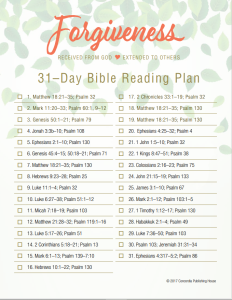
Develop a plan that highlights passages on grace, mercy, confession, and restoration. Those verses usher in times of refreshing for your soul. Here are several free Bible reading plans to choose from.

Consistent reading nurtures understanding and keeps you spiritually nourished as a gift of the Holy Spirit. It also builds resilience in practicing forgiveness and repentance amid life’s challenges.

Rooting your forgiveness and repentance efforts in Scripture continually renews your perspective and commitment. It anchors you in the Lord God’s truth and empowers you through His Spirit. This faithful foundation transforms abstract concepts into living, breathing parts of your spiritual life.

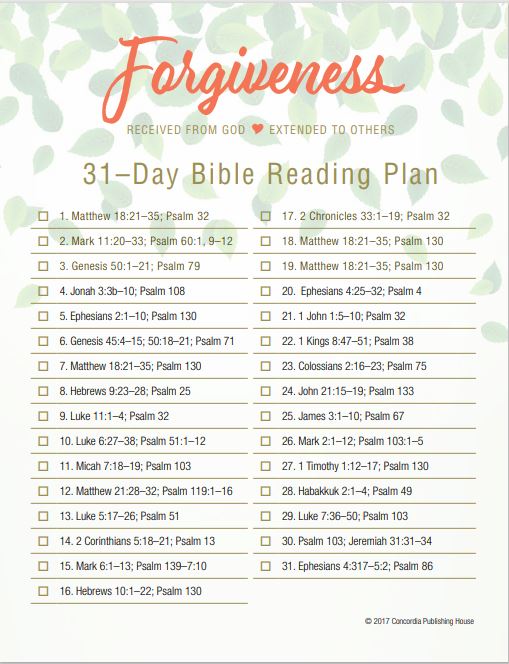
Free Downloads: 31-Day Forgiveness Bible Reading Plan and 31-Day Forgiveness Devotional.
Next-Level Tips

  • Use a Bible App with Highlight Features: Apps allow tagging and color-coding forgiveness and repentance verses for quick reference. This organization aids in meditation and teaching. Digital tools make Scripture study flexible and engaging.
  • Join a Bible Study Focused on These Themes: Participating with others enriches your understanding through dialogue and shared experience. Group study deepens wisdom and offers mutual encouragement. It also strengthens your spiritual community.
  • Pray Scripture Back to God: Make your prayers echo Scripture promises and commands on forgiveness and repentance. This practice aligns your heart with God’s Word and intensifies sincerity. Prayerful Scripture use invites transformation beyond knowledge.

Go Deeper

  • Create Scripture Art: Design visual reminders of forgiveness and repentance verses, such as calligraphy or digital art. Art makes Scripture memorable and inspiring. Sharing art cultivates faith in others.
  • Write Testimonies Based on Scripture Impact: Document how specific Bible passages have shaped your forgiveness and repentance journey. Personal testimonies encourage others and reinforce your testimony. Writing sharpens insight and celebrates growth.
  • Use Scripture as Meditation Themes: Focus your quiet times on one verse each day, allowing reflection and prayer to unpack its meaning fully. Meditation nurtures deep spiritual connection and application. It slows your pace to listen to God’s voice through His Word as He works a change of heart in your life.

Helpful Tools On Your Forgiveness Journey

Gathering these essentials builds a strong foundation for your study, making the process less intimidating and more enriching. It’s about creating a sacred environment where learning and transformation can thrive. 

Christ Jesus’ death on the cross and resurrection on the third day accomplished the forgiveness of your sins (and sins of the whole world) to the glory of God. God in His steadfast love meets you where you are.

  • Bible: A reliable, well-annotated Bible is essential, preferably a version you feel comfortable reading. Having access to a physical or digital copy allows you to refer directly to relevant verses that reveal the heart behind forgiveness and repentance as taught in the Word of God. A study Bible with commentary provides context and deeper insights.
  • Notebook or Journal: Recording your reflections and discoveries about forgiveness and repentance helps internalize these teachings and track your spiritual growth. Journaling your prayers, questions, or personal experiences related to these themes can make your journey more personal and transformative. Consider dedicating a special journal to this purpose for easy reference over time.
  • Prayer and Reflection Time: Setting aside intentional moments for prayerful meditation prepares your heart to receive understanding and apply biblical teachings authentically. These quiet intervals allow God’s Spirit to illuminate meanings and encourage real change in your life. Consistency in prayer fosters openness and ongoing healing as you learn about forgiveness and repentance.
  • Bible Study Resources: Supplementary materials such as concordances, commentaries, or trusted sermons can enrich your study. They offer historical background, theological explanations, and practical applications related to forgiveness and repentance. These resources provide clarity and prevent misunderstandings, equipping you to live out these principles genuinely. Choose materials from respected authors or ministries aligned with biblical truth.
  • Community or Spiritual Mentor: Engaging with others who share your faith can offer encouragement, accountability, and diverse perspectives as you explore forgiveness and repentance. A small group, pastor, or mature Christian friend help navigate challenges and celebrate breakthroughs.

Bottom Line

Forgiveness is always personal. It’s incredibly difficult to do. But it’s never optional. When someone has offended us, the temptation to not forgive is great. But the roots of unforgiveness and bitterness can grow deep in the human soul. Left alone, unforgiveness produces bitter fruit that shows itself in angry thoughts, words, and deeds. 

Our hearts soften as we learn of Jesus’ forgiveness for us. And, most important, we are encouraged to extend that same forgiveness to others.

Related Posts:

Donna Snow

About the Author

Donna is an award-winning author, sought-after speaker, and Bible teacher. Her path from unchurched to becoming passionate about sharing Jesus was difficult. Read about her God-breathed journey: “From Unchurched to Becoming a Multi-Published Author and Sought-After Speaker.” If you want to send Donna a quick message, visit her here.

{Some of these links are affiliate links. If you purchase through that link, the ministry may receive a small commission at no extra cost to you.}

10 Powerful Prayers for Repentance and Restoration

Some people jeer at the mere mention of offering prayers of repentance. I used to be one of them. We tend to struggle with pride. And prideful people do not like to admit we’re wrong. 

Yet here is the truth as Christ-followers: God’s forgiveness, mercy, and grace are freely extended to everyone who comes to Him with genuine repentance. The Bible calls it a “contrite heart.” God wants to hear our prayers, including that daily hard prayer of repentance.

prayers for repentance

What is Repentance?

The plain definition of repentance is  “deep sorrow, compunction, or contrition for a past sin, wrongdoing.” So true repentance begins as a posture of our heart. The key ingredient is the power of the Holy Spirit, who convicts you with godly grief.

Nothing hinders your prayers and intimacy with the Lord like unconfessed sin. I keep a journal of things I confess so that I can see how God is changing my heart and life.

Getting Real

It is vital to keep a short account of your secret sins (and public ones) to maintain a right spirit of sincere repentance. As soon as you become aware of a sinful attitude or blatant sin, don’t wait to lay it out before God. 

The longer you hold on to a destructive path of sin, a harsh tongue, or wicked ways, the longer you delay God’s abundant mercy to cleanse you.

His steadfast love means that it is your heavenly Father’s good pleasure to give you a clean heart once again. Making your prayer life a way of life brings endless times of refreshing from God’s grace. 

prayer

What’s the Point?

Repentance has two primary purposes: (1) to acknowledge your sins, and (2) to invite you into deep examination of your choices and path of righteousness.

In repentance, you seek God’s forgiveness of sins and confess any evil way hidden in your heart. You may come to God with a broken spirit, but you receive His great mercy, forgiveness, and unconditional love.

In his 95 Theses, repentance was the very first item on Martin Luther’s list: “When our Lord and Master Jesus Christ said, ‘Repent’ [Matthew 4:17], he willed the entire life of believers to be one of repentance.” In fact, items 2 and 3 of Luther’s 95 Theses were also about repentance. Repentance was so important that it occupied the top three spots on his list. 

The point of repentance is not to constantly remind yourself of how bad you are. Repentance humbles you to acknowledge God alone as sovereign over your life. 

As you confess your sins, the act of repentance reminds you of the incredible goodness of your merciful God as He wipes the slate clean once again. God’s help and great love poured over you through the blood of Jesus are all the help you need.

Luther's monastery in Eisenach

10 Powerful Prayers of Repentance

Each repentance prayer begins with God’s Word for a biblical foundation. Let’s run into the open arms of our dear Lord.

1 John 1:9 – “If we confess our sins, he is faithful and just to forgive us our sins and to cleanse us from all unrighteousness.”

Prayer: Lord Jesus Christ, I confess my sinful nature and longing after the things of this world. I have sinned against you in thought, word, and deed, by what I have done and by what I have left undone. I have not loved You with my whole heart; I have not loved my neighbors as myself. Guide me, O Lord, along the right path all the days of my life. For the sake of Your Son, Jesus Christ, have mercy on me. Forgive me, renew me, and lead me, so that I may delight in Your will and walk in Your ways to the glory of Your holy name. In Jesus’ name, Amen. 

prayer

Prayer #2

Psalm 51:1-2 – “Have mercy on me, O God, according to Your steadfast love; according to Your abundant mercy blot out my transgressions. Wash me thoroughly from my iniquity, and cleanse me from my sin.

Prayer (directly from Psalm 51:3-4, 7-10): “For I know my transgressions and my sin is ever before me. Against You, You only, have I sinned and done what is evil in Your sight, so that You may be justified in Your words and blameless in Your judgment. Purge me with hyssop, and I shall be clean; wash me, and I shall be whiter than snow. Let me hear joy and gladness; let the bones that You have broken rejoice. Hide Your face from my sins, and blot out all my iniquities. Create in me a clean heart, O God, and renew a right spirit within me.”

prayer

Prayer #3

Psalm 19:14 – “Let the words of my mouth and the meditation of my heart be acceptable in your sight, O Lord, my rock and my redeemer.” 

Prayer: Dear God, right now I cannot even discern the errors in my thoughts or ungodly intentions of my heart. But You see my inward being. Only You can see the truth in my secret heart. Cleanse me from any faults that I cannot see because You are a forgiving God. I confess and repent of those sins that I have intentionally committed. Free me from anything in my life that hinders my walk with You. Restore to me the joy of Your salvation in the name of Jesus Christ. Amen. 

prayer

Prayer #4

James 4:8-10 – “Draw near to God, and he will draw near to you. Cleanse your hands, you sinners, and purify your hearts, you double-minded. Be wretched and mourn and weep. Let your laughter be turned to mourning and your joy to gloom. Humble yourselves before the Lord, and he will exalt you.”

Prayer: Lord God, what hope You give me in those words! I long to draw near to you, but my unconfessed sin stands in the way. I confess my sins to you right now and repent with sorrow. Bring a fresh awareness of the seriousness of my sin and how it separates me from You. My sin has caused that distance and I confess it now. I pray that Your mighty name be exalted in my life. Thank you for drawing near to me when I continuously pull away from You.

prayer

Prayer #5

2 Chronicles 7:14 – “If my people who are called by my name humble themselves, and pray and seek my face and turn from their wicked ways, then I will hear from heaven and will forgive their sin and heal their land.”

Prayer: Dear Lord, each day I am surrounded by the sins of the world – and that includes pride. I have allowed pride to keep me from humbling myself before You. This world does not celebrate humbleness, but You honor it. Father, turn my face toward You. Cleanse me of pride and anything else that keeps me from seeking You. I pray that Your good things continuously show me a better way to live a new life centered on You.

prayer

Prayer #6

Matthew 6:9-13 – “Our Father in heaven, hallowed be Your name. Your kingdom come, Your will be done, on earth as it is in heaven. Give us this day our daily bread, and forgive us our debts, as we also have forgiven our debtors. And lead us not into temptation, but deliver us from evil.”

Prayer: O God of my salvation, the “Lord’s prayer” that Christ Jesus taught the disciples demonstrates how You long for us to live free of guilt, sin, and unforgiveness. I confess my sins to you now, Father. Give me the tenacity and strength to mourn over and repent of my sin to continuously turn my heart toward You. Thank you for running after this prodigal son every single time.

prayer journal

Prayer #7

Joel 2:12 – “Yet even now,” declares the Lord, “return to me with all your heart, with fasting, with weeping, and with mourning.”

Prayer: Dear Lord, I confess that I have put my agenda ahead of Yours. I have trusted my timing instead of Yours. I have trusted my own cleverness rather than leaned into Your holiness. And have not lived in a way that shows the glory of God in my life. Purify my heart, Lord. I ask for Your forgiveness. Set my feet on the right path that leads to the kingdom of heaven and intimacy with You. 

repentance

Prayer #8

2 Peter 3:9 ​- “The Lord is not slow to fulfill his promise as some count slowness, but is patient toward you, not wishing that any should perish, but that all should reach repentance.”

Prayer: Lord God, You could condemn the whole world, including me, at this very moment. Yet You want us to live eternally with You rather than perish in our sin. Father, I repent of my sins whether I know about them or I am blind to them. I find that repentance is painful, but my sorrow is a gift of Your grace that draws me closer to You. Thank you for loving me so much.

prayer journal

Prayer #9

9) Acts 3:19 – “Repent, then, and turn to God, so that your sins may be wiped out, that times of refreshing may come from the Lord.”

Prayer: Dear Lord, what hope this verse brings! You promise that when I repent You faithfully wipe out my sins and refresh me in the Lord. I confess my sins, whether known or unknown, and am heartily sorry for them. I humbly ask for Your forgiveness and desire for You alone to put my feet on the right path each day. Keep the Word of the Lord alive in my heart as I follow You all the days of my life.

prayer

Prayer #10

10) 2 Corinthians 7:9-10a – “As it is, I rejoice, not because you were grieved, but because you were grieved into repenting. For you felt a godly grief, so that you suffered no loss through us. For godly grief produces a repentance that leads to salvation without regret.

Prayer: Father God, thank you for working in me godly grief that produces true repentance that leads to eternal life. It is easy to follow the wrong path of worldly repentance where I’m only sorry that I got caught. Continue to give me a willing spirit toward good deeds and serving others in Your glorious name. My specific prayer is that you remove every thought or intention of my heart that does not draw me closer to You.

angel

Worldly Sorrow vs. Godly Sorrow

The Apostle Paul talks about godly grief and worldly grief (both known as sorrow). It is important to recognize the difference between these two kinds of repentance to determine whether you are offering genuine repentance – whether to God and another person. 

Worldly Sorrow

Worldly sorrow tends to focus on regret over the consequences of behavior. It says, “I’m sorry I got caught. I’m sorry I have to face the consequences for what I did.” It is sorrow over the consequences you face instead of sorrow over the hurt you have inflicted. 

Worldly sorrow is self-centered; it focuses on the suffering of “poor little me” as you face the consequences of your actions. It says, “Yes, I did that, but now nobody trusts me anymore. Everybody’s talking about me. Everybody’s mad at me.” Me is a key word with worldly sorrow.

Worldly grief produces death” (2 Corinthians 7:10b).

germany

Godly Sorrow 

Godly sorrow says, “I’m sorry for who I’ve become. I’m sorry that I’ve become so deceptive and dishonest. I’m sorry for how my behaviors have hurt you and destroyed our relationship.” Do you see the difference? 

Godly sorrow owns up to the sin and focuses on how to repair the damage, inviting repentance and restitution. That’s why the Bible says godly sorrow leads to salvation and freedom. 

A person who exhibits godly sorrow is determined to walk away from the behavior and move toward repairing the damaged relationship.

I wrote an entire Bible study about forgiveness because it is vital to keep our hearts moldable in God’s hands. Godly sorrow is key.

prayer

God’s Mercy

In His great mercy, God did not dismiss your sins as inconsequential. Rather, He added them to the weight of sin His Son bore on the cross for you, and He remembers them no more. 

When you separate God from vengeance and justice, the cross becomes superfluous. And the cross is anything but superfluous.

But God, being rich in mercy, because of the great love with which He loved us, even when we were dead in our trespasses, made us alive together with Christ—by grace you have been saved.” (Ephesians 2:4-5).

psalm 103

It is easy to spend your days pointing out other people’s sins and shortcomings. Spending time asking God to search your heart to convict you of your sin keeps you humble.

As a child of God, following God’s commandments and seeking the will of God are cornerstones to intimacy with Him.

If you have a hard time confessing sins, remember that His great compassion and love always welcome you into the presence of the Lord. God’s plan for your life is perfect. Lean in!

Related Posts:

About the Author
Donna is a sought-after author, speaker, and Bible teacher. Her path from being unchurched to becoming passionate about sharing Jesus was not easy. Read her God-breathed journey: “From Unchurched to Becoming a Multi-Published Author and Sought-After Speaker.” If you want to send Donna a quick message, then visit her here.

{Some of these links are affiliate links. This means if you make a purchase through that link, the ministry may receive a small commission at no extra cost to you. Thank you for your support!}

What Does the Bible Say About Forgive And Forget?

When my ex-husband committed adultery six years into our marriage, I did not tell anyone. I was ashamed that perhaps people would think I was a bad wife. Was I supposed to forgive and forget?

Perhaps I had done something to turn him away. Or the worst, I wasn’t “putting out” enough. In other words, I was blaming myself and absorbing guilt that was not mine.

forgive-and-forget

Contents

  1. Is Forgetting a Hurt Even Possible?
  2. Three Options for Dealing with our Wound
  3. Only God has the Power to Forget
  4. The Definition of Forgiveness
  5. What Forgiveness is NOT

God did not give human beings the divine power to erase our memories. We cannot forget when someone hurts us. However, we still need to walk toward the soul freedom that forgiveness promises.

So what can we do to get past the hurt to begin the forgiveness process?

The Unseen Wounds

When you are wronged, you are handed an internal wound. Though unseen, we never forget the pain caused by that wound.

The larger the pain, the larger the wound. Some days, I truly felt like I was bleeding out of my skin, but no one knew.

I prayed constantly for God to give me the grace to forgive that adultery. In tears, I often pleaded with God for His healing. For the Holy Spirit to give me the strength to move past that horrific wound. And for the courage to be intimate in my marriage again. For trust in my spouse to be repaired.

In His steadfast love, God granted all of those requests and more. Forgiveness flowed, our relationship was repaired, and He pulled our marriage out of the depths of the sea. And even though they had been forgiven, those memories were stored in the hard drives of my mind. Yours are, too.

Seven years later, I discovered my husband’s past sins had resurfaced and he was having multiple affairs, which ultimately ended our marriage. I cannot even fully describe the level of anger, hurt, and unforgiveness that welled up inside me.

Past hurts raged to the surface and I knew I needed to seek help for my own sake. I was drowning in emotional pain.

For the first time in my life, I sought Christian counseling. The absolute last thing I needed was for any root of bitterness to take hold.

It took a solid year for God’s forgiveness to flow in my heart to move me toward forgiving my ex-husband. I cannot stress strongly enough the importance of forgiveness in order to embrace a new life.

Is Forgetting A Hurt Even Possible?

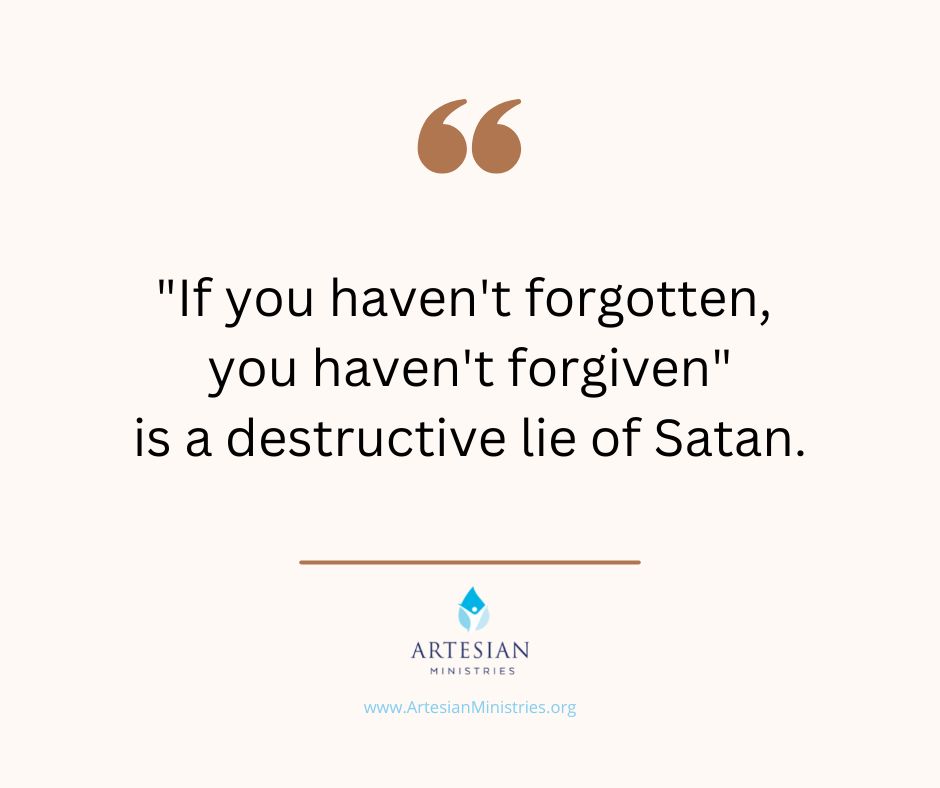
We’ve all heard the phrase, “If you haven’t forgotten, you haven’t forgiven.” Perhaps you have even said it because I certainly used to. It’s easy to say but impossible to do. While we may be able to forget small slights, we remember life-altering wounds.

On the other hand, remembering certain kinds of hurt is usually beneficial. For instance, I don’t touch hot stoves because I did that once. Lesson learned.

Our memory can instruct us on how to avoid similar hurt in the future. It’s those heart hurts caused by unacceptable behavior or harsh words that can trip us up for a very long time.

A Stationary Bicycle Going Nowhere Fast

When we buy into the forgive-and-forget lie, we end up berating ourselves when we remember our wounds. We get frustrated and spend futile time and energy trying to make ourselves forget again. It is a useless, unproductive cycle that only succeeds in embedding the hurt deeper.

Satan loves the forgive-and-forget lie because it wastes our time and energy and always lands us right back where we started: remembering the wound. It’s a stationary bicycle going nowhere fast.

There is no solution to the lie of “forgive and forget.” That pot only keeps stirring toxic emotions.

Three Options for Dealing with our Wound

When someone hurts us (wounds us), we have three main options:

1. Hand It Back

When you hand back a wound, it is called revenge. It looks something like this: “You did this to me? Then, this is what I will do to you.” You then throw the wound back at them with a vengeance. Whether verbally or physically, handing the wound back through revenge intends to harm.

2. Internalize or Hide It

This happens when shame plays a part in the wound. Rape victims deal with this because some people still believe the nauseating assumption that somehow the victim invited or deserved it. The victim may hide it to avoid being called loose. Shame is the single biggest factor in hiding a wound.

3. Hand it Up to Jesus

When we hand our wounds up to Jesus Christ, we take them out of circulation. The wounds do not have the opportunity to fester in us or spread to others. Taking the wounds out of circulation stops the cycle. That is how Jesus patterned forgiveness. He felt the wounds, absorbed the pains, and forgave them from the cross. He took them out of circulation for eternity.

When you and I hand up our wounds to Jesus, He renews our strength from the inside out. Right where that wound is hiding. And He faithfully begins to work true forgiveness in us.

Even though you and I cannot forget a wound, we can certainly choose how to deal with the pain of their offense going forward. We can choose options 1 and 2 above and let bitterness sink in, or we can go with option 3 and live in the freedom that forgiveness brings.

Only God Has the Power to Forget

In Hebrews 8, God’s Word says: “For I will be merciful toward their iniquities, and I will remember their sins no more” (Hebrews 8:12, ESV). God promises to forget our sins (the precise meaning of which could fill a whole book), but that is an unrealistic standard to put on ourselves. He is God. We are not.

What is the Definition of Forgiveness?

If you asked a dozen people to define forgiveness, you would likely hear twelve different responses. Since Christians are commanded to extend forgiveness, we need to clearly understand what it means.

Webster’s dictionary defines forgiveness as “to excuse a fault or offense; to stop feeling anger or resentment against; and to absolve from payment of.” Excuse and absolve are difficult verbs to swallow in the context of pain.

Thankfully, our Heavenly Father provides many Bible verses to navigate the storm. {Download 31-Day Forgiveness Bible Reading Plan}

forgiveness bible reading plan

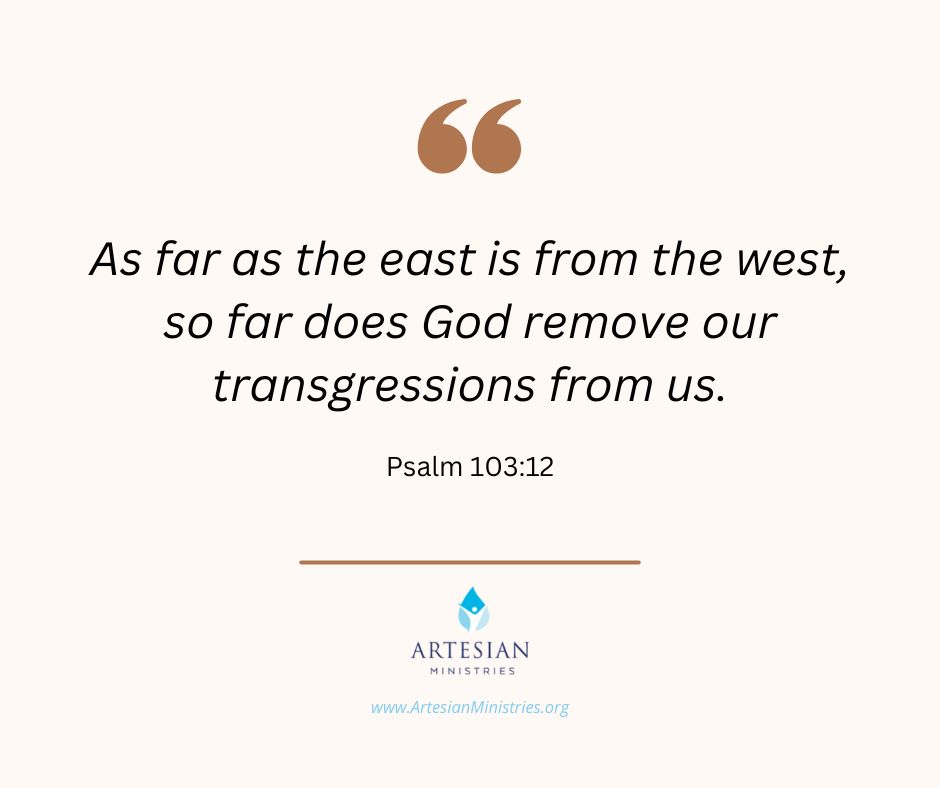
The Greek word in the New Testament for forgive (aphiēmi) means “to send away.” In Christ Jesus, God packed up our transgressions (which include unforgiveness) and permanently sent them away. In Psalm 103:12, God promises: “As far as the east is from the west, so far does He remove our transgressions from us.”

The thing about the east and west is that there is no end. Once you start heading east, you are always heading east until you change directions. Once you journey west, you are always journeying west.

By the grace of God, He removes our sins and remembers them no more.

Hate and Love Cannot Coexist

When someone hurts us, God commands us to forgive because hate and bitterness do not line up with His teaching to love. Hate and love cannot coexist. Forgiveness cannot blossom when roots of unforgiveness hide in the soil of our hearts.

Thankfully, God does not simply issue the command to forgive, sit back, and watch us struggle. He provides the Source of power that enables us to fulfill His command.

The Apostle Paul wrote: “I have been crucified with Christ. It is no longer I who live, but Christ who lives in me. And the life I now live in the flesh I live by faith in the Son of God, who loved me and gave himself for me” (Galatians 2:20, ESV).

The power of Christ in us enables us to forgive the deepest wounds. Trust me. I have been divorced for twelve years now. Had I refused to let God work His forgiveness in me and then through me, I would be an angry, bitter, hot mess about now. A healed heart is FREEDOM.

Forgiveness is Commanded

Jesus talked about forgiveness more than two dozen times in the Gospels, including a key part of the Lord’s Prayer (Matthew 6:12) and teaching His disciples to forgive others “seventy-seven times” (Matthew 18:22). He even asked God to forgive those who nailed Him to the cross (Luke 23:34). That includes you and me.

Forgiveness is not God’s suggestion; it is His command: “Put on then, as God’s chosen ones, holy and beloved, compassionate hearts, kindness, humility, meekness, and patience, bearing with one another and, if one has a complaint against another, forgiving each other; as the Lord has forgiven you, so you also must forgive” (Colossians 3:12-13, ESV).

We must also forgive. That’s a hard truth to digest when the mere thought of forgiving your offender makes you sick to your stomach. I certainly did want to forgive my ex-husband. But those negative feelings were toxins in my soul.

It’s amazing how easily we throw around the word forgiveness until we are asked to step forward through the pain and extend it personally. But forgiveness is the only way we will survive bleeding out from the spiritual and emotional wounds caused by the hurtful words and actions of others.

The Cost of Forgiveness

The heart of forgiveness always beats with liberation and freedom. Not necessarily for those who hurt you. But for you. Forgiveness is costly. We struggle not to lash out at those who hurt us.

We’re absorbing the debt and cost of the consequences instead of taking it out on the perpetrator. We suffer, and it hurts terribly. Surrendering that pain to God is the only pathway toward healing.

Some people say that it feels like dying. They are not wrong. The cost of forgiveness is death. Death to our desire for revenge. Death to seeking payment for the hurt they caused.

The cost of forgiveness is death. Just ask Jesus. He sacrificed His life to forgive us eternally. And His forgiveness leads us to experience a resurrection of new life centered in Him.

So start by asking God for just one small step today on the road toward forgiveness. Tomorrow, ask Him for another small step. The road ends in the death of bitterness and resurrection to life. The dead-end road ends at Calvary. 

Does Forgiveness Condone Their Hurtful Actions?

The hardest struggle we face in extending forgiveness is falsely believing that we are somehow condoning their actions. That lie comes straight from the devil. The enemy loves weaving a web of toxicity around that lie because we want those who hurt us to pay for their transgressions.

Forgiveness does not mean condoning someone’s bad behavior. It means releasing their judgment and consequences to God.

As God faithfully opens doors for me to travel and speak with groups of women all over the country, I have discovered that forgiveness is often misunderstood.

Some believe that forgiveness should only be extended when their perpetrator asks for it. Or when they have groveled enough. But when is enough enough? Your pain cannot be undone, only surrendered to God.

Others believe that forgiveness means you must reconcile with the person who hurt you and go skipping through the tulip fields into the sunset together. Neither could be further from the truth. In order to extend forgiveness, we need to clearly understand what it is not. 

What Forgiveness is NOT

Forgiveness Is Not Excusing a Sin or Crime

This is one of the most common objections to extending forgiveness. Many people often equate forgiveness with letting someone off the hook; like somehow forgiveness approves what they did because we didn’t force them to make it right. But that’s not what forgiveness means.

For instance, a rape victim suffers horrible atrocities, and there are legal consequences for the violator. The victim can forgive her attacker yet still follow the legal process to take the proper course for her attacker to reap the punishment for his actions.

Sin is not okay. It can be forgiven, but it should not be excused. By God’s grace, we become wiser regarding future interactions with that person.

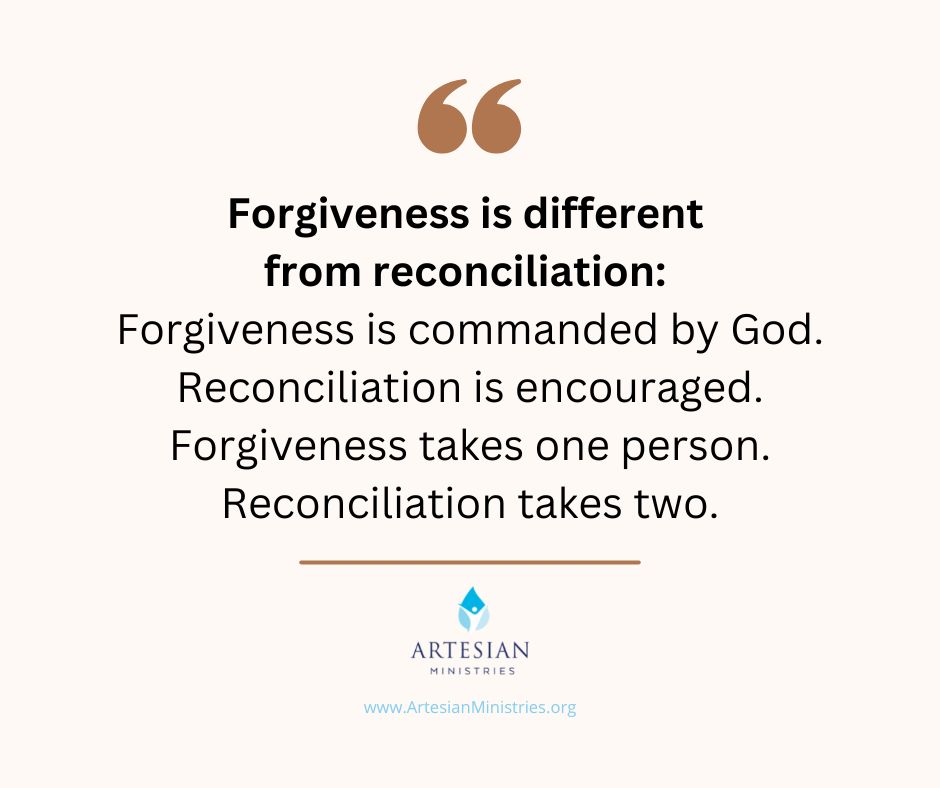
Forgiveness Is Different from Reconciliation

Forgiveness takes one. It is extended from one individual to another and released. Reconciliation takes two people who agree to set aside past hurtful behavior, communicate to repair the relationship, and move forward together.

I realized that reconciliation for my marriage was not possible due to the kind of women with whom my ex-husband was involved. If we had reconciled and continued in our marriage, I stood a very real chance of contracting HPV, HIV, or AIDS.

My ex-husband was a habitual adulterer, so reconciling and remaining married would have placed my health (and ultimately my life) in danger.

In situations where habitual abuse (whether physical or verbal) has occurred, reconciliation may not be possible because safe mental and physical boundaries must be established. But forgiveness is still commanded.

Forgiveness Is Not about Justice or Consequences

Forgiveness does not obligate the forgiver to protect the offender from reaping the consequences of his or her actions. Consequences are usually what it takes for offenders to change their behavior. If their actions have broken the law (rape, harming a child, etc.), we can and should follow through with appropriate legal action.

To prevent a perpetrator from raping again, testifying at trial is certainly appropriate. There are always consequences for sin, but exacting the consequences of their actions is God’s job, not ours.

He alone calls unrepentant sinners to answer for their actions. Even in such extreme circumstances when reconciliation is not possible, we still move toward forgiveness.

Forgiveness Is Not about the Offender

It is not our job to determine whether someone deserves forgiveness of sins. God never tells us in His Word to extend it only when the offender begs for it. Some people hold grudges and stay angry until they believe their offender has suffered enough. But how do we determine when enough is enough?

Hate and anger have consuming power, and those toxins can control and define us. When we allow unforgiveness to consume us, the object of our wrath actually has control over us. It can keep our hearts dangling over the fire, so to speak.

We are washed clean by baptismal grace; therefore, our merciful God does not withhold forgiveness from us—and we are to follow His lead. Forgiving others as God has forgiven us means that we are obeying God’s command. Yet forgiveness is also a gift to ourselves of a life free from bitterness and anger.

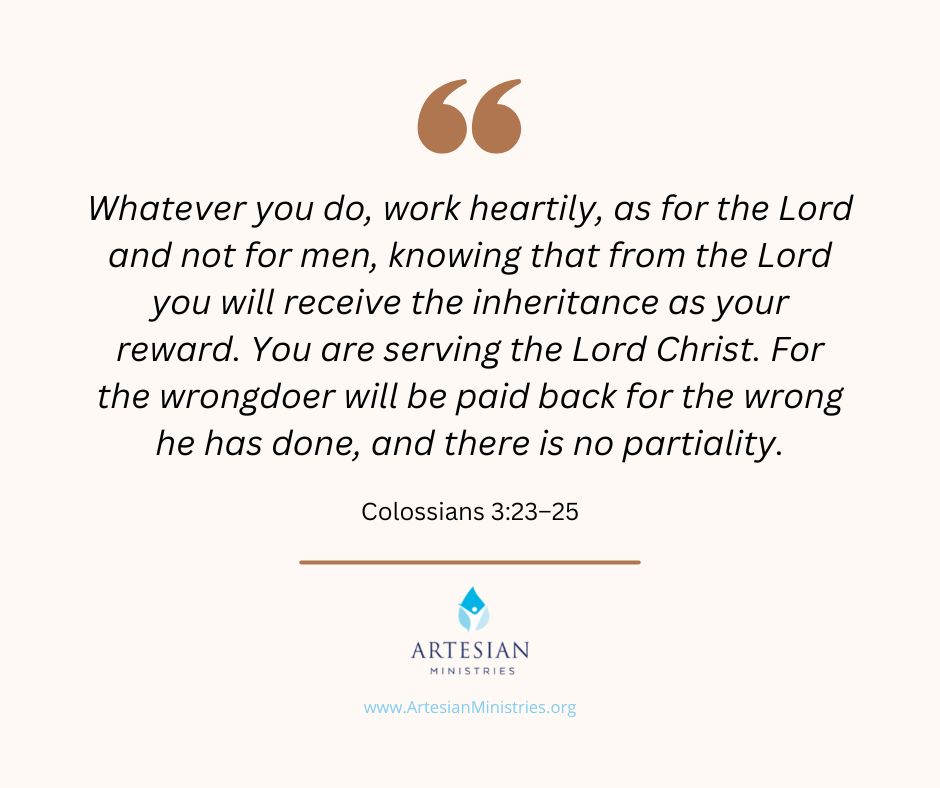
Whatever you do, work heartily, as for the Lord and not for men, knowing that from the Lord you will receive the inheritance as your reward. You are serving the Lord Christ. For the wrongdoer will be paid back for the wrong he has done, and there is no partiality” (Colossians 3:23–25, ESV).

Did you notice that the Lord is the focus of those verses? The Lord handles the wrongs done to us as we heartily serve Him.

Forgiveness Is Not Artificial Nonchalance

Have you ever tried to pretend someone’s actions or words did not hurt you? Me too. But when I remember that hurt for the tenth time in an hour, I cannot keep pretending. Pretending there is nothing to forgive results in anger and resentment down the road.

What we harbor internally eventually surfaces externally. Forgiveness means we acknowledge the hurtful actions or words, pray for God to provide insight on how best to convey them gracefully to the offender, and allow God to move us toward Him for healing. 

Forgiveness Is Not Avoidance

Some people believe that out of sight means out of mind. As long as we avoid our offenders, everything will be just fine. Although that person may not be around, the hurt they inflicted remains. It must be acknowledged, grieved, and forgiven.

Forgiveness Is Not Easy

It’s just not. It takes time. If the wound is deep, it may take a long time. That one year of post-divorce counseling felt like a lifetime. But focusing our energy and time on moving toward forgiveness means embracing our future free from the bondage of vengeful toxins.

We can confidently count on God’s outrageous faithfulness to us. Yesterday is over. Your future lies ahead. God provides peace of mind right alongside our fresh start. Relentlessly lay those hurts at His feet and trust Him to remove the sting.

What’s the Takeaway?

I learned so much about forgiveness from the Lord, life experience, and counseling that I wrote an entire book on forgiveness. You can find that Bible study here.

God’s Word transforms us, so here is 31-Day Bible Reading Plan about forgiveness that you can download free right now and get started today.

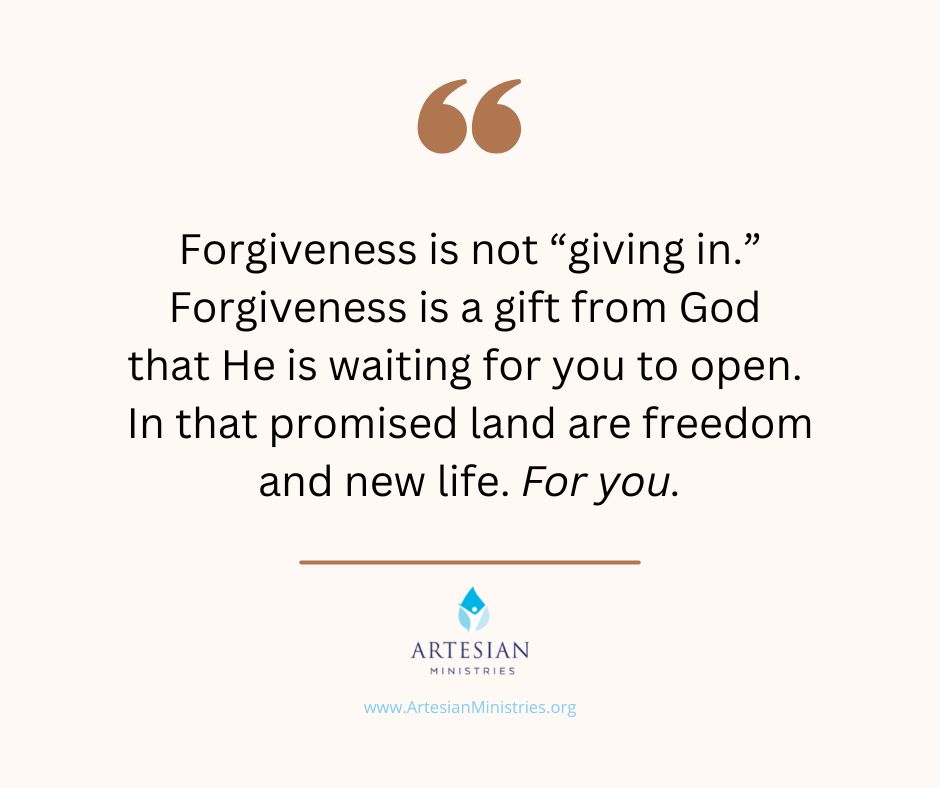
Forgiveness is not “giving in.” Forgiveness is a gift from God that He is waiting for you to open. In that promised land are freedom and new life. For you. 

Related Posts:

About the Author
Donna is a sought-after author, speaker, and Bible teacher. Her path from being unchurched to becoming passionate about sharing Jesus was not easy. Read her God-breathed journey: “From Unchurched to Becoming a Multi-Published Author and Sought-After Speaker.” If you want to send Donna a quick message, then visit her here.

{Some of these links are affiliate links. This means if you make a purchase through that link, the ministry may receive a small commission at no extra cost to you. Thank you for your support!}