
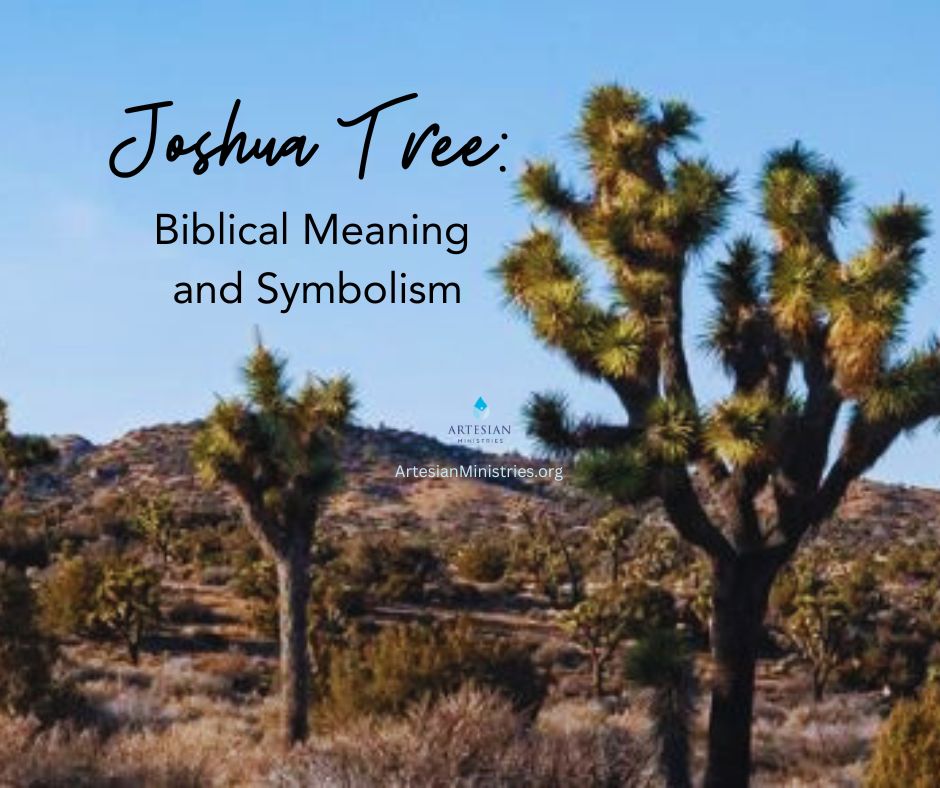
The Joshua tree, with its distinctive twisted branches reaching skyward, has become an iconic symbol of the American Southwest. But many people wonder about its biblical connections and whether this unique plant actually appears in Scripture.
Let’s explore the fascinating relationship between the Joshua tree and the Bible, and uncover what this connection truly means.
Table of Contents
The Origin of the Name “Joshua Tree”
The Joshua tree (Yucca brevifolia) doesn’t actually appear in the Book of the Law of God by this name. In fact, it isn’t mentioned in Scripture at all.
The biblical connection comes entirely from Mormon pioneers who crossed the Mojave Desert in the mid-19th century. Settlers encountered the strange-looking trees with their upward-reaching branches. They were reminded of the biblical figure Joshua raising his hands in prayer to God.
According to historical accounts, the Mormon travelers saw the tree’s unique shape as resembling Joshua’s arms extended toward heaven. This led the people to name the plant after the Old Testament leader of the people of Israel.
This naming occurred around 1857 as Mormon settlers traveled through the region that would later become Joshua Tree National Park.
Related: Is the Lord’s Prayer in the Old Testament?

Who Was Joshua in the Bible?
To understand the significance of this connection, it’s important to know who Joshua was in biblical history.
After the events of the exodus and death of Moses, Joshua was named Moses’ successor. He led the Israelites into the Promised Land after their forty years of wandering in the wilderness. His name in Hebrew, “Yehoshua,” means “Yahweh is salvation” or “the Lord saves.”
Under Joshua’s capable leadership and God’s miraculous intervention, the children of Israel took possession of the Promised Land as their new home. Joshua was a symbol of strong and good courage in the eyes of Israel, keeping true to God’s Word.
Joshua’s Key Biblical Moments:
Military Leader: Joshua commanded the Israelites in numerous battles in the land of Canaan, including the famous Battle of Jericho where the walls came tumbling down.
Faithful Servant: He was one of only two spies (along with Caleb) who believed God would give the Israelites victory over the inhabitants of Canaan.
Prayer Warrior: Joshua was known for his powerful prayers and direct communication with God, which is the connection the Mormon pioneers saw in the tree’s posture.
Covenant Keeper: Then Joshua challenged the tribes of Israel to remain faithful to God, famously declaring, “As for me and my house, we will serve the Lord” (Joshua 24:15).
Related: Strong and Courageous: Studying God’s Promises in Joshua

The Symbolic Meaning Behind the Connection
The Mormon pioneers’ decision to name these trees after Joshua wasn’t random. It carried deep symbolic meaning for them as they journeyed through harsh desert conditions.
A Sign of God’s Guidance: Just as Joshua led the Israelites through challenging terrain to their promised land, these trees seemed to point the way for pioneers crossing the desert to reach California and their own hoped-for prosperity.
Steadfastness in Harsh Conditions: The Joshua tree’s ability to survive and even thrive in the extreme Mojave Desert environment reminded settlers of Joshua’s unwavering faith during difficult times.
Reaching Toward Heaven: The upward-pointing branches symbolized prayer and maintaining a connection with the divine even in the wilderness.
Endurance and Longevity: Joshua trees can live for hundreds of years, reflecting the enduring legacy of Joshua’s faith and leadership in biblical history.
Biblical Trees and Their Significance
While the Joshua tree itself isn’t mentioned in the Bible, Scripture contains numerous references to trees and their spiritual symbolism. Understanding biblical tree imagery helps us appreciate why the Mormon pioneers would make this connection.
The Tree of Life: Appears in Genesis and Revelation, representing eternal life and God’s provision.
The Cedars of Lebanon: Symbolized strength, majesty, and longevity throughout the Old Testament.
The Fig Tree: Often represented Israel itself and spiritual fruitfulness (or lack thereof).
The Olive Tree: Symbolized peace, prosperity, and God’s anointing.
Palm Trees: Represented victory, triumph, and righteousness.
In this biblical context, naming a resilient desert tree after a great man of faith fits perfectly within the tradition of using plants and trees to convey spiritual truths and commemorate important figures.
Related: Praying Mantis in the Bible: Symbolism and Meaning

The Joshua Tree in Modern Spiritual Context
Today, the Joshua tree continues to hold spiritual significance for many people beyond its Mormon naming origins. Visitors to Joshua Tree National Park through the National Park Service often describe feeling a sense of peace, contemplation, and connection to something greater than themselves.
Resilience and Adaptation: The tree’s survival in extreme conditions inspires people facing their own challenges to persevere with faith.
Uniqueness and Individuality: Each Joshua tree grows in its own distinctive shape, reminding us that each person’s spiritual journey is unique.
Desert Spirituality: The barren landscape where these trees grow has long been associated with spiritual seeking, solitude, and divine encounters. In the Bible we see Moses in the desert at Mount Sinai receiving the Word of the Lord and Jesus spending forty days in the wilderness. Many believers find the desert to be a special sanctuary of the Lord.
Natural Cathedral: The groves of Joshua trees create natural spaces that many describe as cathedral-like, inspiring worship and reflection. A tabernacle of the Lord, so to speak.
Lessons from Joshua’s Life Applied to the Joshua Tree
The connection between the biblical story of Joshua and the tree named after him offers several meaningful spiritual lessons applicable to life in our modern times.
Be Strong and Courageous: God repeatedly told Joshua to “be strong and courageous” (Joshua 1:9). The Joshua tree embodies this message, standing firm against desert winds and harsh conditions. We too can face life’s challenges with courage rooted in faith.
Maintain Your Stance: Joshua trees grow slowly and deliberately, each branch forming over years. Similarly, Joshua’s faith was developed through years of following Moses and trusting God. Spiritual growth requires patience and persistence.
Reach Upward: The upward-reaching branches that reminded pioneers of Joshua’s prayerful posture remind us to maintain our connection with God, especially during difficult seasons.
Leave a Legacy: Joshua’s influence extended far beyond his lifetime, and Joshua trees can live for centuries. Our faithful actions today can impact generations to come.
Related: Sons of Noah in the Bible and What Happened to Them
Common Misconceptions About the Joshua Tree and the Bible
As with many topics that blend nature, history, and religion, several misconceptions have developed over time regarding the Joshua tree’s biblical connection.
Misconception 1: Joshua Trees Are Native to Israel
The Joshua tree is native only to the southwestern United States, primarily the Mojave Desert. There are no Joshua trees in Israel or anywhere in the Middle East.
Misconception 2: The Bible Mentions Joshua Trees
The Bible contains no reference to Joshua trees. The connection is entirely historical and cultural, not scriptural.
Misconception 3: Joshua Trees Are Sacred in Christianity
While the tree has spiritual significance for some people, it holds no official sacred status in Christianity or any other major religion.
Misconception 4: Joshua Himself Saw These Trees
The biblical Joshua lived approximately 3,400 years ago in the Middle East and never traveled to North America, so he never encountered these trees.
The Broader Spiritual Message
Whether or not the Joshua tree appears in the Bible, its story and symbolism offer valuable spiritual insights. The Mormon pioneers who named these trees demonstrated something important: the ability to see God’s hand and biblical truth reflected in the natural world around them.
This practice of finding spiritual meaning in nature has deep biblical roots. The Psalms frequently call us to observe creation and see God’s glory reflected in it. Romans 1:20 states, “For since the creation of the world God’s invisible qualities—his eternal power and divine nature—have been clearly seen, being understood from what has been made.”
In this sense, the Joshua tree serves as a reminder that while we hold Scripture as our ultimate authority, we can also encounter spiritual truth and inspiration through observing God’s creation. The tree doesn’t need to be mentioned in the Bible to point us toward biblical truths about faith, endurance, prayer, and reaching toward God.
Related: What to Highlight in the Bible and The Best Way to Do It

Visiting Joshua Tree: A Spiritual Experience
For those interested in experiencing the Joshua tree for themselves, Joshua Tree National Park in California offers an opportunity to see thousands of these remarkable plants.
Many visitors report that walking among the Joshua trees provides a contemplative experience that deepens their spiritual life. Tips for a reflective visit:
Go Early or Late: Sunrise and sunset offer the most beautiful light and fewer crowds, creating space for quiet reflection.
Practice Silence: Consider taking time to sit quietly among the trees, using the opportunity for prayer or meditation.
Observe Carefully: Notice how each tree is unique, how they’ve adapted to their environment, and what lessons their resilience might teach you.
Read Scripture: Bring a Bible and read passages from the book of Joshua while surrounded by the trees bearing his name.
Journal Your Thoughts: Record any insights or feelings that arise during your visit.
What the Joshua Tree Really Means
The Joshua tree doesn’t appear in the Bible, but its connection to the biblical figure of Joshua offers rich symbolic meaning. Named by Mormon pioneers who saw in its upward-reaching branches a reminder of Joshua’s prayerful posture, the tree has become a powerful symbol of faith, endurance, and reaching toward the divine.
The story of how the Joshua tree got its name reminds us that spiritual insight can come from unexpected places. It encourages us to look for biblical principles and divine inspiration not just in Scripture itself, but also in the natural world that Scripture’s author created.
Whether you view the Joshua tree as simply an interesting botanical specimen, a historical curiosity, or a spiritual symbol, its story illustrates humanity’s ongoing desire to connect the physical world with spiritual truth. In 2026 and beyond, the Joshua tree continues to stand as a testament to resilience, faith, and the human inclination to see the sacred in the natural world around us.
Bottom Line
Just as the biblical Joshua stood firm in his faith and led God’s people with courage, these distinctive desert trees stand as silent sentinels in the wilderness. Their branches lifted skyward in a posture that continues to inspire spiritual reflection more than 150 years after they received their biblical name.
Related Posts:
- Best Bible Reading Plans
- 13 Best Bible Study Methods
- What to Highlight in the Bible and the Best Way To Do It
About the Author
Donna is an award-winning author, sought-after speaker, and Bible teacher. Her path from unchurched to becoming passionate about sharing Jesus was difficult. Read about her God-breathed journey: “From Unchurched to Becoming a Multi-Published Author and Sought-After Speaker.” If you want to send Donna a quick message, visit her here.

{Some of these links are affiliate links. If you purchase through that link, the ministry may receive a small commission at no extra cost to you.}