
The vision of the valley of dry bones stands as one of the most vivid and dramatic prophecies recorded in Scripture. Found in Ezekiel 37:1-14, this Old Testament passage describes the prophet Ezekiel being led by the Spirit of God into a valley filled with dry, lifeless bones.
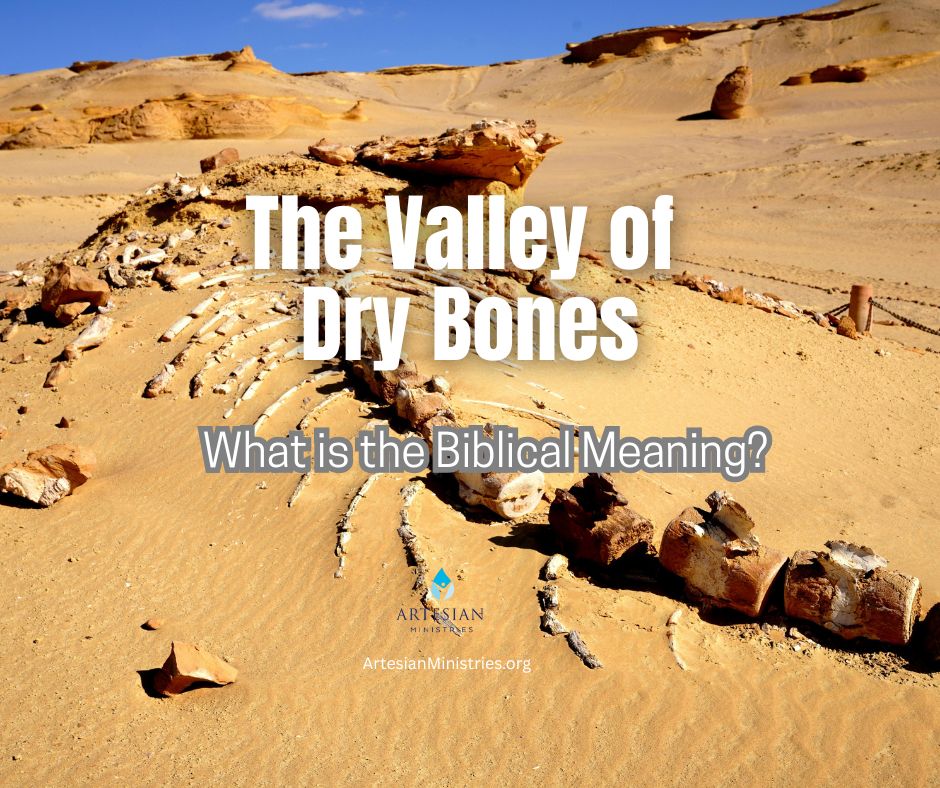
What unfolds is a powerful demonstration of God’s ability to bring life from death. Resurrect hope from despair. Bring restoration out of complete devastation.
Table of Contents
For believers throughout the centuries, this passage has served as profound encouragement during times of spiritual drought and national crisis. As we face continuing challenges today, the message of the dry bones remains as relevant as ever. It speaks to our deepest need for our Sovereign Lord’s divine intervention.
The Historical Context of Ezekiel’s Prophecy
To fully grasp the significance of the dry bones vision, we must first understand the historical circumstances surrounding Ezekiel’s ministry. The Book of Ezekiel reveals that the prophet Ezekiel was among the Jewish exiles taken to Babylon during the first deportation in 597 BC. That was approximately eleven years before the final destruction of Jerusalem in 586 BC.
The Babylonian exile represented the darkest period in the people of Israel’s history since their enslavement in Egypt. The people of Judah had been torn from their homeland by an exceedingly great army. The temple of Solomon had been destroyed and the monarchy of God’s servant David had been overthrown.
This devastation felt like a death sentence for the children of Israel whose identity was deeply rooted in the promised land and the everlasting covenant with God.
Ezekiel 37:11 captures the despair of the exiled community: “Then he said to me, “Son of man, these bones are the whole house of Israel. Behold, they say, ‘Our bones are dried up, and our hope is lost; we are indeed cut off.'” The people had lost all hope of national restoration and spiritual renewal.
Ezekiel’s Role as Prophet
Ezekiel served as both priest and prophet during this tumultuous time and Babylonian captivity. His name means “God strengthens,” which was precisely his mission to strengthen the faith of a devastated people.
Before the vision of dry bones in chapter 37, Ezekiel had delivered numerous prophecies of judgment against Israel’s sinful backsliding and idolatry. The dry bones vision marked a turning point, shifting from judgment to hope and restoration.
Related: Perseverance: Praying Through Life’s Challenges

The Vision Explained: Ezekiel 37:1-14
Verses 1-2: The Valley of Death
“The hand of the Lord was upon me, and he brought me out in the Spirit of the Lord and set me down in the middle of the valley; it was full of bones. And he led me around among them, and behold, there were very many on the surface of the valley, and behold, they were very dry” (Ezekiel 37:1-2).
The Spirit of God transported Ezekiel to the middle of the valley covered with bones. The Hebrew word for valley, “biq’ah,” suggests a broad, open plain, emphasizing the vast scope of death and destruction. The bones were not freshly deceased but “very dry,” indicating they had been there for a long time.
This detail underscores the impossibility of natural restoration. These bones were beyond any hope of revival through human means.
Verse 3: The Divine Question
“And he said to me, “Son of man, can these bones live?” And I answered, “O Lord God, you know” (Ezekiel 37:3).
God’s question to Ezekiel did not seek information but invited faith. Ezekiel’s response demonstrated wisdom and humility. He didn’t presume to know what God could or couldn’t do, but instead deferred to God’s sovereign knowledge and power.
This nugget from Scripture teaches us that what seems impossible to human understanding remains fully possible with God. The mountains of Israel (and everywhere else) can be moved by faith the size of a grain of mustard seed.
Related: What Do Forgiveness and Repentance Mean in the Bible?
Verses 4-8: The First Prophecy (The Bones Come Together)
“Then he said to me, “Prophesy over these bones, and say to them, O dry bones, hear the word of the Lord. Thus says the Lord God to these bones: Behold, I will cause breath to enter you, and you shall live. And I will lay sinews upon you, and will cause flesh to come upon you, and cover you with skin, and put breath in you, and you shall live, and you shall know that I am the Lord” (Ezekiel 37:4-6).
God commanded Ezekiel to prophesy to the lifeless bones. This seemed absurd. How could dead bones hear? Yet the Bible says Ezekiel obeyed.
As he prophesied, a remarkable transformation began: “So I prophesied as I was commanded. And as I prophesied, there was a sound, and behold, a rattling, and the bones came together, bone to its bone. And I looked, and behold, there were sinews on them, and flesh had come upon them, and skin had covered them. But there was no breath in them” (Ezekiel 37:7-8).
The bones assembled themselves into complete bodies, with tendons, flesh, and skin. Yet they remained lifeless. Physical restoration without spiritual animation.
Verses 9-10: The Second Prophecy (The Breath of Life)
“Then he said to me, “Prophesy to the breath; prophesy, son of man, and say to the breath, Thus says the Lord God: Come from the four winds, O breath, and breathe on these slain, that they may live.” So I prophesied as he commanded me, and the breath came into them, and they lived and stood on their feet, an exceedingly great army” (Ezekiel 37:9-10).
The Hebrew word “ruach” is used here, which can mean wind, breath, or spirit. Ezekiel was instructed to prophesy to the wind or breath, calling it from the four corners of the earth. This breath entered the assembled bodies on the surface of the valley, and they came to life, standing as a vast army.
This imagery directly connects to Genesis 2:7, where “then the Lord God formed the man of dust from the ground and breathed into his nostrils the breath of life, and the man became a living creature.” Just as God animated the first human with His breath, He would reanimate His people through His Spirit.
Verses 11-14: The Interpretation
God Himself interpreted the vision for Ezekiel: “Then he said to me, “Son of man, these bones are the whole house of Israel. Behold, they say, ‘Our bones are dried up, and our hope is lost; we are indeed cut off.’ Therefore prophesy, and say to them, Thus says the Lord God: Behold, I will open your graves and raise you from your graves, O my people. And I will bring you into the land of Israel” (Ezekiel 37:11-12).
The dry bones represented the entire nation of Israel, both the northern kingdom (Israel) and the southern kingdom (Judah). Scripture clearly states that God promised to resurrect the nation, bringing them back from exile to their homeland. Ezekiel 37:14 emphasizes the spiritual dimension: “And I will put my Spirit within you, and you shall live, and I will place you in your own land. Then you shall know that I am the Lord; I have spoken, and I will do it, declares the Lord.”
Related: What is the Spiritual Meaning of Rain in the Bible?
Theological Significance of the Dry Bones
The dry bones vision powerfully demonstrates God’s absolute sovereignty over life and death. Deuteronomy 32:39 declares, “See now that I, even I, am he, and there is no god beside me; I kill, and I make alive; I wound, and I heal; and there is none that can deliver out of my hand.”
When the situation appears completely dead, God possesses the power to resurrect and restore. That goes for any present condition of a nation, a ministry, a relationship, a family member, and personal faith. First Samuel 2:6 affirms, “The Lord kills and brings to life; he brings down to Sheol and raises up.”
The Power of God’s Word
Throughout the vision, transformation occurred through prophetic declaration. Ezekiel spoke God’s Word to lifeless bones, and they responded. This illustrates the creative and transformative power of God’s commands.
Hebrews 4:12 teaches, “For the word of God is living and active, sharper than any two-edged sword, piercing to the division of soul and of spirit, of joints and of marrow, and discerning the thoughts and intentions of the heart.”
Isaiah 55:10-11 promises, “For as the rain and the snow come down from heaven and do not return there but water the earth, making it bring forth and sprout, giving seed to the sower and bread to the eater, so shall my word be that goes out from my mouth; it shall not return to me empty, but it shall accomplish that which I purpose, and shall succeed in the thing for which I sent it.”
Related: Top 50 Encouraging Psalms in the Bible for Every Day

The Role of the Holy Spirit
The breath or “ruach” that animated the bodies represents the Holy Spirit. Physical assembly without spiritual life results in mere corpses. True life—spiritual vitality and purpose—comes only through God’s Spirit.
Jesus taught this principle to Nicodemus in John 3:5-6: “Jesus answered, “Truly, truly, I say to you, unless one is born of water and the Spirit, he cannot enter the kingdom of God. That which is born of the flesh is flesh, and that which is born of the Spirit is spirit.”
Paul wrote in Romans 8:11, “If the Spirit of him who raised Jesus from the dead dwells in you, he who raised Christ Jesus from the dead will also give life to your mortal bodies through his Spirit who dwells in you.”
Historical Fulfillment of the Prophecy
The initial fulfillment of Ezekiel’s prophecy began with the return of Jewish exiles to their homeland. Following the decree of Cyrus the Persian king in 538 BC (as recorded in Ezra 1:1-4), multiple waves of Jews returned to Jerusalem and Judah. They rebuilt the temple (completed in 516 BC) and later the walls of Jerusalem under Nehemiah’s leadership (completed in 445 BC).
This restoration was both physical (returning to the land) and spiritual (renewing covenant faithfulness to God). Ezra 1:5 notes, “Then rose up the heads of the fathers’ houses of Judah and Benjamin, and the priests and the Levites, everyone whose spirit God had stirred to go up to rebuild the house of the Lord that is in Jerusalem.”
Spiritual Fulfillment in the Church
The New Testament reveals that the promises to Israel find expanded fulfillment in the church, composed of both Jewish and Gentile believers united in Christ.
Ephesians 2:12-13 says “remember that you were at that time separated from Christ, alienated from the commonwealth of Israel and strangers to the covenants of promise, having no hope and without God in the world. But now in Christ Jesus you who once were far off have been brought near by the blood of Christ.”
The outpouring of the Holy Spirit at Pentecost (Acts 2) represents the breath of God animating the church, bringing spiritual life to those who were formerly dead in trespasses and sins.
Personal Application: What Dry Bones Teach Us Today
The dry bones vision offers profound hope for situations that appear completely dead. Whether facing a struggling marriage, a wayward child, a dying church, financial ruin, or spiritual warfare, God specializes in resurrection.
Romans 4:17 describes God “who gives life to the dead and calls into existence the things that do not exist.” Abraham believed God could bring life from his aged body and Sarah’s barren womb, and “he grew strong in his faith as he gave glory to God” (Romans 4:20).
The Necessity of Spiritual Life, Not Just External Form
The vision’s two-stage process teaches that external religious form without internal spiritual life equals death. Jesus condemned the Pharisees as “whitewashed tombs, which outwardly appear beautiful, but within are full of dead people’s bones and all uncleanness” (Matthew 23:27).
Churches can have impressive buildings, programs, and activities yet lack spiritual vitality. Individuals can maintain religious routines while their hearts remain far from God. Revelation 3:1 warns the church at Sardis, “I know your works. You have the reputation of being alive, but you are dead.”
True spiritual life comes through the indwelling Holy Spirit, producing the fruit of genuine transformation: “But the fruit of the Spirit is love, joy, peace, patience, kindness, goodness, faithfulness, gentleness, self-control; against such things there is no law” (Galatians 5:22-23).
Related: Quenched: Christ’s Living Water for a Thirsty Soul

Obedience Despite Apparent Futility
Ezekiel obeyed God’s command to prophesy to dead bones. It was an action that seemed completely pointless. Often God calls us to act in faith when circumstances appear hopeless. Our obedience demonstrates trust in God’s power rather than reliance on what we can see or understand.
Second Kings 5 records Naaman’s healing from leprosy. The prophet Elisha told him to wash seven times in the Jordan River. Initially, Naaman was furious at such a simple, seemingly ineffective instruction. But when he humbled himself and obeyed, he was healed.
Similarly, Jesus commanded the man with the withered hand, “Stretch out your hand” (Matthew 12:13)—something impossible in his condition. Yet as he obeyed, healing came.
The Process of Restoration
Resurrection happened progressively in Ezekiel’s vision: first bones connecting, then sinews and flesh appearing, then skin covering, and finally breath entering. This suggests that spiritual restoration often occurs in stages rather than instantaneously. God can do whichever He wills to do.
When returning to God after a period of spiritual deadness, we shouldn’t expect immediate perfection. Sanctification is a process. Philippians 1:6 assures us, “And I am sure of this, that he who began a good work in you will bring it to completion at the day of Jesus Christ.”
Peter fell dramatically yet was restored through Christ’s patient restoration process (John 21:15-19). The prodigal son’s return involved a journey and not instantaneous transportation (Luke 15:11-32).
Speaking Life to Dead Situations
Ezekiel prophesied God’s Word to the bones. Believers today are called to speak God’s truth into dead and dying situations. This doesn’t mean presumptuous positive thinking, but rather declaring what God has already promised in His Word.
Jesus spoke to storms, fig trees, and even the dead (Lazarus, Jairus’s daughter, the widow’s son). While we don’t possess Christ’s unique divine authority, we can pray and declare God’s promises in faith.
Proverbs 18:21 states, “Death and life are in the power of the tongue: and those who love it will eat its fruits.” Our words carry weight. Speaking faith, hope, and God’s truth rather than despair, doubt, and defeat aligns us with God’s redemptive purposes.
Related: 100 Promises of God in the Bible to Strengthen Faith

The Dry Bones and Resurrection Hope
Many theologians see Ezekiel 37 as foreshadowing the doctrine of physical resurrection. While the primary interpretation concerns national Israel’s restoration, the imagery naturally points toward bodily resurrection.
Job expressed faith in physical resurrection: “For I know that my Redeemer lives, and at the last He will stand upon the earth. And after my skin has been thus destroyed, yet in my flesh I shall see God” (Job 19:25-26).
Daniel 12:2 prophesies, “And many of those who sleep in the dust of the earth shall awake, some to everlasting life, and some to shame and everlasting contempt.”
Christ’s Resurrection as the Ultimate Fulfillment
Jesus Christ’s resurrection from the dead represents the ultimate triumph over death and the firstfruits of resurrection for all believers. First Corinthians 15:20-22 declares, “But in fact Christ has been raised from the dead, the firstfruits of those who have fallen asleep. For as by a man came death, by a man has come also the resurrection of the dead. For as in Adam all die, so also in Christ shall all be made alive.”
Christ’s power to resurrect Himself demonstrates His authority over death: “For this reason the Father loves me, because I lay down my life that I may take it up again. No one takes it from me, but I lay it down of my own accord. I have authority to lay it down, and I have authority to take it up again” (John 10:17-18).
Future Resurrection of Believers
Paul taught that believers who die will be resurrected with glorified bodies at Christ’s return: “For the Lord himself will descend from heaven with a cry of command, with the voice of an archangel, and with the sound of the trumpet of God. And the dead in Christ will rise first. Then we who are alive, who are left, will be caught up together with them in the clouds to meet the Lord in the air, and so we will always be with the Lord” (1 Thessalonians 4:16-17).
First Corinthians 15:51-53 reveals, “Behold! I tell you a mystery. We shall not all sleep, but we shall all be changed, in a moment, in the twinkling of an eye, at the last trumpet. For the trumpet will sound, and the dead will be raised imperishable, and we shall be changed. For this perishable body must put on the imperishable, and this mortal body must put on immortality.”
The dry bones vision prefigures this glorious resurrection hope. It is a beautiful reminder that no grave can contain what God purposes to resurrect.
Related: Powerful Prayer for God’s Protection from Psalm 91
Related Biblical Passages on Restoration and Resurrection
Ezekiel 37 should be read alongside other prophetic promises of restoration. Jeremiah 31:31-34 promised a new covenant: “Behold, the days are coming, declares the Lord, when I will make a new covenant with the house of Israel and the house of Judah… I will put my law within them, and I will write it on their hearts. And I will be their God, and they shall be my people.”
Hosea 6:1-2 urged, “Come, let us return to the Lord; for he has torn us, that he may heal us; he has struck us down, and he will bind us up. After two days he will revive us; on the third day he will raise us up, that we may live before him.”
Joel 2:28-29 prophesied the outpouring of God’s Spirit: “And it shall come to pass afterward, that I will pour out my Spirit on all flesh; your sons and your daughters shall prophesy, your old men shall dream dreams, your young men shall see visions. Even on the male and female servants in those days will I pour out my Spirit.”
New Testament Parallels
Jesus declared in John 5:25, “Truly, truly, I say to you, an hour is coming, and is now here, when the dead will hear the voice of the Son of God, and those who hear will live.” This echoes the dry bones hearing and responding to God’s prophetic word.
Ephesians 2:1-5 describes spiritual resurrection: “And you were dead in the trespasses and sins… But God, being rich in mercy, because of the great love with which he loved us, even when we were dead in our trespasses, made us alive together with Christ—by grace you have been saved.”
Romans 6:4 connects resurrection to Christian baptism: “We were buried therefore with him by baptism into death, in order that, just as Christ was raised from the dead by the glory of the Father, we too might walk in newness of life.”
Related: What is the Biblical Meaning of Restore and Renew?
Common Misconceptions About the Dry Bones Vision
Misconception 1: The Vision Applies Only to National Israel
While the primary interpretation concerns Israel’s national restoration, the principles of God’s resurrection power apply universally. The God who can resurrect a nation can resurrect an individual’s faith, a dying church, or any situation submitted to His sovereign will.
Misconception 2: God Resurrects Only the Worthy
The bones in Ezekiel’s vision were completely dead and lifeless. They contributed nothing to their resurrection. Similarly, spiritual resurrection comes entirely from God’s grace, not human merit. Ephesians 2:8-9 confirms, “For by grace you have been saved through faith. And this is not your own doing; it is the gift of God, not a result of works, so that no one may boast.”
Misconception 3: The Vision Guarantees Immediate Results
While God can work instantaneously, restoration often involves process and time. The Israelites didn’t return to their land immediately after Ezekiel’s prophecy but decades later. Spiritual revival and personal restoration may require patient faith and perseverance.
Misconception 4: This Vision Eliminates Human Responsibility
Though God alone resurrects, He uses human instruments. Ezekiel had to prophesy in obedience. Today, believers participate in God’s resurrecting work through prayer, proclamation of the Gospel, and faithful obedience. We are “God’s fellow workers” (1 Corinthians 3:9).
Practical Steps for Applying the Dry Bones Vision
Honestly assess where spiritual death or dying exists in your life. It could be your prayer life, passion for God’s Word, compassion for others, witness to unbelievers, moral purity, or relationships. Psalm 139:23-24 provides a model prayer: “Search me, O God, and know my heart: try me, and know my thoughts! And see if there be any grievous way in me, and lead me in the way everlasting!”
Steps One and Two
- Acknowledge Your Inability to Self-Resurrect. Dead bones cannot revive themselves. Admit your complete dependence on God’s power. Jesus said, “apart from me you can do nothing” (John 15:5). Pride prevents resurrection; humility invites it.
- Seek the Holy Spirit’s Filling. Just as breath animated the assembled bodies, the Holy Spirit brings spiritual life. Paul commanded, “And do not get drunk with wine, for that is debauchery, but be filled with the Spirit” (Ephesians 5:18). This filling isn’t a one-time event but a continual yielding to the Spirit’s control.
Steps Three Through Six
- Immerse Yourself in God’s Word. Transformation came through prophetic declaration of God’s Word. Romans 10:17 teaches, “So faith comes from hearing, and hearing through the word of Christ.” Regular, attentive Bible reading allows God’s voice to speak life into dead areas.
- Persist in Prayer. Prayer aligns us with God’s purposes and opens channels for His power. Jesus taught persistence in prayer through parables (Luke 11:5-13, Luke 18:1-8). James 5:16 promises, “The prayer of a righteous person has great power as it is working.”
- Exercise Faith Through Obedience. Like Ezekiel prophesying to bones, obey God even when actions seem futile. Faith demonstrates itself through works (James 2:17). Step forward in obedience, and watch God work.
- Join with Other Believers. The bones became “an exceeding great army.” A corporate body, not isolated individuals. Connection with other believers provides encouragement, accountability, and shared spiritual strength. Hebrews 10:25 warns against “neglecting to meet together, as is the habit of some, but encouraging one another, and all the more as you see the Day drawing near.”
Related: Best Christian Prayer Room Ideas to Strengthen Faith

The Ultimate Hope: New Creation
Ezekiel’s vision of resurrection points ultimately to God’s final work of new creation. Revelation 21:1-5 promises, “Then I saw a new heaven and a new earth, for the first heaven and the first earth had passed away, and the sea was no more… He will wipe away every tear from their eyes, and death shall be no more, neither shall there be mourning, nor crying, nor pain anymore, for the former things have passed away. And He who was seated on the throne said, “Behold, I am making all things new.”
Just as God resurrected dry bones into living beings, He will resurrect the entire creation. He will remove all effects of sin, death, and decay. Romans 8:21-22 states “that the creation itself will be set free from its bondage to corruption and obtain the freedom of the glory of the children of God. For we know that the whole creation has been groaning together in the pains of childbirth until now.”
Conclusion: The God Who Resurrects
The vision of dry bones in Ezekiel 37 reveals the character of our God—He specializes in resurrection. When situations appear completely hopeless, when dreams have died, when faith has withered, when churches have declined, when nations have fallen, God remains the God who speaks life into death.
The same power that assembled scattered bones, clothed them with flesh, and animated them with divine breath raised Jesus Christ from the dead and offers spiritual life to all who believe. This resurrection power still operates today. It is available to every believer and church that humbly seeks God’s intervention.
Whether you find yourself in a personal valley of dry bones or witness the spiritual death around you, take hope from Ezekiel’s vision. The question God posed to the prophet echoes across the centuries: “Can these bones live?” The answer remains unchanged: with God, all things are possible.
As Paul declared in Ephesians 3:20-21, “ Now to Him who is able to do far more abundantly than all that we ask or think, according to the power at work within us, to Him be glory in the church and in Christ Jesus throughout all generations, forever and ever. Amen.”
Bottom Line
The valley of dry bones need not remain a graveyard. Through faith, obedience, and the power of God’s Spirit, it can become the birthplace of a mighty army. Resurrected, restored, and ready to fulfill God’s purposes.
Will you believe God for resurrection in your dry places? How will you surrender the dead situations in your life? Will you invite the breath of God’s Spirit to animate what seems lifeless?
The God of Ezekiel 37 is the same yesterday, today, and forever. God still speaks life into death. He promises to resurrect the impossible. He still transforms valleys of dry bones into armies of living testimonies to His glory and power.
Related Posts:
- Best Bible Reading Plans
- 13 Best Bible Study Methods
- What to Highlight in the Bible and the Best Way To Do It
About the Author
Donna is an award-winning author, sought-after speaker, and Bible teacher. Her path from unchurched to becoming passionate about sharing Jesus was difficult. Read about her God-breathed journey: “From Unchurched to Becoming a Multi-Published Author and Sought-After Speaker.” If you want to send Donna a quick message, visit her here.

{Some of these links are affiliate links. If you purchase through that link, the ministry may receive a small commission at no extra cost to you.}