
The phenomenally popular television series The Chosen has introduced millions of viewers to biblical narratives in fresh and engaging ways. We meet many characters, including a man named Atticus. But is Atticus in the Bible?
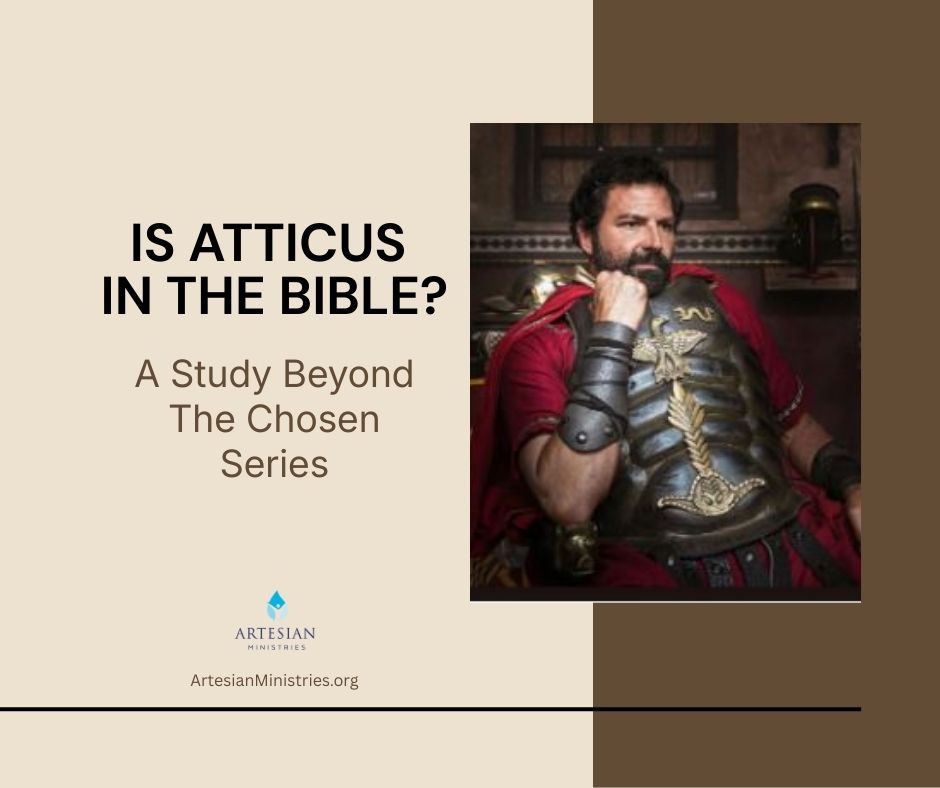
Table of Contents
Among the many characters that populate this dramatic retelling of Jesus’s ministry is Atticus Aemilius Pulcher. He is an urban cohort operative in the Roman Empire (not a Roman senator) who appears later in The Chosen season.
His sophisticated demeanor, complex motivations, and interactions with both Roman and Jewish characters have made him a memorable figure in the series. However, this raises an important question for students of Scripture: Who is Atticus and does he actually appear in the biblical text?
Related: Fallen Angels in the Bible: How Many Were There?

The Biblical Answer: Atticus Does Not Appear in Scripture
The straightforward answer is that there is no direct mention of Atticus in the Bible. He is entirely a fictional character created by the writers of The Chosen to serve dramatic and narrative purposes within the series.
The Chosen often takes creative liberties to fill in gaps in the biblical narrative and create compelling television. Atticus represents a significant role as one of the show’s fictional additions.
Such artistic license does not diminish the value of this character from the Roman people in relation to a storytelling perspective. However, it is crucial for believers and students of Scripture to distinguish between what is explicitly stated in God’s Word and what isn’t. Artistic interpretation and historical fiction are not biblical history from ancient times.
Even though the story of Atticus is compelling in the series, the Bible provides no record of any Roman official named Atticus Aemilius Pulcher interacting with Jesus, His disciples, or the early Christian community.
Understanding The Chosen’s Creative Approach
The Chosen‘s creator, Dallas Jenkins, has been transparent about the show’s methodology. The series aims to remain faithful to the biblical text while creating backstories, dialogue, and situations that are not explicitly recorded in Bible stories. This approach allows the show to explore the human dimensions of biblical figures. Some stories contain historical roots based on Roman culture derived from ancient texts or religious practices.
Atticus serves several functions within this creative framework. He represents the complex relationship between Roman authority and Jewish life in a first-century biblical context. He also provides a window into Roman investigations of what they would have perceived as potentially seditious religious movements during biblical times.
Additionally, his character allows the show to explore themes of duty, conscience, and the transformative power of encountering truth. As C.S. Lewis demonstrated with in The Lion, The Witch, and The Wardrobe, biblical references and Christian values can be effectively portrayed through modern media.
Related: How Did Queen Esther Die According to the Bible?

What The Bible Says About Roman Officials
While Atticus himself is a fictional Bible character, the Bible records many interactions between Jesus, His followers, and various Roman officials. Understanding these biblical accounts in a Roman society helps us appreciate both the historical context of early Christianity and the creative choices made in The Chosen.
Pontius Pilate
The most prominent figure in the Gospel narratives is a Roman official named Pontius Pilate. He was the prefect of Judea from approximately AD 26 to 36. All four Gospels record his crucial role in Jesus’s trial and crucifixion (Matthew 27:1-26, Mark 15:1-15, Luke 23:1-25, John 18:28-19:16). The biblical Pilate is portrayed as a conflicted figure who recognizes Jesus’s innocence but ultimately capitulates to political pressure.
The Centurion at Capernaum
Luke 7:1-10 and Matthew 8:5-13 record Jesus’s encounter with a Roman centurion whose faith impressed the Lord. Jesus declared, “I have not found such great faith even in Israel” (Luke 7:9). This unnamed centurion is among the Bible’s notable figures because he demonstrates that Roman officials could possess spiritual sensitivity and humility, contrary to stereotypes.
Cornelius
Acts 10 introduces Cornelius, a centurion (and real person) of the Italian Regiment stationed in Caesarea. He is described as “devout and God-fearing; he gave generously to those in need and prayed to God regularly” (Acts 10:2). His conversion represents a pivotal moment in the early church’s recognition that the Gospel was for Gentiles as well as Jews.
Other Roman Figures
The New Testament mentions other Roman officials including Felix and Festus (Acts 23-26), procurators before whom the Apostle Paul appeared. Also, Julius who was the centurion who showed kindness to Paul during his voyage to Rome (Acts 27:1-3).
Related: Biblical Meaning of INRI on the Cross of Jesus Christ
Historical Context: Roman Presence in First-Century Judea
While Atticus himself is fictional, characters like him would have been a reality in first-century Palestine. Understanding the historical usage and context helps us appreciate the plausibility of such figures in the everyday life of human experience in the early Christian era.
Judea was a Roman province. Extra-biblical texts reveal that its status and governance varied during the first century. At the time of Jesus’s ministry, it was under direct Roman rule through prefects like Pontius Pilate. These officials had military forces at their disposal to maintain order and suppress any movements that threatened Roman interests.
The Romans were sophisticated administrators who maintained extensive intelligence networks throughout their empire. They answered to Roman emperors who would have been keenly interested in any religious or political movement that attracted large crowds or challenged existing power structures. Jesus’s ministry, which drew thousands and included revolutionary-sounding language about a “kingdom,” would certainly have attracted Roman attention.
The Chosen depicts Atticus as belonging to the cohortes urbanae. This role of urban cohorts served as a police force in Rome and occasionally in provinces. While the historical details of their operations in Judea during Jesus’s time are limited, Roman authorities certainly had mechanisms for monitoring potentially subversive activities.
Related: The Valley of Dry Bones: Complete Biblical Meaning

The Value and Limitations of Historical Fiction
The creation of characters like Atticus raises important questions about the role of historical and biblical fiction in Christian education and entertainment. They help us see racial injustice and the persecution of early Christians in vivid dimensions.
Well-crafted fictional characters can help viewers imagine the historical and cultural context of biblical events more vividly. They can illustrate principles found in Scripture even if their specific stories are not recorded there. They also create emotional engagement that can lead viewers to deeper study of the actual biblical text.
The primary danger is conflation—when viewers begin to confuse fictional elements with biblical truth. After watching The Chosen, some viewers might mistakenly believe that Atticus is a biblical character or that events depicted in the show actually occurred as portrayed. This underscores the importance of personal Bible study and biblical literacy about the first century AD.
Principles for Engaging with Biblical Media
As Christians in 2026 navigate an increasingly sophisticated landscape of biblical entertainment and education, several principles can guide our engagement:
No matter how well-produced or emotionally compelling a biblical drama may be, Scripture alone is inspired, inerrant, and authoritative (2 Timothy 3:16-17). Entertainment and educational media should drive us toward God’s Word, not replace biblical teachings.
We can appreciate the artistic skill and good intentions behind projects like The Chosen while maintaining discernment about what is biblical and what is speculative or fictional. This requires neither wholesale rejection nor uncritical acceptance. They provide helpful insights into Ancient Greek culture, Roman history, and what it meant to live under Roman citizenship.
Biblical fiction can spark interest and raise questions that lead to genuine biblical study. When a character like Atticus raises questions about Roman involvement in Jesus’s ministry, this can motivate viewers to research what the Bible actually says about Roman officials and first-century political contexts.
Related: Joshua Tree Reference in the Bible: What Does It Mean?
Separating Fact from Fiction
Atticus Aemilius Pulcher is not mentioned in the New or Old Testament. He is a fictional character created for The Chosen series to explore themes and historical contexts related to the biblical narrative. While the Bible does record interactions between Jesus, His followers, and various Roman officials, Atticus himself represents creative license rather than scriptural or historical record.
This distinction matters. As believers, our faith is built on the solid foundation of God’s revealed Word, not on dramatic interpretations, however skillfully crafted. The Chosen can serve as a valuable tool for engagement and exploration, but it cannot be a substitute for direct engagement with Scripture.
When we hear media or literary references to alleged historical figures, searching Scripture is the plumb line for discerning biblical stories and ancient cultures. That being said, Christian teachings through all forms of art can powerfully convey moral values that leave an indelible mark.
Bottom Line
The story of Jesus Christ, His life, death, and resurrection, as recorded in the inspired Gospels, remains the greatest story ever told. No fictional character, however compelling, can add to its power or authority.
As we enjoy modern retellings of biblical narratives, we must continually return to the source, studying God’s Word with diligence and allowing the Holy Spirit to illuminate its eternal truths for our lives today.
Related Posts:
- Best Bible Reading Plans
- 13 Best Bible Study Methods
- What to Highlight in the Bible and the Best Way To Do It
About the Author
Donna is an award-winning author, sought-after speaker, and Bible teacher. Her path from unchurched to becoming passionate about sharing Jesus was difficult. Read about her God-breathed journey: “From Unchurched to Becoming a Multi-Published Author and Sought-After Speaker.” If you want to send Donna a quick message, visit her here.

{Some of these links are affiliate links. If you purchase through that link, the ministry may receive a small commission at no extra cost to you.}